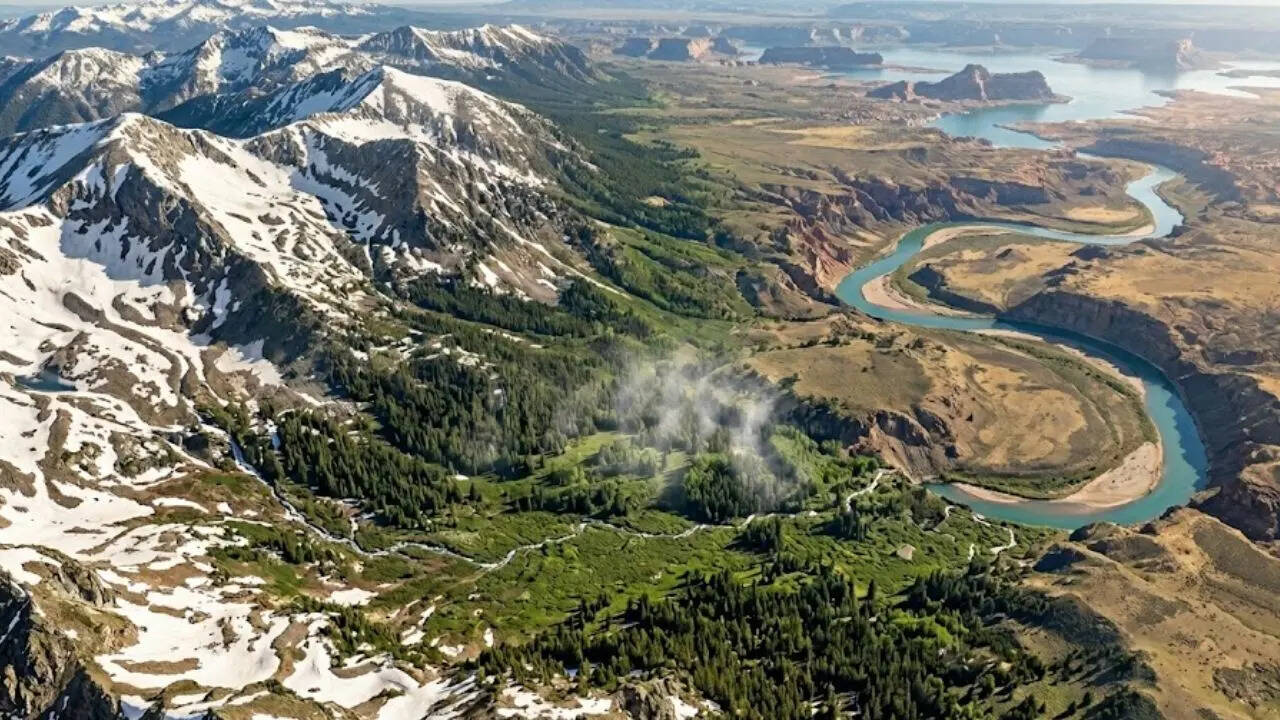
The mystery of the Colorado River’s missing water has finally been solved by scientists from the University of Washington, revealing a critical shift in the American West’s hydrological cycle. For the past several decades, hydrologic managers have used winter snowpack measurements to predict how much water will be available in reservoirs during the summer months, but since the year 2000, managers have consistently overestimated stream flow predictions based on winter snowpack measurements. The new research conducted by scientists revealed that warmer and drier springs are responsible for this phenomenon. Spring precipitation is critical in helping to deliver water from melting snow to the river, but when no spring precipitation occurs, mountain vegetation will draw from the snowmelt before it gets to the river.
This physiological siphoning effect has been enhanced by clearer skies and enhanced solar radiation, which together account for almost 70 per cent of the water deficit being experienced in the basin. Capturing this ecological interception of water from the Colorado River basin is critical for the 40 million people living and working in the basin who are dependent on the diminishing water supply. Such findings highlight a transformative 'thirsty' landscape where vegetation and evaporation claim snowmelt before it reaches human reservoirs, demanding a total recalibration of water management strategies to ensure survival in an increasingly arid West.