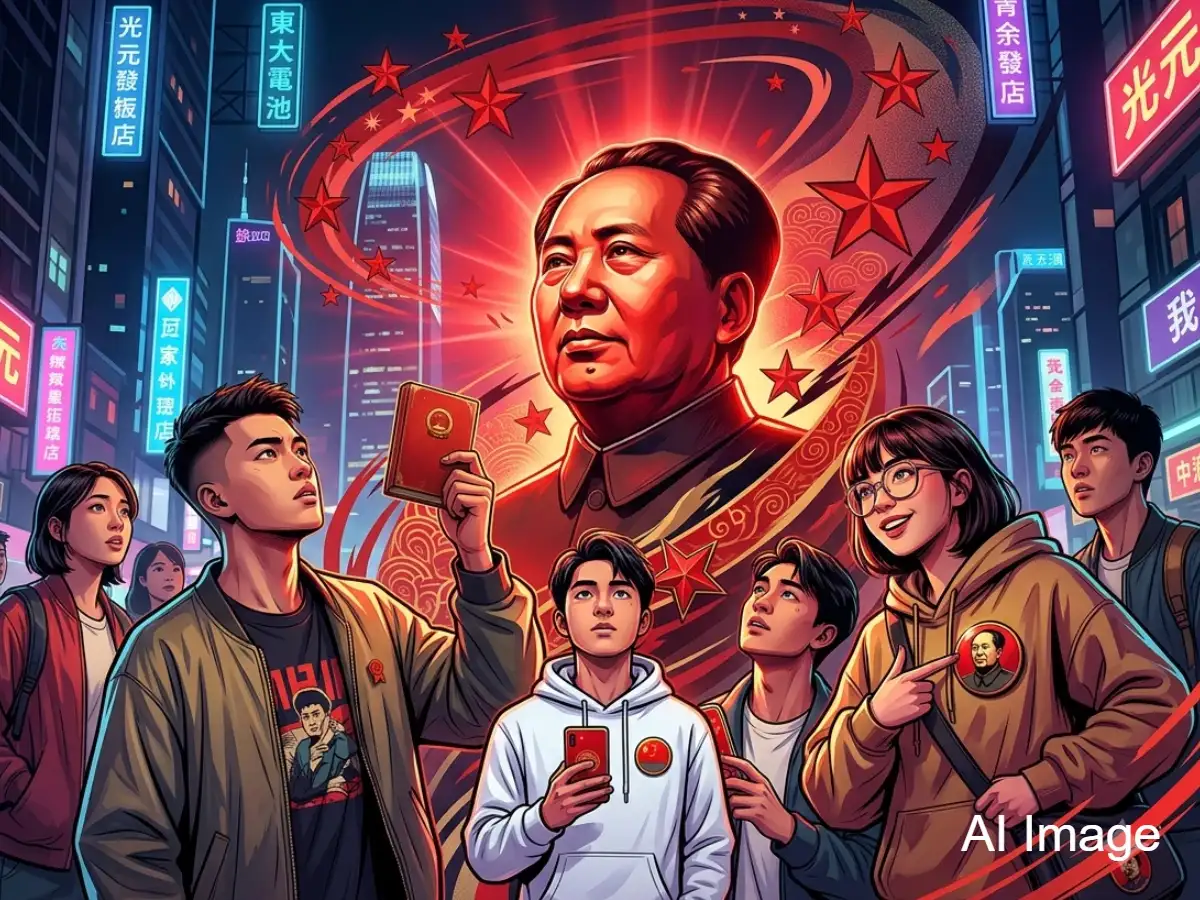
Fifty years after Mao Zedong's death, his writings are finding a new audience among sections of China's younger generation, with some turning to the former leader's ideas for guidance amid economic uncertainty, workplace pressure and growing competition in education and employment.
The renewed interest comes at a time when China's economy is facing slower growth and wider concerns over inequality and job opportunities. According to a recent report by the South China Morning Post, Mao's works are increasingly being treated by some young Chinese not simply as political texts, but as a source of resilience and personal advice.