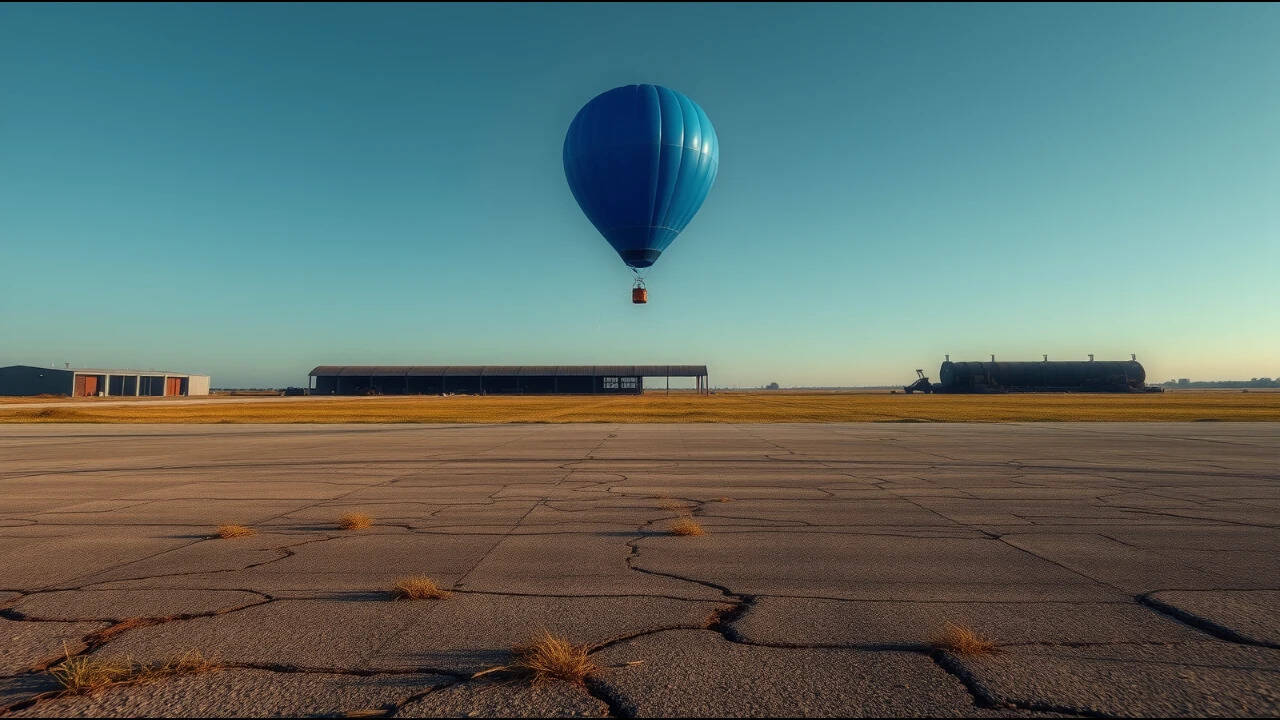
In 2011, a team of British researchers prepared to carry out what would have been one of the first outdoor tests of solar geoengineering equipment anywhere in the world, a plan to send a helium balloon roughly 1 kilometre into the sky above a disused airfield in Norfolk, tethered to a hose that would pump around 150 litres of water up through it. The test was never meant to alter the climate itself. It was designed purely to measure how a balloon and a kilometre-long hose behaved in real wind conditions, data the team needed before attempting to design a far larger version capable of reaching 20 kilometres into the stratosphere. Despite years of preparation and significant public funding, the balloon never left the ground, cancelled just weeks before launch following a mix of regulatory uncertainty, public opposition and an unexpected patent dispute among the very researchers involved. More than a decade on, SPICE's cancellation still serves as a cautionary tale for climate researchers worldwide, illustrating how scientific ambition alone cannot overcome unresolved questions of governance, transparency and public trust surrounding controversial emerging technologies.
Get breaking news anytime, anywhere. Download the TOI app now!