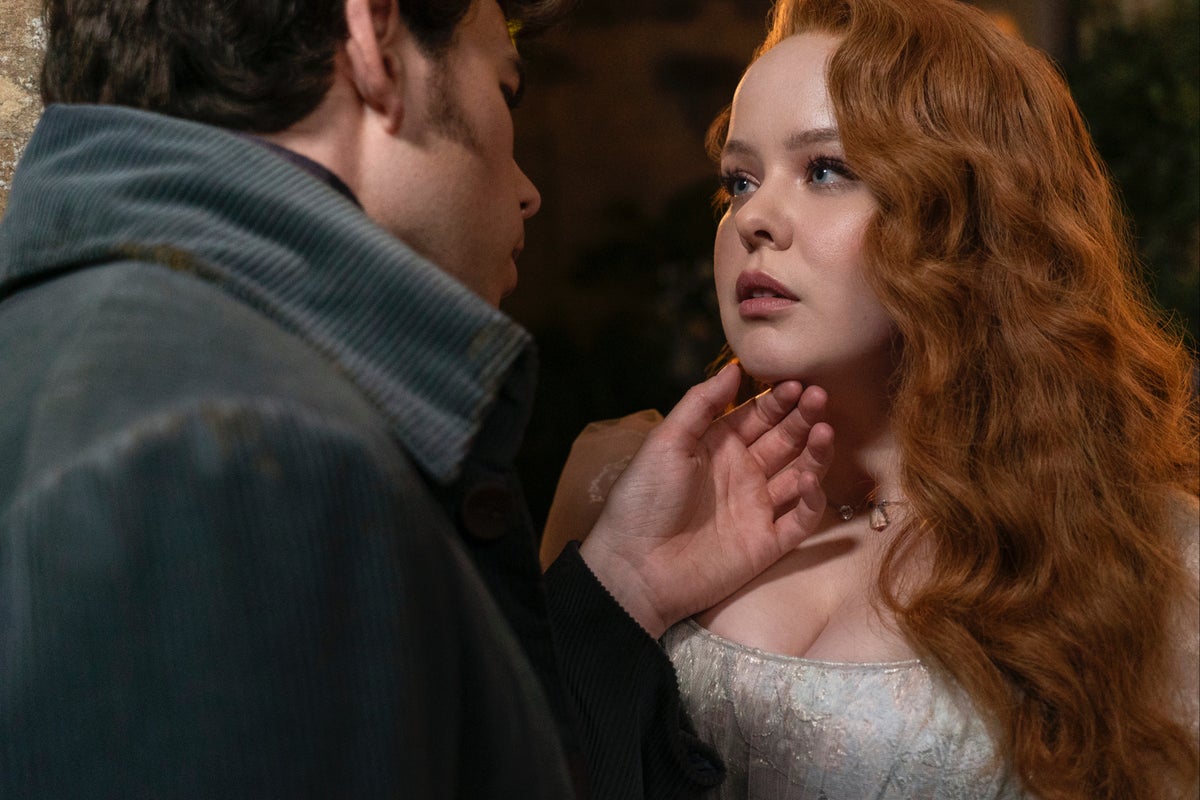
Is that a sweeping orchestral cover of a Pitbull song I hear? Playing over some hot and heavy snogging in the back of a horse-drawn carriage? It can mean only one thing – the return of Bridgerton. Netflix’s revisionist costume drama is now in its third series, and all of its Regency-ish hallmarks are present and correct. The beautiful debutantes dancing the quadrille to the strains of a present-day pop song. The script that crosses its fingers and hopes that a smattering of “Your Grace” and “My Lord” will be enough to mimic early 19th-century speech. The glittering costumes that are part Palladium panto, part Met Gala. It’s worlds away from the more straight-laced costume dramas that once dominated Sunday night TV schedules.
Reviews for the latest season, which focuses on Nicola Coughlan’s Penelope Featherington and her friendship-turned-romance with third Bridgerton brother Colin (Luke Newton), have been mixed to say the least. The Independent’s chief TV critic Nick Hilton described the writing as “particularly flimsy”; on the other end of the spectrum, The Guardian praised its “slickness and relentless fun”. Whatever the verdict, though, Bridgerton is now practically critic-proof, an all-but guaranteed hit. When the second season premiered in April 2022, it racked up 193 million hours of viewing time on Netflix in just three days, beating a record previously held by… the first season. Success like this inevitably breeds imitation. And the show’s legacy is now clear: it has changed the rules of the genre entirely – which might be a mixed blessing.