Get all your news in one place.
100's of premium titles.
One app.
Start reading
The Times of India
The Times of India
World
TOI World Desk

Beginning in 2007, South Korea planted about 3,046 hectares of forest in Mongolia to help combat desertification and reduce Gobi dust reaching the Korean Peninsula

Every spring, winds can carry fine particles from the drylands of Mongolia and northern China across East Asia. In South Korea, these events are known as yellow dust, or hwangsa, and can turn the sky hazy while raising airborne particulate concentrations. According to the Journal of Rural Development , South Korea and Mongolia implemented the Greenbelt Plantation Project from 2007 to 2016 to combat desertification and reduce environmental damage from yellow dust and sandstorms. The project included tree planting in Mongolia, training programs for experts, and technology exchange with Mongolia.

Get breaking news anytime, anywhere. Download the TOI app now!

Planting a forest where trees struggle to survive

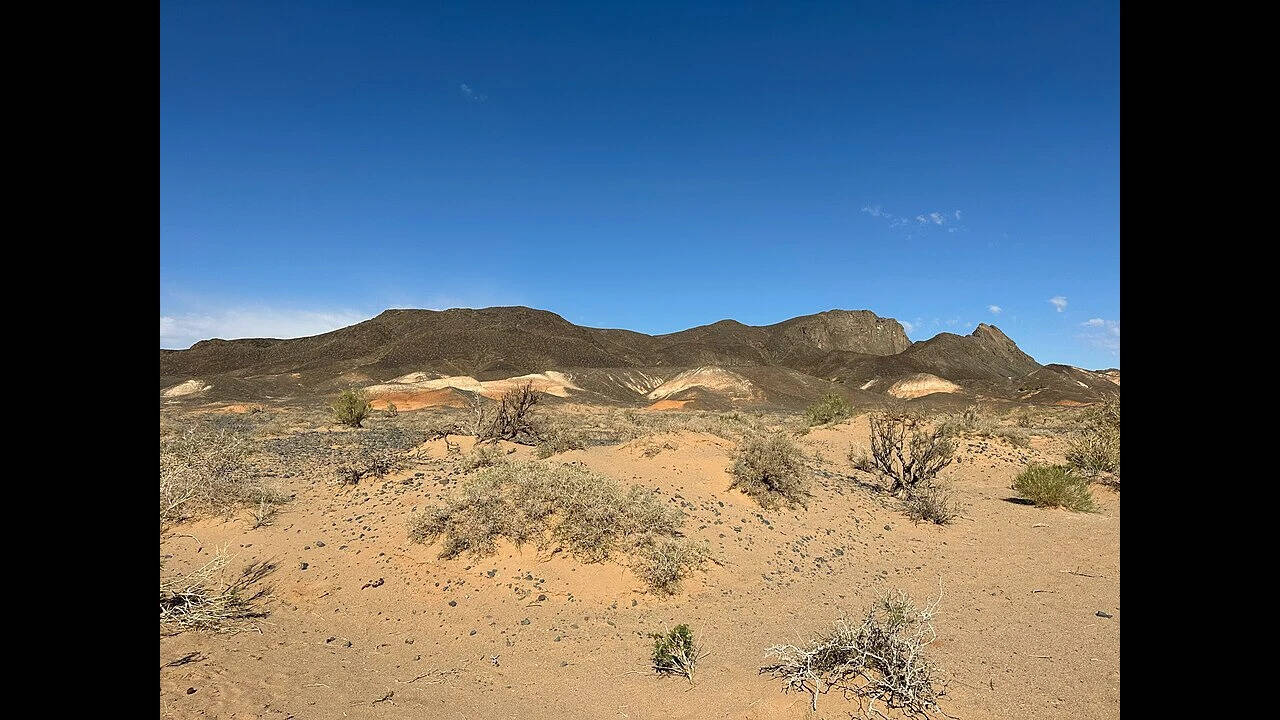
The challenge was not simply finding enough land to plant. Much of the target area was dry, exposed and vulnerable to desertification. Mongolia's climate also presents harsh conditions for young trees, including limited moisture, cold winters and grazing pressure.

The plants chosen for the project needed to cope with dry conditions. According to Korea.net , the Korea Forest Service's 10-year Mongolian Greenbelt Forestation Project covered approximately 3,046 hectares with trees across Mongolia. The forested sites included Lun soum in Töv province, Dalanzadgad and Bayanzag in Ömnögovi province, where desert-adapted species such as dwarf elms, tamarix and haloxylon, or saxaul, were planted. The aim was not to create a conventional forest, but to establish vegetation that could survive harsh desert conditions while helping stabilise vulnerable ground.

According to the Korea Forest Service , the project established three nurseries and an Education Centre for Afforestation Technique to train experts. By 2016, about 5,000 experts had participated in the training programmes, while approximately 200 Mongolian government officials and experts had been invited to South Korea for technology exchanges. That emphasis on local knowledge helped the project last beyond the initial planting phase. A forest planted by an outside organisation cannot remain dependent on outside labour indefinitely. The longer-term objective was to build Mongolia's capacity to maintain and expand the restored areas.

The dust did not begin at Korea's border

The project's environmental impact extends beyond the planting sites themselves. The Gobi region experiences frequent dust storms, and these events can carry fine particles across Mongolia and into neighbouring areas, including the Korean Peninsula. This means a forest planted in Mongolia cannot be judged solely by whether it makes one patch of land greener. Its wider purpose is to reduce the amount of loose material available to be lifted and transported by strong winds. Still, it would be overstating the case to say the Greenbelt alone can prevent yellow dust from reaching South Korea. Dust storms have multiple sources, and their intensity depends on wind, precipitation, soil conditions, vegetation cover and land use across a huge region. The project is better understood as one part of a larger effort to reduce the amount of exposed and degraded land capable of contributing to dust emissions.

A project that outgrew its original forest belt

According to the Korea Forest Service, the Korea-Mongolia Greenbelt partnership continued beyond its first phase. The second phase, running from 2017 to 2021, included establishing an urban forest in Ulaanbaatar and transferring Greenbelt plantations to Mongolian authorities. The third phase, scheduled for 2021 to 2026, was planned to focus on forest restoration, wildfire prevention and the development of reforestation infrastructure.

Planting trees is only the beginning of restoring drylands. The trees have to survive, the land around them has to remain protected, and local institutions need the knowledge and resources to manage the sites after an international project ends. More than a decade after the first seedlings were planted in Mongolia, the project’s significance extends beyond the area it covered. South Korea was trying to address an air-quality problem whose sources lie beyond its own territory, while Mongolia was dealing with land degradation in its own landscape. But by restoring vegetation in vulnerable areas, the two countries have tried to reduce the amount of loose soil available to the wind.

Sign up to read this article
Read news from 100's of titles, curated specifically for you.
Already a member? Sign in here
Related Stories
Top stories on inkl right now
One subscription that gives you access to news from hundreds of sites
Already a member? Sign in here
Our Picks
Fourteen days free
Download the app
One app. One membership.
100+ trusted global sources.