Get all your news in one place.
100's of premium titles.
One app.
Start reading
The Conversation
The Conversation
Politics
Jamie Pringle, Reader in Forensic Geoscience, Keele University

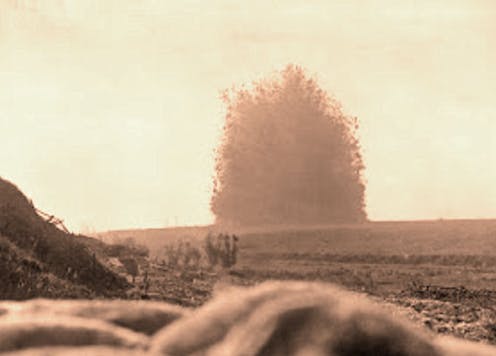
Battle of the Somme: new research shows detonating a massive mine under German lines too early led to a British slaughter

'The earth rose in the air to the height of hundreds of feet.': but a delay in the infantry attack meant that hundreds of British troops were killed.

The Battle of the Somme began on July 1 1916 with a spectacular explosion under Hawthorn Ridge – a fortified German frontline position west of the village of Beaumont Hamel in northern France. The footage of the explosion remains one of the best-known pieces of film from the whole conflict.

Almost 60ft below the surface, British miners of the 252 Tunnelling Company had hand dug a gallery for more than 900 metres through chalk and packed it with 40,000lbs of ammonal explosives. It was one of 19 mines placed beneath German front positions that were detonated on July 1 1916, to mark the start of the offensive.

Sign up to read this article
Read news from 100's of titles, curated specifically for you.
Already a member? Sign in here
Related Stories
Top stories on inkl right now
One subscription that gives you access to news from hundreds of sites
Already a member? Sign in here
Our Picks
Fourteen days free
Download the app
One app. One membership.
100+ trusted global sources.