
Get all your news in one place.
100's of premium titles.
One app.
Start reading
The Independent UK
The Independent UK
Jane Dalton

Ammonia air pollution hot spots found in parts of UK with most factory farms

Parts of the UK with the most large-scale intensive farms are ammonia air pollution hot spots, new research suggests.

Air pollution from manure spread on fields is worst in Norfolk, Lincolnshire and Herefordshire – which have the most large-scale intensive farms, a new map released as part of a report by Compassion in World Farming and Sustain shows.

The ammonia produced by industrial chicken and pig farming is linked to conditions including heart disease, strokes, lung cancer, type 2 diabetes and dementia, according to the report, titled The Ammonia Pollution Problem.

When slurry is spread on fields, the ammonia reacts with other pollutants to form fine particulate matter – one of the most dangerous forms of air pollution – which is blown about, the report says. While people nearest to factory farms face higher exposure, it can also reach into towns and cities.

Ministers are rewriting planning rules to make it easier to build intensive livestock farms despite local opposition, according to The Guardian, after lobbying by poultry industry chiefs. Factory farming has already expanded in the past decade.

The map shows the worst areas for ammonia pollution are Norfolk, the Wye Valley and Lincolnshire (Ciwf/Sustain)

The report says agriculture is responsible for 89 per cent of UK emissions.

Ammonia is used to make fertilisers but is being released into the atmosphere at levels far beyond those ecosystems can absorb, the report authors say. Microscopic particles also penetrate the lungs and bloodstream.

Artist Kate Milsom, 57, says she was twice forced to move homes where she lived in the Wye Valley on the England-Wales border, because the ammonia from nearby chicken farms was devastating.

Ammonia pollution affects climate change, soil, water, animals and people, the report shows (Ciwf/Sustain)

She says it made her eyes sting and water, which stopped her working, and affected her eating and sleeping, while battling the expanding farms hit her mental health.

“I couldn’t have the doors and windows open any more, even on a beautiful day,” she said.

“I became increasingly concerned about my health and the impact of airborne particles. The smell of ammonia is so invasive. You’d think you’d get used to it – but not this smell.”

Kate Milsom says the smell was so intrusive it harmed her sleep, her work and her mental health (CIWF/Richard Dunwoody)

An application for two more poultry units in the area, near ancient woodlands said to be sensitive to ammonia concentrations, would mean another 500,000 more chickens reared there every year.

Michele Franks, who lives near two chicken farms in Lincolnshire, said: “The smell is horrendous, especially if the wind is blowing towards my house.

“I’m asthmatic and I notice whenever the chicken sheds are cleaned out, it affects my breathing and my chest tightens.

“I have to always make sure all my windows are shut, I can’t hang my washing out and I can’t go out into the garden. It’s really unpleasant and lasts for about five days.”

“The spraying of manure is a real problem around here. We’re surrounded by crops sprayed with chicken manure and the smell is really awful. It makes my eyes sting and I have to gasp for breath.

“The smell is so intrusive that I gave up eating meat in 2016 and became pescatarian.”

Michele Franks, centre, and other residents in Lincolnshire oppose plans for a new factory farm (CAFF)

Plans for 12 more poultry sheds housing more than half a million birds would place her home between two industrial units – a situation residents have called “a health disaster waiting to happen”.

The report cites scientific studies linking exposure to to particulate matter to strokes, heart disease, lung cancer, type 2 diabetes, respiratory disease and dementia. It contributed to an estimated 15,470 deaths in 2010, the authors note.

Television doctor Amir Khan said: “As a GP, I see first-hand the toll that air pollution takes on people’s health – and ammonia from intensive farming is a major, yet often overlooked, part of that problem.

“The fine particulate matter formed from ammonia exposure drives heart disease, stroke, asthma and chronic lung conditions, and it is our most vulnerable patients who pay the price.”

Dr Amir Khan said he sees first-hand the effects of air pollution on people's health (Getty)

He said reducing farm emissions was an urgent public health priority.

Compassion in World Farming (Ciwf) says excess nitrogen from ammonia also degrades forests, grasslands, wetlands and freshwater habitats, and fuels algal blooms, and increases disease risk in farm animals.

In air testing in Leicester, Birmingham and London, 79 per cent of areas exceeded World Health Organisation guidelines for particulate matter.

Anthony Field, head of Ciwf UK, said: “By cramming large numbers of animals into confined spaces and relying heavily on fertilisers, these intensive systems release far more ammonia than the environment or our bodies can cope with.

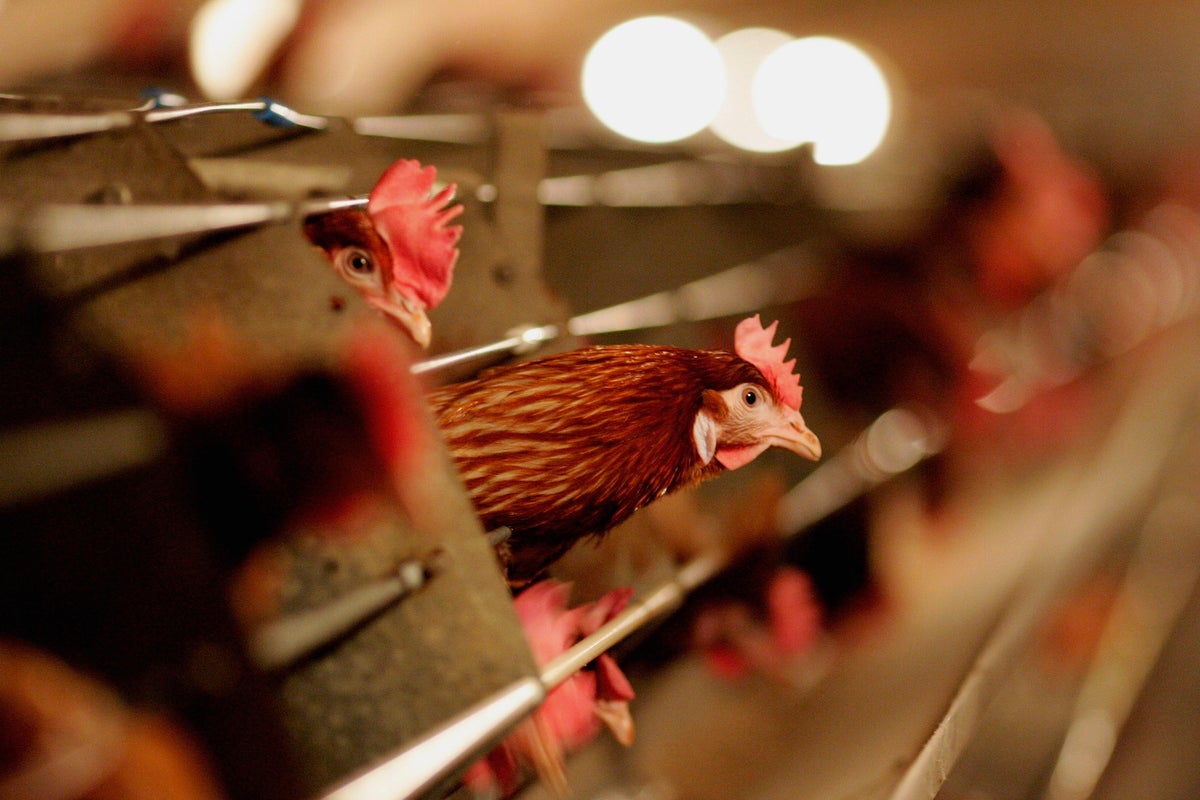
Ciwf says intensive farms release more ammonia than the environment or our bodies can cope with (Compassion in World Farming)

“The result is a cascade of harm – to the animals living in these conditions, to the people breathing the polluted air, and to the ecosystems absorbing the excess nitrogen.”

Ruth Westcott, of Sustain, said:We have a shocking deficit of home-grown vegetables, fruit, nuts, beans and pulses. This must be the priority for government, not handing more power to industrial food production.”

A government spokesperson said: “We are committed to improving air quality to deliver benefits for public health, the environment and the economy whilst also upholding the highest farm animal-welfare standards.

“We are working closely across government to deliver planning reforms that both improve outcomes for nature and enable farmers to build the infrastructure they need.”

Sign up to read this article
Read news from 100's of titles, curated specifically for you.
Already a member? Sign in here
Related Stories
Top stories on inkl right now
One subscription that gives you access to news from hundreds of sites
Already a member? Sign in here
Our Picks
Fourteen days free
Download the app
One app. One membership.
100+ trusted global sources.







