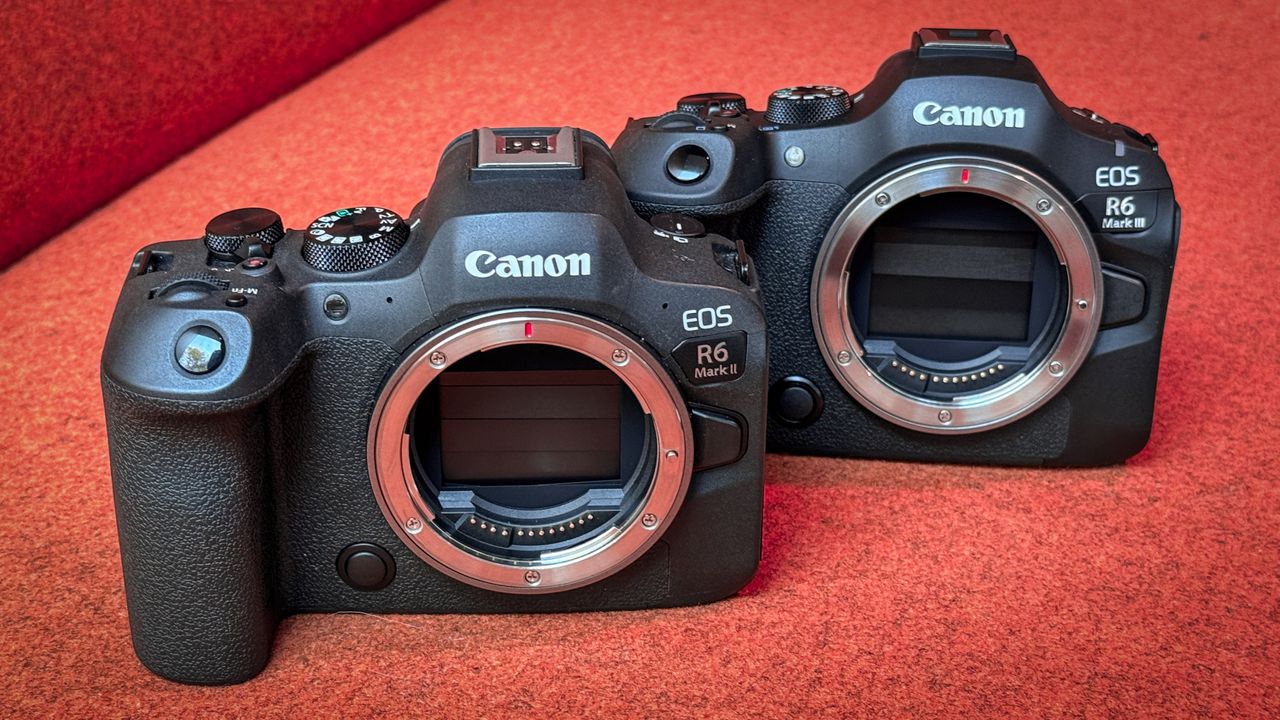
Camera sales have led to record-high net sales for Canon’s latest quarterly financial results – but the camera giant’s latest financial report is dotted with both positives and negatives as the AI boom continues to drive volatile memory prices.
In the July 27 report, Canon added another 6 billion yen – about $36.6 million / £27.6 million / AU$52.4 million / CA$51.75 million – on top of the previously estimated impacts of the AI memory crisis. That puts Canon’s memory crisis estimate for 2026 at $69.4 billion yen. That’s about $423.9 million / £318.9 million / AU$606.4 million / CA$598.6 million at current exchange rates.

The storage needs for generative AI have driven up the cost of all types of digital storage and, beyond just the cost of a camera’s memory cards, could impact the price of the cameras themselves.
While the increased estimate seems to suggest the AI crisis is worsening, the report has a bit of good news – the increased memory cost so far has been offset by tariff refunds after the Supreme Court ruled some of the Trump Administration’s tariffs unconstitutional. Canon is estimating a 37.5 billion yen (around $230 million) tariff refund, which offsets the memory increases as well as the predicted decline in sales due to tension in the Middle East.
While Canon has managed to prevent the memory crisis from severely damaging the bottom line so far, a price increase isn’t out of the question if the situation continues to worsen.
“As memory prices are expected to take some time to normalize, we will closely monitor future price trends and seek to mitigate the negative impact as much as possible through price increases and additional cost reductions,” Canon told investors during the report.
In previous reports, Canon had also indicated that the company had been able to stockpile additional memory ahead of some of the price increases.
The July report isn’t the first time Canon has mentioned the possibility of a price increase driven by the memory crisis. In the previous quarterly report, the company estimated a ¥6 to 7 billion (around $40 million) annual impact from the rising costs of memory, with two-thirds of that cost attributed to the imaging division.
The quarterly report is also not the first time that Canon has mentioned the possibility of a price increase. In an interview earlier this year, a Canon representative said that “we cannot rule out the possibility of passing on the cost to prices.”
Canon also isn’t alone in estimating a severe impact of increasing memory costs. In earlier investor reports, Nikon also said that the company would “consider passing on price increases depending on the situation.” Fujifilm similarly told investors that “pricing measures and other initiatives” could be used to lessen the impact of rising costs of memory.
For now, the tariff refund, existing stockpile, and rising camera sales mean that Canon has a solid buffer against the impact of rising memory costs. But the company’s comments to investors also hint that price increases or cost-cutting may be needed if the situation worsens.
You may also like
Take a look at the best Canon cameras or the best Canon RF lenses.