
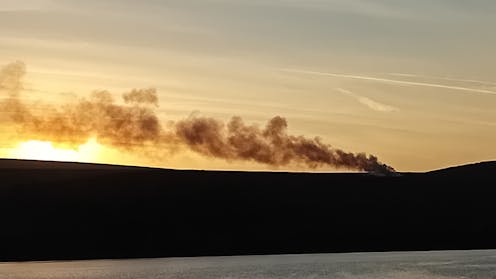
Early one October afternoon in 2023, thick grey smoke drifted across Sheffield’s western skyline. As much of the city became blanketed, residents turned to social media to complain about “bonfire smoke”, while others were forced to leave the city due to breathing difficulties.
However, this smoke did not originate within the city. It was drifting in from the Peak District, more than nine miles away, where controlled heather burning was taking place on the moorlands. For around six hours, levels of fine particulate matter (known as PM2.5), tiny airborne pollutants known to harm human health, exceeded 40 micrograms per cubic metre of air (µg/m³) and peaked at 70µg/m³, well above the guidelines recommended by the World Health Organization.













