
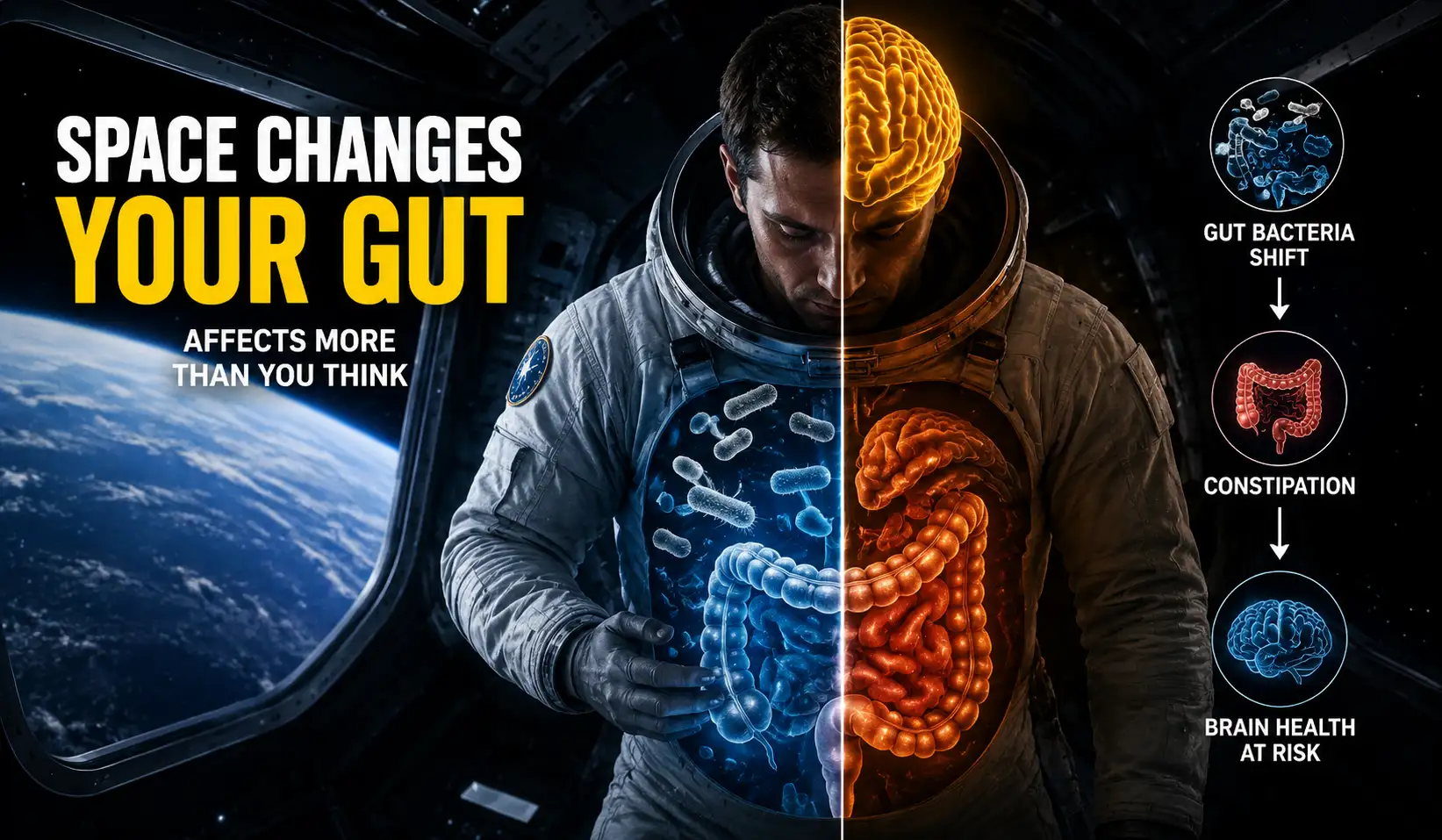
Constipation may seem like a minor inconvenience beside the dramatic challenges of spaceflight, but for astronauts it points to a deeper biological problem. Once the human body leaves Earth, the digestive system no longer operates under the gravitational conditions in which it evolved. A new study from the University of Copenhagen, conducted with NASA, offers fresh clues about what happens inside the intestine during months in orbit. Blood samples from 52 astronauts suggest that changes in gut metabolism begin within weeks of reaching the International Space Station and persist until they return home.
The finding helps explain why constipation is so common in space, while also raising a broader question about how the human microbiome responds when gravity disappears. Researchers found signs that bacteria in the intestine shift toward fermenting more protein than usual during spaceflight. That does not necessarily mean astronauts are eating more protein or developing an intestinal disease. Instead, it may indicate that food and its contents are moving differently through the digestive tract, leaving less readily available fiber for gut microbes to consume.













