
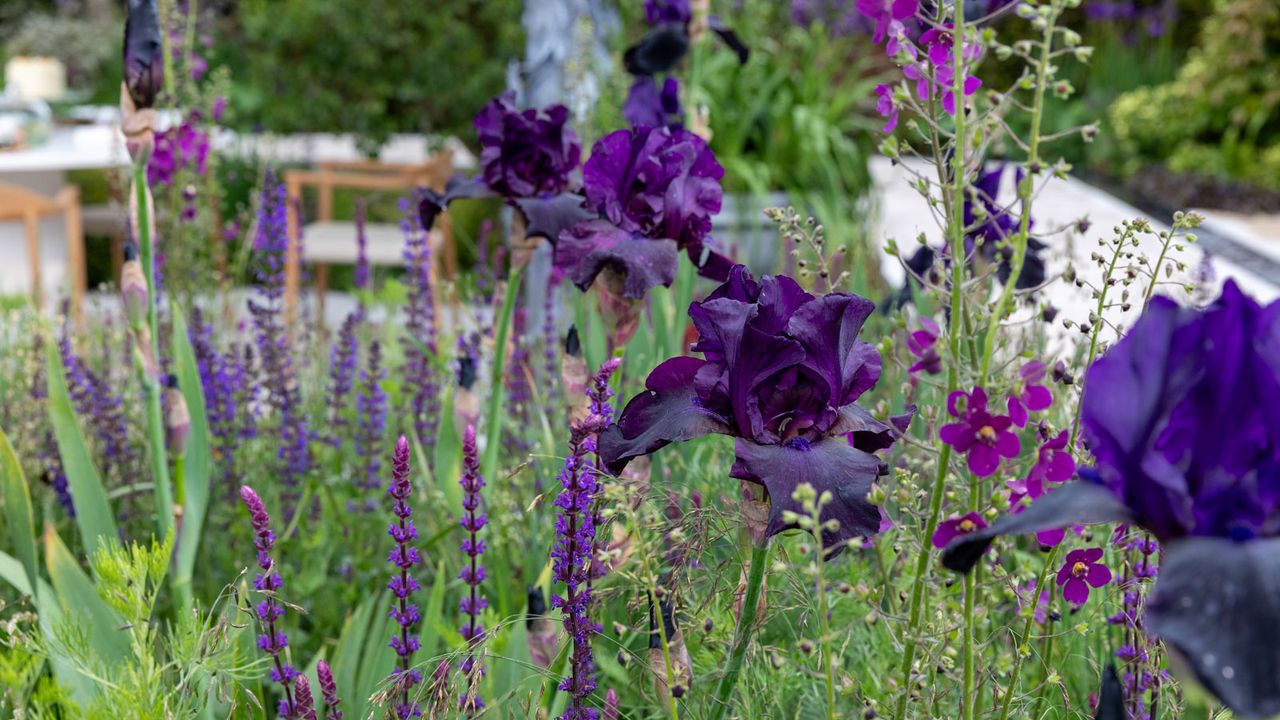
There is a reason why purple is having a moment, and it's one to consider when looking for color inspiration to reimagine your outdoor space. The huge range of shades on offer makes purple such a key component of the color palette that it begs to be included in any outdoor color-drenching design.
Purple adds a tantalising element to gardens, with its rich, dark, and dramatic notes. Ranging from pale lavender to darkest plum, purple feels effortlessly luxurious. Darker shades create an elegant atmosphere ideal for relaxing in the garden, while softer shades have a soothing feel that calms the mind. So it's not hard to see why it's become one of this year's biggest garden color trends.

"For color drenching outdoors, purple is a particularly effective choice because it brings a sense of richness and character while still feeling connected to nature," says Danielle Le Vaillant of Cox & Cox. "Planting can introduce the color throughout the garden; then, for a cohesive look, it can be carried across seating, accessories, and styling details to make the space feel intentionally designed."
Find out why some of our favorite landscape designers love purple so much and how they use it in the spaces they design — so that you can, too.
1. Try the Purple Color-Layering Technique for a 'Designed' Look
Purple planting has moved well beyond traditional lavender borders for a modern new take on the color. "Today's schemes are less about color alone and more about creating depth, mood, and movement," says garden designer Karen McClure. "The best-performing plants contribute more than just color."
In Karen's designs, purple favorites earn their place. Nepeta offers months of flowers and soft, aromatic foliage, while Allium 'Lavender Bubbles' (available from YouGarden on Amazon in a pack of three — we love its intense purple flowers) delivers midsummer impact, and Verbena bonariensis adds height and transparency, weaving effortlessly through neighboring plants. Ornamental grasses are equally important, introducing texture and movement amongst the purple planting, while also helping to soften planting combinations and connect different layers within a border.
"The key is to avoid single-register planting, one color, one texture, or one fleeting moment of interest," says Karen. "Instead, layer purple flowers with contrasting foliage, from the silver-gray leaves of Stachys byzantina to the acid-lime tones of Alchemilla mollis. Choose bronze fennel to add further texture and movement, extending the season and enriching the overall composition."
It's this thoughtful layering of color, form, and texture that elevates a naturalistic planting scheme from a simple color exercise to a planting design with lasting interest.
2. Use Texture and Tone for a Very Modern Take on Purple
“If there is one color poised to become the favorite in the garden equivalent of interior design's color drenching trend, then purple feels like the natural frontrunner," says Nick Woodhouse, creative director at Woodhouse & Law. "Rather than relying on a single shade, purple in the garden has the ability to immerse the eye in a spectrum of violet tones, from the soft haze of lavender and lilac to the richer blue-purple of irises and deeper plum accents. Using these garden color ideas creates an effect that is both calming and distinctly contemporary."
The key to making a purple scheme feel sophisticated rather than one-note is to layer texture and tone. "In many of our projects, airy purple lavender contrasts with the sculptural form of dark purple irises, while lush green foliage provides a vital balance that prevents the palette from becoming overwhelming."
Repeating the color beyond the planting, through cushions, throws, and decorative details, strengthens the immersive effect, much as an interior designer would carry a paint color across walls, woodwork, and furnishings. The result is not a garden filled with purple flowers, but a garden defined by a purple mood.
3. Mix Light and Dark Tones of Purple to Add Depth
"Calming purple has long been used as part of traditional English garden borders, but they are also well-suited to Mediterranean planting schemes, a style that is becoming increasingly popular as we experience hotter, drier summers," says landscape designer Rosie Wilkins.
There are a huge number of purple-flowering plants available that tap into current garden trends, with an option to suit almost every outdoor space from full sun to shade. Rosie explains why purple is so popular and how to include it in your planting scheme. "Salvia nemorosa 'Caradonna' is probably one of the most well-used purple flowers, but other readily available options include iris, geranium, and verbena. Many of these plants, including lavender, have a timeless appeal that transcends other more fleeting trends that come and go."
Salvia Caradonna is available on Amazon and will bloom through till autumn.
Purple is also one of the most versatile garden color ideas that can be used alone or to complement and contrast with other shades. "For a calm but uplifting scheme, I like to pair deep purples with fresh whites and greens," says Rosie. "For more striking displays, try combining a range of light and dark purple tones with accents of red and peachy pinks. It doesn't have to be just about the flowers either, as incorporating plants with purple-bronze foliage can also add interest and depth to a scheme."
4. Celebrate the Unique Qualities of Purple
"In our view, there are lots of reasons to choose purple," says landscape designer Penelope Walker. "The darker tone is quite a unique one in the garden. The purple-maroon tones sit so well with softer dusky pinks and lavenders. The interest in these cool yet slightly feminine colors has been firm for a while, so it was probably a natural evolution that we’d progress into deeper variants. Plus, deep purple goes with so much."
The last decade or so has seen a strong focus on monochrome planting, with white gardens in particular being a feature, but the trend towards incorporating color specifically is definitely now in full swing, according to Penelope. "Introducing depth into a color scheme is a long-term staple choice."
She recommends some of her other favorite plants with an emphasis on the purple foliage these varieties offer. "For structure, try Pittosporum ’Tom Thumb’, which is a great alternative to box. Heuchera ‘Palace Purple’ is good for a wetter spot in dappled shade. For height, try Cotinus ‘Royal Purple’ and Cercis ‘Forest Pansy’, with its delicate heart-shaped leaves, is one of the best trees for small gardens."
Cotinus ‘Royal Purple’ is available from Crocus and has dark red-purple oval leaves that turn scarlet in autumn.

Primrose's sphere water feature gives a similar effect to the slate water feature in this space and will be sure to elevate any garden.
5. Lean Into a Harmonious, Complementary Palette That Enhances the Purple
"In contemporary gardens, purple is the color that consistently does the heaviest lifting in my opinion," says landscape designer Mia Witham. "It's incredibly versatile depending on how you direct it. On the one hand, you can lean into a harmonious, complementary palette by pairing purples with silver, gray and soft pastels. On the other hand, you can look to the opposite side of the color wheel and strike a vivid contrast with hot reds, oranges, and yellows."
When you introduce those hotter colors, purple serves a brilliant purpose. It lends an immediate sophistication to the palette, acting as a visual ‘pause’ between the intense, vibrant plant masses.
"To avoid a garden feeling flat or one-tone, the secret is managing these transitions," says Mia. "Some of the top-performing purple plants that are widely available are Salvia nemorosa (like ‘Caradonna’), Nepeta, and classic lavender. By anchoring them with the frothy, lime green foliage of Alchemilla mollis, you create a dynamic, layered space that feels both energetic and grounded."
"An outdoor space can, of course, never be completely color drenched as the sky and surrounding landscape will always provide contrast," says Danielle Le Vaillant of Cox & Cox. "The key is to embrace purple as the dominant thread running through the design, while balancing it with natural materials such as wood, rattan, and stone. This combination adds warmth and texture, ensuring the overall effect feels immersive and sophisticated."
For more ideas for your outdoor space, our edit of the best color schemes for small outdoor spaces delves deeper into the hues designers use when decorating space-restricted outdoor areas.
And for more garden and home inspiration, subscribe to the Livingetc newsletter, and all the latest will be delivered directly to your inbox.