
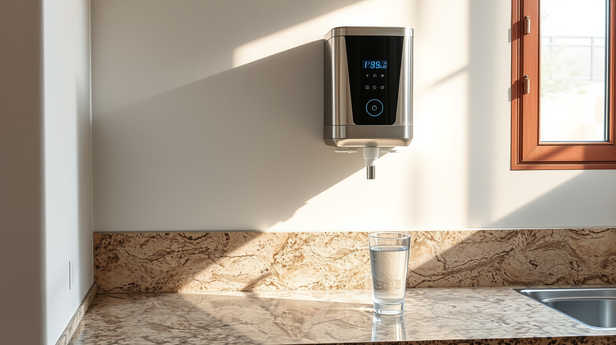
What RO filtration actually removes
Reverse osmosis works by forcing water through a semi-permeable membrane with pores small enough to block dissolved salts, heavy metals, and bacteria. That same thoroughness catches minerals the body needs. The five that disappear in measurable quantities are calcium, magnesium, potassium, sodium, and fluoride. A 2019 review published in the journal Nutrients found that RO-treated water typically retains less than 10 mg/L of calcium and less than 5 mg/L of magnesium, compared to 40 to 80 mg/L and 10 to 30 mg/L respectively in untreated groundwater across most Indian cities. The membrane does not distinguish between arsenic and calcium. It removes both.














