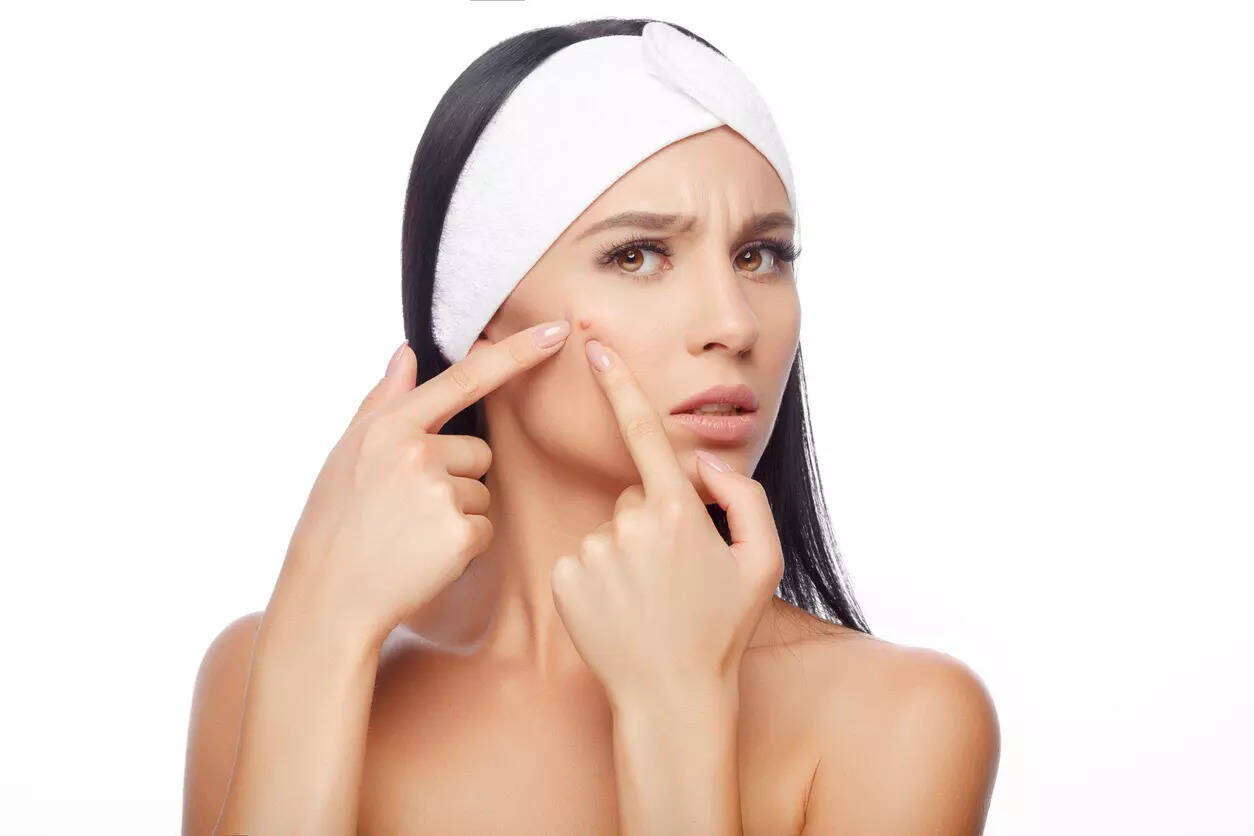
Acne is an inflammatory skin condition, caused by a chain of events that happen in a skin pore. It begins with the overactivity of the sebaceous gland, which supplies sebum in excess amounts to the connected hair follicle. Hormones, especially the androgens in the body, play a significant role in regulating the sebaceous gland activity in the skin. Increased androgen levels in the body cause the sebaceous glands to enlarge and produce more sebum than required. Genetics, puberty, menstrual cycle, pregnancy and menopause in women, birth control pills, increased stress levels, and certain medications containing corticosteroids or lithium are the most common factors that cause hormonal imbalance in the body, resulting in increased sebum production in the skin. The sticky sebum traps dead skin and dirt inside the pore. This triggers the growth of acne-causing bacteria such as 'Propionibacterium acnes' that feed on the mixture of the sebum and dead skin in the plugged follicle. In turn, this results in inflammation associated with pain, heat, and redness in the follicle, acne in short. Sometimes, the walls of these clogged and inflamed pores break open, spilling out white pus.
Vipin Sharma, Senior Product and Research Manager at Fixderma India Pvt Ltd: