
Get all your news in one place.
100’s of premium titles.
One app.
Start reading
Homes & Gardens
Homes & Gardens
Chiana Dickson

3 Items I Quit Buying Once I Saw They Were Only Performative Purchasing – Clutter Finally Came Under Control

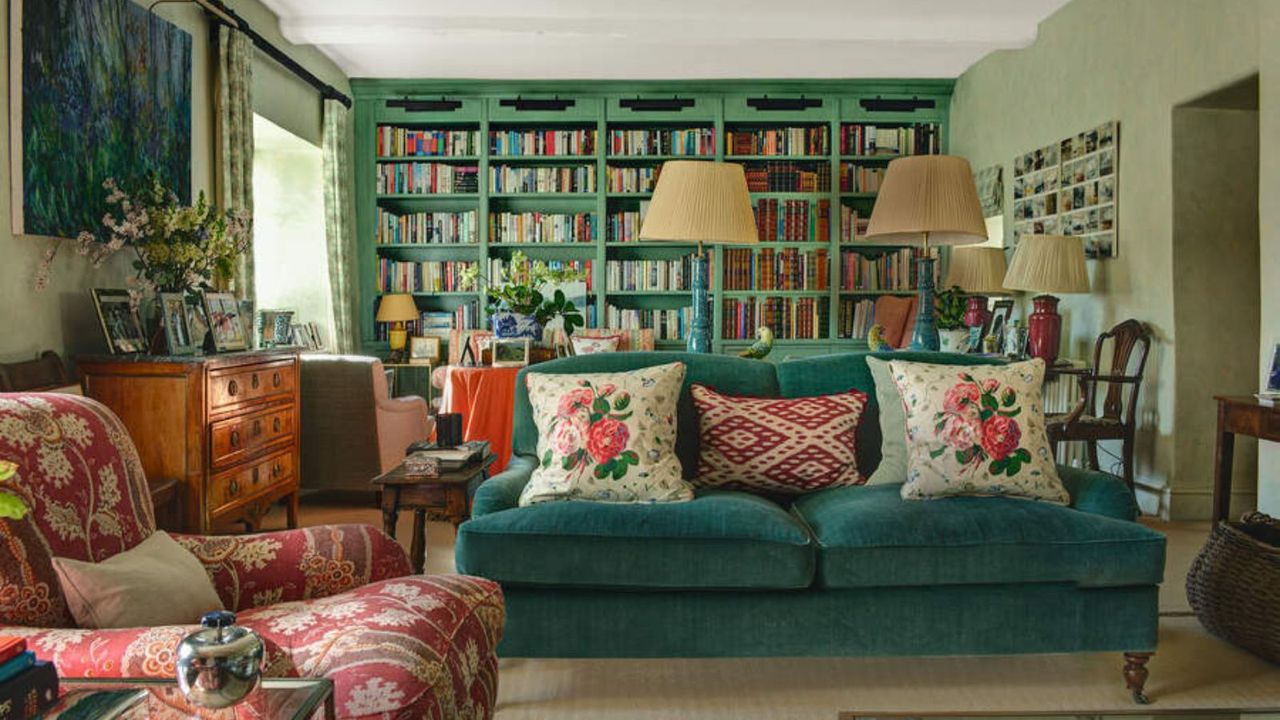
A country living room with a blue sofa and red patterned arm chair. Built in blue book cases line the back wall. .

For years, I kept buying items that weren’t truly useful – they just looked impressive. These purchases weren’t about functionality or fun; they were performative, bought to signal success, style, or financial comfort to others, and often influenced by my social media habits.

Now I am starting to try and cut contact with my previously dependable influencers; however, my eyes are being opened to just what does and does not serve me, and what was acting as a 'if you know you know' signal to people whose opinions ultimately didn't matter.

Now, they all just feel like clutter. These are the three things I've stopped buying to stop clutter and wasted money, and the pro decluttering methods for clearing out the current collections.

Performative Clutter You Can Clear Out Guilt-Free

1. Expensive Clothing

Some investment pieces are worth it, but not every garment needs a hefty price tag. (Image credit: Future / Ruth Maria Murphy)

My shopping habit is well-documented and often excused by the fact that the pieces I buy nowadays are well-made from natural fibers. However, just because they're 'investment pieces' doesn't mean I need all of them. In fact, many of them, including several bought mainly for their logos, were purchased under the influence of others. What else screams 'I'm secure' more than good tailoring or a well-known brand stitched onto a blouse? It's safe to say I should have used the ETC method a little more liberally before heading to checkout so many times.

However, these garments are infamously difficult to take care of, clogging up the space next to my laundry basket waiting to be taken to the costly dry cleaners (as I am not confident enough to dry clean clothing at home). In the worst case, they are hardly worn, taking up space in my closet organization, in fear I will damage them.

I am not going back to buying cheap polyester by any means. Instead, to save money at home and stop clutter before it starts, I am going to shift to simply buying less, using the law of least regret to make decluttering easier, and invest in a handheld clothes steamer from Wayfair to make daily maintenance that little bit easier, hopefully enticing me to use existing pieces more often.

Diana Moll, professional organizer and founder of D's Declutrr, also suggests, 'Before buying something new, ask: Would I use this on a regular Tuesday? Does it make my life easier – or just look good? Your home isn’t a performance. It’s a support system.

'And when we choose function with beauty, not image alone, life gets noticeably lighter. If something adds hesitation, stress, or extra steps to your routine, it isn’t comfort,' she adds, 'it’s work. '

2. Decorative Tchotchkes

You should only display the items that genuinely bring you joy. (Image credit: Kit Kemp Design Studio)

I have realised that purely display items, such as coffee table books and random figures, really are performative. If you have money and space to sacrifice on items you don't look at, just because it's trendy must mean you're doing okay, right?

Diana says, 'Performative clutter thrives on external pressure. Social media, trends, and “upgrade culture” quietly tell us what our homes should look like and what success should feel like. When we buy into that narrative, we stop trusting our own instincts. Our homes fill with things that look right but don’t function well – and we’re left wondering why nothing feels settled.'

For me, the coffee table books that covered my sideboard were completely unread, and the hand-me-down novels collecting dust on shelves took up valuable space for putting down bags daily, or storing books I actually want to read, for the sake of making my home look a little more like the ones I see online.

Diana continues, 'Here’s what often gets misunderstood: Function doesn’t mean sacrificing beauty. A home can be both visually appealing and easy to live in. True comfort comes from spaces that support your routines, flow naturally, and don’t require constant managing while still reflecting your style.'

When deciding what to do with the items I am decluttering, I assessed the quality before using either a book-selling app or donating them to my local thrift store. I was never going to get the full amount of 'wasted' money back, but at least they could go on to be more useful to someone else than they were to me.

3. 'Comfort' Items That Weren't Very Comforting

Not everything has to be the absolute highest quality. (Image credit: Lulu and Georgia)

Don't get me wrong, I love it when a home looks and feels cohesive. I wouldn't work for a home magazine if I did not. As such, I went a little overboard, replacing items that worked perfectly well with items I didn't actually like to use anywhere near as much, just because they looked better. It was a colossal waste of money, and sometimes created unnecessary trash at home, if not piles of clutter, as I refused to let go of the replaced items.

Nowhere is this more true than of my blanket collection. And yes, it is truly a collection at this point.

When it comes down to it, my favorite throw is a super old one my partner has had since he was in high school. It's far from 'aesthetic', but it is thick and warm and comfortable, and has been with us, moving from house to house with us, for nigh on six years. However, I have tried on several occasions to replace it with alternatives that matched the color scheme better, or were 100% wool, because I felt like I had to – just because designers so often recommend them.

In the end, I go back to that same grey fleece blanket I always have. More importantly, though, I have lost so much storage space to blankets I don't use, with several shoved into untouched vacuum storage bags, from Target, to try and reclaim my space (and I hate to think how much I spent on them).

All in all, Cathy Orr, professional organizer and co-founder at The Uncluttered Life, assures that, 'Homes are to be lived in, not showcases. They are there to support our families and our lives, no matter what they look like to others. As long as a home is clean, decluttered, and organized, any items can fit into the decorating scheme.

'It’s better to work with what makes our house feel like a home than it is to make our house feel like a showcase,' she presses. 'Styles change, and we don’t need to keep replacing just to look like influencers' Instagram accounts.'

How to Avoid Performative Purchases

Preventing clutter and wasted money can all come down to a few simple questions. (Image credit: Future / Ruth Maria Murphy)

Preventing performative purchases is so much easier once you recognize the bad habit and make a few mindset shifts to prevent clutter in the future.

For Gayle Gruenberg, professional organizer and owner of Let's Get Organized, this means asking yourself a few core questions before you spend money.

He explains, 'I ask many questions of my clients in order to drill down to the explanations for their behavior, for example, what's at the core of the need to buy these things? Is it the media that convinced them to make the purchase, promising a better life if they own "the thing?"

'Is it peer pressure, goading them to acquire something to fit in with a certain assumed persona? Is it a deep-seated belief system? The voice of someone from their past telling them they aren't enough if they don't have the item?

'Did they grow up in poverty, come from another country, or as a child of parents who lived through The Depression? People are complex and can go through life in a fog, never really mindful of their actions. Getting to the root of why we do what we do takes time.'

Creating a more/less list can be a good way to help you identify what you really want more of in your life, and encourage you into more value-based decluttering.

'I invite my clients to consider their core values around getting organized: What's their big why?' Gayle adds. 'Many have never thought about their core values before, and this can be a shock to their systems.'

If you feel like you're trying to declutter when you feel overwhelmed, it might be a sign that it's time to hire a professional organizer, who can make the process less daunting.

What to Shop

Meet the Experts

Of course, if any of these items do make your day better and boost your mood, they should stay in your home – they are serving a purpose, after all. There are plenty of other ways to own less without being a minimalist you can try if you're still looking to cut clutter.

Sign up to read this article
Read news from 100’s of titles, curated specifically for you.
Already a member? Sign in here
Related Stories
Top stories on inkl right now
One subscription that gives you access to news from hundreds of sites
Already a member? Sign in here
Our Picks
Fourteen days free
Download the app
One app. One membership.
100+ trusted global sources.