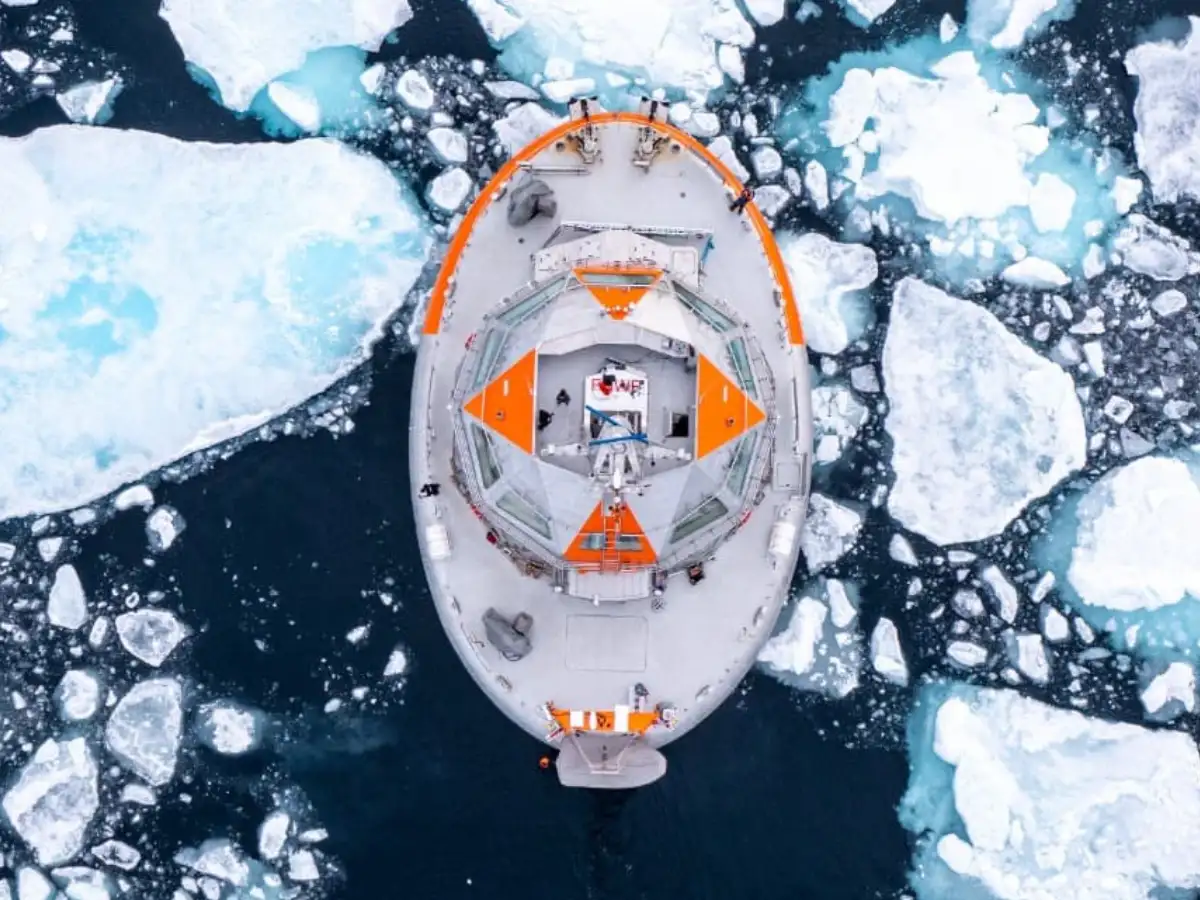
Imagine spending eight months aboard a ship frozen into Arctic pack ice, with no sunlight for the majority of it, and the nearest help potentially a week away. That is precisely what a crew of 12 scientists, engineers, sailors, and a physician has agreed to do, and they’re doing it entirely on purpose.
This July, the 26-meter research vessel and platform Tara Polar Station is set to leave France, pick up several scientists in northern Norway and head into Russian waters. By mid-September 2026, the ship is expected to be encased in pack ice in the central Arctic Ocean, where its crew of 12 will drift for eight months through the Arctic winter and into spring, according to the Tara Ocean Foundation.

For the first time, the Tara Polar Station will enable a continuous long-term study of the central Arctic Ocean through all seasons. According to a vision paper, ‘Tara Polar Station: Advancing Scientific Understanding of the Central Arctic Ocean over the Next Twenty Years,’ published in Elementa: Science of the Anthropocene, the Tara Polar Station is designed to drift with the ice pack and withstand the harshest of polar conditions, with an operational autonomy of up to 500 days.
This is not a survival stunt. It is science, and the stakes could not be higher.
Why the Arctic Ocean urgently needs answers
For most of human history, the central Arctic Ocean has been frozen and inaccessible, its biology largely unknown. Now rapid warming is changing that quickly, and governments will soon have to make consequential decisions about it, including whether to open it to commercial fishing as the ice gives way.
According to the European Commission, the EU and nine countries, including the United States, Canada, China, Norway, and Russia, agreed in June 2021 to ban commercial fishing in the central Arctic Ocean for at least 16 years, giving scientists time to learn about the ecosystem before any exploitation begins. The window is closing fast, and scientists still have next to no idea about what lives under the ice. As polar ecologist Nina Schuback, who will be spending the winter on board the vessel, has pointed out, nobody even knows if fish breed in the central Arctic Ocean. That’s a staggering blind spot for an ocean that covers millions of square kilometers.