Get all your news in one place.
100's of premium titles.
One app.
Start reading
The Economic Times
The Economic Times

Scientists scanned this man's brain and found something extraordinary. These tiny habits made him regarded as 'world's happiest man'

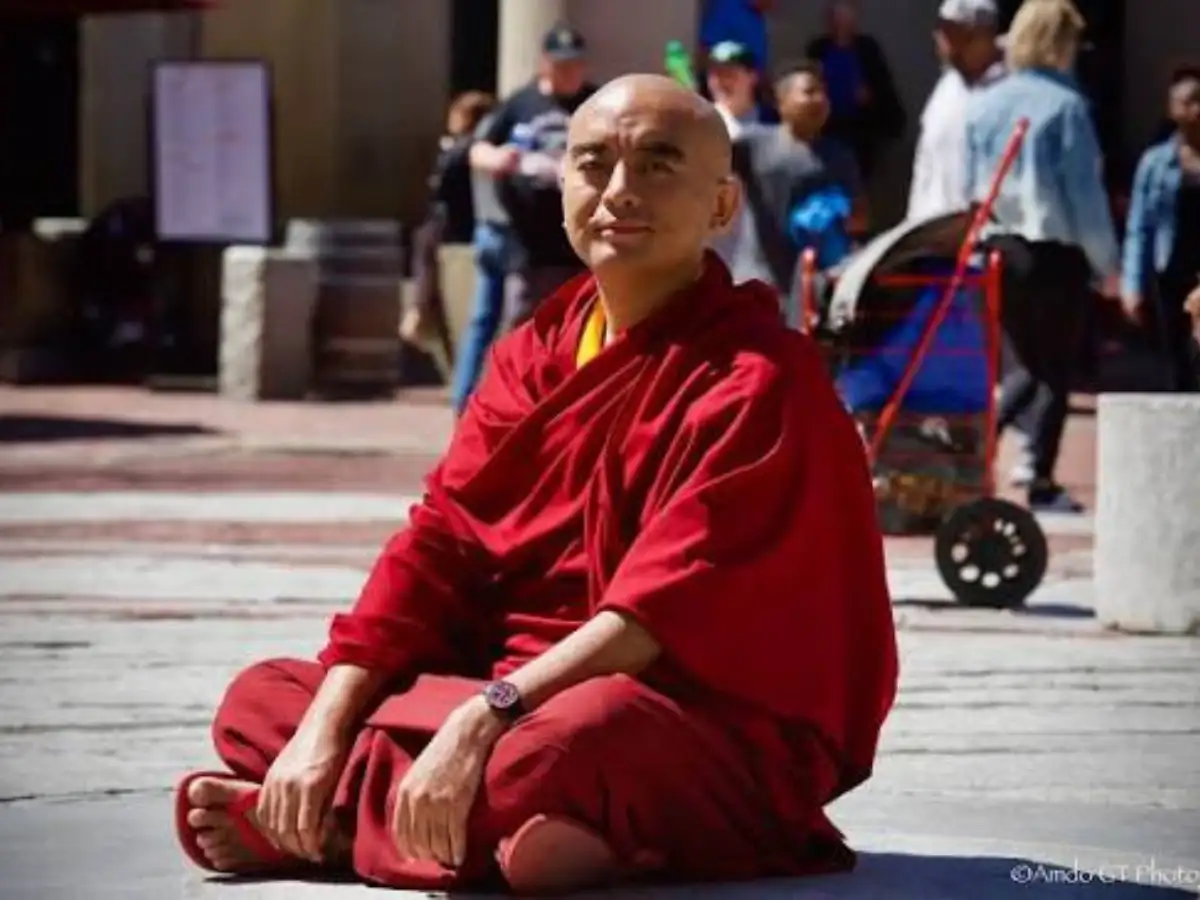
Scientists once tagged Tibetan Buddhist monk Yongey Mingyur Rinpoche with a label of the "happiest man on Earth." Laboratory scans of his brain revealed unprecedented levels of activity, while separate tests showed his biological brain age was nearly a decade younger than his physical age of 41. A NYT bestselling author for The Joy of Living, Mingyur (Rinpoche is an honorary title meaning, roughly, “precious one”) famously slipped out of his monastery to live as an anonymous, homeless ascetic for four years, according to a Guardian report. Blending modern neuroscience with ancient Himalayan wisdom and a warm sense of humor, he offers a deeply practical guide for navigating stress, uncertainty, and the pressures of modern life.

Mingyur's core teachings directly target the modern professional's daily struggles: managing career burnout, breaking consumerist feedback loops, navigating uncertainty, and dismantling deep-seated anxieties over success and failure. His insights focus on transforming everyday friction, from office politics and noisy commutes to chronic overthinking, into actionable tools for sustainable mental clarity.

Here are 10 life lessons from Yongey Mingyur Rinpoche

1. Swap cheap convenience for deep contentment

“As the Dalai Lama says, we have everything at the touch of a finger, and so when we start to feel lonely, incomplete, bored – we protect ourselves with whatever: eating ice-cream, our smartphone, coffee. We try to get away from them, but those feelings are wisdom, in a way. The really important thing is to sit with them, embrace them as a path to explore," he told Guardian's Joel Snape.

Modern life offers endless friction-free stimulation, leading us to reflexively soothe minor discomforts with digital doomscrolling or instant gratification. Mingyur explains that these moments of boredom or emptiness are actually valuable signals. Instead of fleeing from discomfort, treating it as an internal compass allows us to uncover lasting contentment rather than superficial fixes.

When you feel the urge to check your phone while watching a movie or waiting in line, pause for 30 seconds. Sit directly with the boredom or restlessness without reaching for a screen, letting the sensation pass naturally.

2. Treat major life disruptions as opportunities for growth

In the words of Mingyur, “Modern life is full of adventure. When you turn 18, start a new job, start a new relationship – each of those are opportunities for change.”

Having voluntarily abandoned his comfortable monastic life to live as a homeless yogi and surviving near-fatal food poisoning in the process, he learned that relinquishing control is the key to inner peace. We do not need extreme hardships to practice adaptability; major career pivots, new projects, or everyday routine shifts serve as ideal training grounds for building mental flexibility.

Whenever you feel stuck in a rut, introduce one small, unfamiliar element to your day such as taking an alternate route to work or trying a new activity. This would gradually expand your comfort zone.

3. Turn everyday distractions into supports for focus

“For meditation, you need to know two things. One, you can make everything support for meditation – you can meditate anytime, anywhere, with anything. Second, you have to have some creative element with your meditation: everything becomes a friend to the meditation," the "happiest man in the world" says.

Meditation does not require absolute silence or an isolated sanctuary. He teaches that surrounding noises, chaotic environments, and internal chatter should not be viewed as obstacles; instead, they can be utilized as the primary focal points of your practice.

When working in a noisy open-plan office or commuting, refrain from fighting the background noise. Shift your attention directly to the sounds around you, using them as an anchor for open awareness.

4. Apply the 'three pillars' to rewire habitual mindsets

“We think about three things in Tibetan Buddhism: view, meditation and application... View is the mindset: we believe that everybody has an inner sky, the qualities of awareness, love, compassion and wisdom. We practise meditation, and then we practise application – building new habits.”

Sustainable mindset shifts require three sequential elements: establishing the foundational belief that peace is inherently present (View), practicing direct awareness (Meditation), and actively translating that awareness into daily conduct (Application). Changing ingrained negative perceptions requires repetitive, deliberate behavioral habits.

Practice the "Application" phase daily by identifying a positive quality in a challenging colleague or difficult business associate before entering a meeting with them.

5. Practice hyper-specific gratitude

“I appreciate that I have senses, that there’s a roof above me, that I have at least one or two friends or family. When you begin to appreciate these things, you start to appreciate the quality of your life and everything around you," he told the publication.

Generic gratitude lists often become automatic and lose their emotional impact over time. Buddhist monk Yongey Mingyur Rinpoche advocates for micro-awareness, shifting attention to basic, highly specific physical realities that we routinely take for granted, such as shelter, air temperature, or bodily senses.

Utilise brief gaps during your workday, such as waiting for a file to download or standing in an elevator, to mentally note a single, specific comfort right in front of you.

6. Do not fight anxiety, connect with your "Inner Sky"

“When I began to learn meditation from my father, I asked him how to fight them. He said: ‘Don’t fight.’ The first reason is that if you fight, panic becomes stronger... A storm cloud can’t change the nature of the sky – it comes and then it goes. You just have to connect with the inner sky," the monk said.

Attempting to suppress or combat intense panic and anxiety only intensifies the emotion. Drawing from his personal childhood struggle with panic disorders, he explained that difficult emotions are temporary weather patterns, whereas fundamental awareness remains vast and unaltered like the sky.

During periods of severe workplace stress, ground your awareness in physical sensations, such as feeling your feet firmly planted on the floor or noticing ambient room temperature, rather than engaging with spiraling thoughts.

7. Recognize "Gossipy Neurons" and untangle false perceptions

“In your brain, the scientists say - there's a lot of neurons in your brain, and they talk a lot! They love gossip! Gossipy neurons... So, if you recognize that this is my own perception... 98% of your perception is not real, but you created it," he said in a video titled 'What causes anxiety and suffering.'

Brain neural networks frequently magnify minor concerns into perceived existential threats through repetitive internal dialogue. The Buddhist monk highlights that the vast majority of our catastrophizing thoughts are mental fabrications rather than objective reality. Recognizing these self-generated narratives allows us to disempower them.

When caught in a loop of self-doubt or worry, label the thought pattern as "neuron gossip." Step back objectively to separate factual data from internal projection.

8. Address physical distress before mental conditioning

“At the beginning, the first step for me was going to the doctor... The second step is deep breathing... Step three. Now you need to work with the behavioral level, so do physical exercise... take care with your diet. Do not drink high levels of caffeine... Number four. Now you begin to learn meditation," said Yongey Mingyur Rinpoche in a lesson on 'Seven steps to work with panic attacks'.

Psychological and meditative practices are far less effective when the physical nervous system is overstimulated or exhausted. He advocates for a structured, bottom-up approach: rule out medical issues, regulate the nervous system with deep breathing, adjust diet and exercise, and only then proceed to formal mental training.

Before addressing complex professional burnout through mindset work, audit your biological fundamentals: reduce afternoon caffeine intake, maintain a consistent sleep schedule, and engage in daily physical exercise.

9. Practice in short bursts to outsmart Your "Monkey Mind"

“The traditional teaching says keep it short time. 1 second, 2 seconds, good enough. But we need to repeat again, repeat again, repeat again... This is like a mental exercise it's short time but repeat again again again," the monk says.

For modern minds accustomed to short attention spans and rapid context-switching, attempting extended, rigid meditation sessions often leads to frustration. Rinpoche emphasizes the principle of "short times, many times"—brief moments of awareness repeated consistently throughout the day to build mental endurance.

Set periodic reminders during work to execute 5-second "awareness breaks." Pause briefly, take a single conscious breath, notice your surroundings, and then resume your tasks.

10. Recognize how aversion and craving distort reality

“Aversion makes whatever phenomena, whatever situation, whatever the sensation as soon as if you try to push away that thing become unpleasant... Craving makes things away from you like the neighbors grass always greener," Mingyur said.

Human suffering is fundamentally driven by two opposing mental habits: pushing away unwanted experiences (aversion) and desperately clinging to desired outcomes (craving). Aversion causes minor inconveniences to feel overwhelming, while craving creates a persistent sense of lack that keeps satisfaction out of reach.

When facing an unwanted delay or unfavorable outcome, notice if your immediate impulse is to push the reality away. Acknowledge the current situation as it exists without immediately judging it as good or bad.

Sign up to read this article
Read news from 100's of titles, curated specifically for you.
Already a member? Sign in here
Related Stories
Top stories on inkl right now
One subscription that gives you access to news from hundreds of sites
Already a member? Sign in here
Our Picks
Fourteen days free
Download the app
One app. One membership.
100+ trusted global sources.