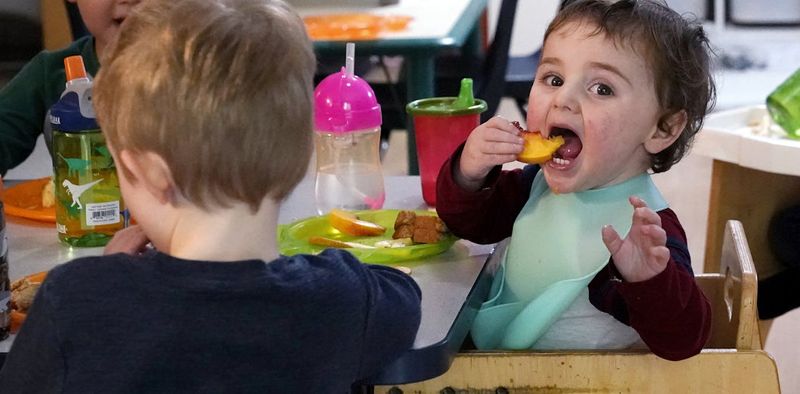
For preschoolers, fear of new foods is common — and responding can feel anything but simple Feeding children can be challenging. It is sometimes hard to know if you’re getting it right. The Conversation · May 7
In the age of AI, human creative output is becoming a luxury Imagine two identical spoons. One is hand-wrought from silver by a skilled metalworker. The other, a base-metal facsimile, was mass-produced by a machine. Which would you value more? Most of us would say the handmade spoon. The Conversation · May 5
How should schools teach AI? 3 models to consider Students across Canada are exposed to artificial intelligence (AI) whether through search engines, writing assistants, automated recommendation systems or social media. The Conversation · May 3
Worried about food prices? Investment in public infrastructure pays If you’ve been to the supermarket recently, you know food prices are high. Politicians looking for a fix are considering government-run grocery stores. The Conversation · Apr 29
Coercion isn’t care, and new laws that enforce treatment and confinement are dangerous The Supreme Court of Canada has described the right to refuse unwanted medical treatment as “fundamental to a person’s dignity and autonomy, [including] in the context of treatment for mental illness.” The Conversation · Apr 26
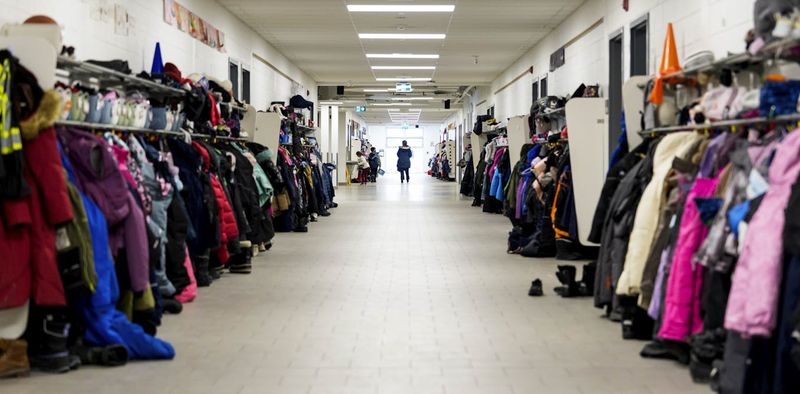
What Ontarians need to know about ‘student achievement’ reforms that will run school boards like businesses The Ontario government has introduced legislation that will make its school boards run more like businesses. The recently announced Putting Student Achievement First Act reduces the power of elected trustees and creates a powerful new chief executive officer (CEO) position to head school boards. The Conversation · Apr 16
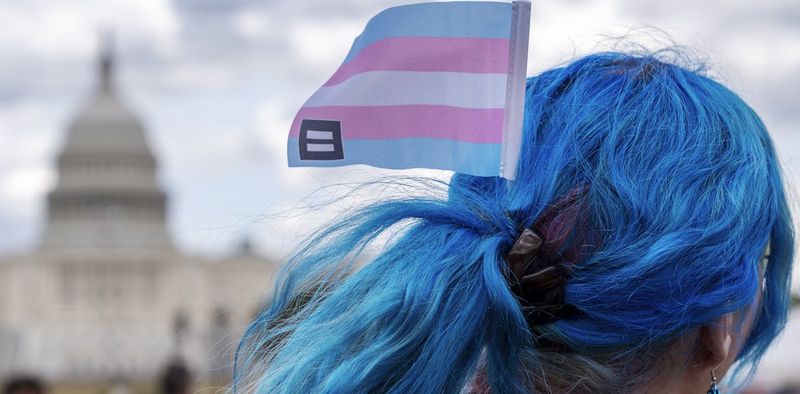
Counting trans people: Why better data collection is essential for better policy In the wake of Trans Day of Visibility, the risks of being seen are clearer than ever, from rising hate crimes and online harassment to the spread of anti-trans legislation. The Conversation · Apr 1
Fact check: Pierre Poilievre’s misinformation on Joe Rogan’s podcast disrespects Canadians Conservative Leader Pierre Poilievre, head of Canada’s official opposition, recently became the first Canadian political leader to appear on the controversial Joe Rogan Experience podcast. The Conversation · Mar 24
People studying to become teachers speak about Islamophobia and anti-Palestinian racism in Ontario schools The rise of anti-Muslim and anti-Palestinian racism is playing out in Ontario schools, widely influenced by broader geopolitical and social issues. The Conversation · Mar 23
Not just boys: The overlooked story of ADHD in women and girls When people think about attention-deficit/hyperactivity disorder (ADHD), they often picture a hyperactive young boy running around a classroom, not the quiet girl daydreaming in the corner, the chatty student who can’t finish her work or the mother who is chronically late and constantly searching for her keys. The Conversation · Mar 22
Ontario’s proposed nuclear waste repository must obtain consent from all affected First Nations In January, the Impact Assessment Agency of Canada (IAAC) initiated an assessment of a proposed nuclear waste repository in northwestern Ontario. The repository is being advanced by the Nuclear Waste Management Organization (NWMO), which is charged with finding a long-term solution to Canada’s mounting nuclear fuel waste. The Conversation · Mar 22
From gym to jawline: What looksmaxxing says about modern masculinity Young men and teenage boys are learning to see their faces and bodies as projects to measure and optimize. The Conversation · Mar 19
B.C.’s switch to permanent DST adds to the ‘perfect storm’ for poorer adolescent sleep and mental health The British Columbia government recently announced the province will adopt permanent daylight saving time (DST). It framed the decision as a way to improve health, reduce disruptions, simplify scheduling and provide more evening daylight. The Conversation · Mar 9
From Minneapolis to Toronto and Bogotá, cities showcase new ways to address crises Crises seem to be everywhere. We live through a moment of generalized crisis — called poly– or perma-crisis by some. In this context, the nation-state often appears as the default institution and ideological framework for addressing challenges. But the nation-state is not always the best placed entity to respond to… The Conversation · Feb 18
The Conversation · Feb 12 How Indigenous athletes challenge simple ideas of national unity at the Olympics As the 2026 Winter Olympics in Milan Cortina unfold, the world is once again turning its gaze to the podium. But for most nations, the importance of the Olympics extends well beyond medals.
The Conversation · Feb 12 The war after the war: How violence is passed down through generations Editor’s note: This story is the first in a series of articles from Canada’s top social sciences and humanities academics. Click here to register for In Conversation with Myriam Denov, Feb. 25 at 1 p.m. ET. This is a virtual event co-hosted by The Conversation Canada and the Social Sciences…
The Conversation · Jan 19 The flu is everywhere. So why aren’t Canadians getting vaccinated for viral illnesses? The death of Prashant Sreekumar made headlines across Canada when the 43-year-old father of three died in the emergency room of Edmonton’s Grey Nuns hospital after waiting for eight hours with chest pains.
The Conversation · Dec 17, 2025 What happens when managers don’t act? New research reveals the consequences can be severe Most people recognize that we shouldn’t actively harm others at work. Yet people tend to assume that failing to act is relatively benign or inconsequential.
The Conversation · Dec 15, 2025 What Canada’s public sector voting divide could mean for future elections The Liberal government’s recent budget aims to reduce the size of the federal public service by around 40,000 positions, which is roughly 10 per cent of the workforce. The government argues that the size of the public service has swelled to an unsustainable level.
The Conversation · Dec 7, 2025 Possible ancient artifacts are found in a B.C. thrift shop — and archeology scholars are on the case An unusual email arrived in the inbox of a faculty member at the department of archeology at Simon Fraser University in the spring of 2024.
The Conversation · Nov 17, 2025 Will AI automation really kill jobs? A new survey finds Canadian workers are split on the answer Since 2023, there has been a steady increase in media stories about the potential for automation by artificial intelligence (AI) to displace workers. As sociologists who study what people think and feel about work, we wondered if these narratives were gaining any traction among workers.
The Conversation · Nov 12, 2025 Team work and power plays: What Alberta’s Bill 2 says about Canadian democracy Across Canada, elected representatives are opting to toe the party line on major discussions about the future of the country — or even to sit out the debates entirely.
The Conversation · Oct 20, 2025 From warning to reality: Canada’s escalating hate crisis demands action Widespread, unrestrained hatred and polarization in the United States recently jolted Americans when conservative influencer Charlie Kirk was gunned down in broad daylight. As thousands of attentive students at Kirk’s Utah event watched in horror, thousands more have seen it unfold online — an experience none will easily forget.
The Conversation · Oct 20, 2025 New study reveals how illegal wildlife trade intersects with organized crime in Canada When most people hear terms like poaching, wildlife trafficking or illegal wildlife trade, they probably think of threatened species such as elephants, rhinos, tigers or sharks. Geographically, wildlife crime may feel like a problem confined to southern Africa or southeast and East Asia.
The Conversation · Oct 6, 2025 More than a quarter of Canadian teens have experienced sexual violence online Law enforcement agencies across Canada are sounding the alarm over a rise in sexual extortion (“sextortion”) against young people.













 The Conversation
