Source of one of rarest meteorites to fall on Earth discovered by scientists The Ivuna meteorite landed in Tanzania in December 1938 Wales Online · Oct 20, 2022
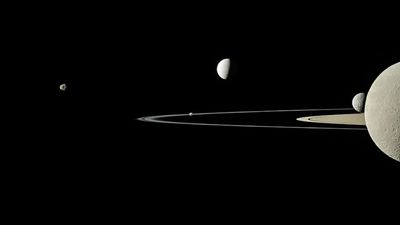
Saturn's moons: Facts about the weird and wonderful satellites of the ringed planet Saturn has the most moons of any other planet in the solar system. Here we explore some of the 274 moons that orbit the ringed planet. Space · Oct 19, 2022
Astronomers search for signal from "interstellar internet" nodes Two astronomers suggest SETI researchers should listen for signals from alien spacecraft positioned to take advantage of our Sun’s gravitational lensing effect. Inverse · Oct 18, 2022
The Moon has been trying to escape Earth for aeons, new research suggests We recently discovered the perfect place to uncover the long-term history of our receding moon. Inverse · Oct 16, 2022
Our Place in Space solar system trail lands in Liverpool - pictures The trail will be in Liverpool for the next three weeks Liverpool Echo · Oct 14, 2022
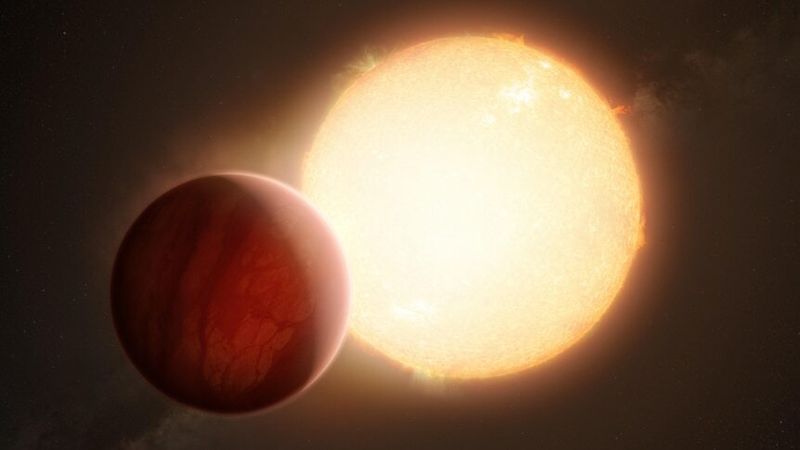
Astronomers stumble across heaviest element ever discovered on an exoplanet, on a gas giant so hot it could 'rain iron' Barium, which is two and a half heavier than iron, was found on two ultra-hot gas giants orbiting stars outside our solar system. ABC News · Oct 14, 2022
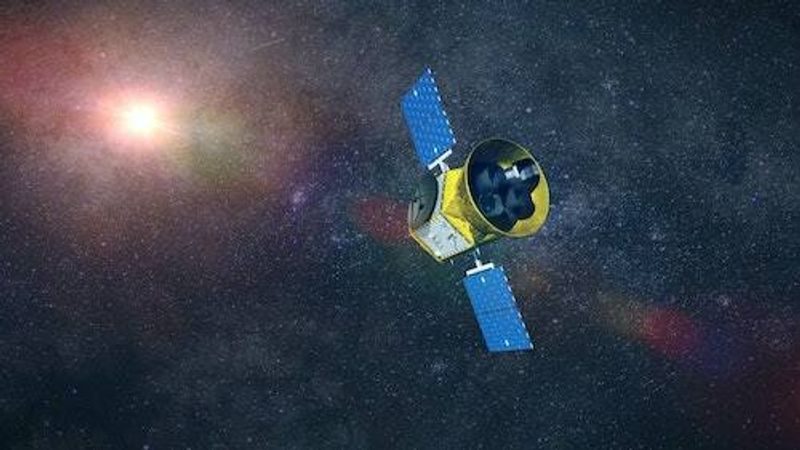
NASA gets its planet-hunting telescope back online after glitch NASA's extrasolar planet hunter TESS is pausing observations while it works to recover and go back to finding distant worlds. Inverse · Oct 13, 2022
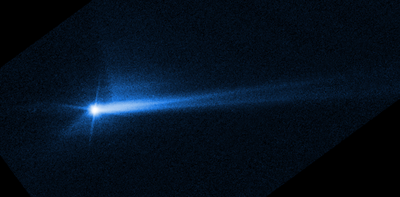
NASA's asteroid deflection mission was more successful than expected. An expert explains how On September 26, after a nine-month journey through the Solar System, NASA’s Double Asteroid Redirection Test (DART) mission impacted an asteroid called Dimorphos. The Conversation · Oct 12, 2022
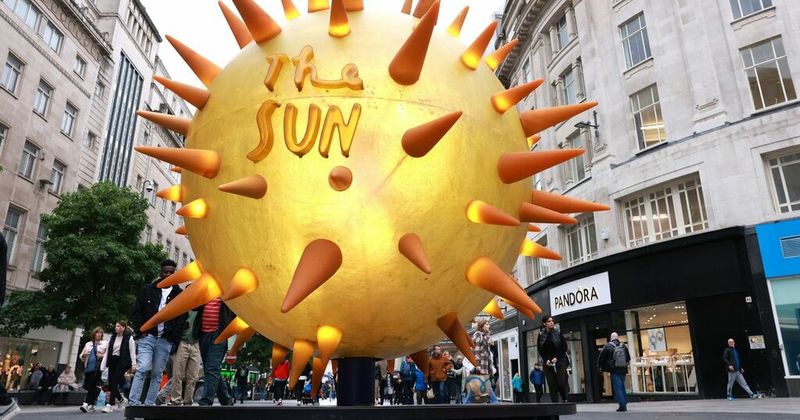
Our Place in Space: Full guide to Liverpool solar system sculpture trail 2022 The trail is free to visit and features models of the sun and planets Liverpool Echo · Oct 10, 2022
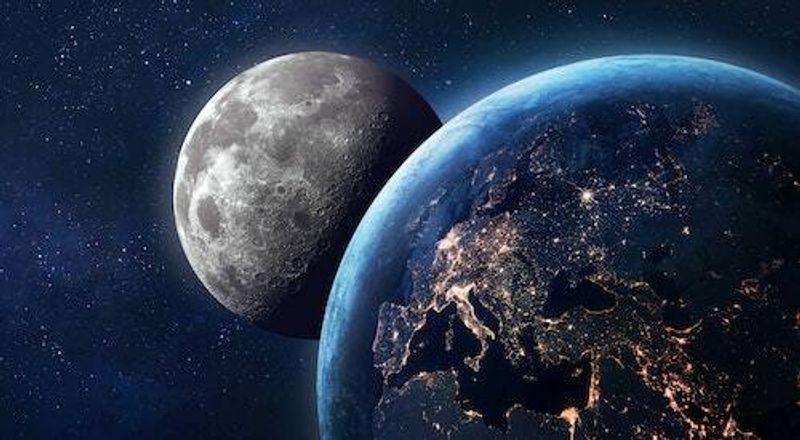
Our moon has been slowly drifting away from Earth over the past 2.5 billion years Looking up at the moon in the night sky, you would never imagine that it is slowly moving away from Earth. But we know otherwise. In 1969, NASA’s Apollo missions installed reflective panels on the moon. These have shown that the moon is currently moving 3.8 cm away from the… The Conversation · Oct 10, 2022
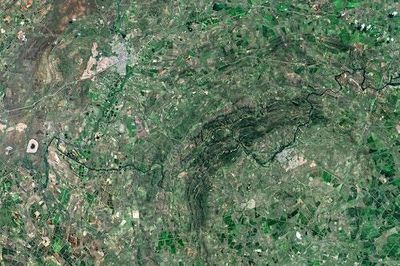
Earth’s most powerful asteroid impact may be even bigger than we thought But new research published in the Journal of Geophysical Research: Planets arrives at a different size and impact velocity for the Vredefort impactor. Inverse · Oct 8, 2022
Stargazing in October: Halloween fireballs This month, we’ll enjoy a display of Orionid meteors, writes Nigel Henbest The Independent UK · Oct 7, 2022
Draconids: You need to see the most unpredictable meteor shower peak this week The Draconids may not be as prolific as some meteors but they are fascinating none-the-less. Inverse · Oct 3, 2022
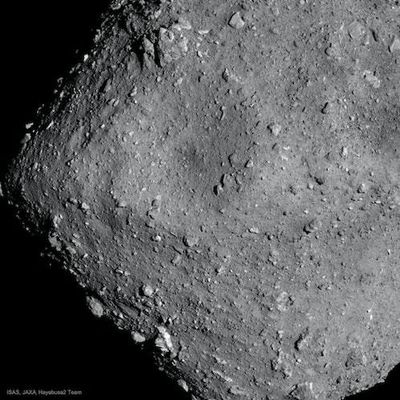
Study: Analysis of asteroid reveals unexpected evidence of mini-ocean — and carbonation Asteroid Ryugu has some dangerous seltzer for you, according to recent analysis by Japanese scientists on samples returned from JAXA's Hayabusa2. Inverse · Oct 1, 2022
The Conversation · Sep 28, 2022 Glass beads in lunar soil reveal ancient asteroid bombardments on the Moon and Earth In 2020, China’s Chang'e 5 mission sampled more than a kilogram of Moon rock and soil and brought it back to Earth. The samples contain countless tiny beads of glass, created when asteroids hit the Moon and splashed out droplets of molten rock around the impact site.
Daily Mirror · Sep 27, 2022 Stargazers share Jupiter photos in planet's closest approach to Earth for generations Jupiter, the largest planet in our solar system, mad its closes pass to Earth since 1963 last night, with several stargazers heading outside to catch a glimpse of it
ABC News · Sep 27, 2022 How a Canberra space station played an essential role in NASA's DART asteroid mission As the world watched NASA complete the globe's first full-scale planetary defence test, few knew the crucial role played by a team on the outskirts of Australia's national capital.
The Conversation · Sep 25, 2022 In a world first, NASA's DART mission is about to smash into an asteroid. What will we learn? On September 26 at 11.15pm UTC, NASA’s DART mission (Double Asteroid Redirection Test) will be the first to deliberately and measurably change the motion of a significant body in our Solar System. In other words, it will smash into an asteroid.
Belfast Live · Sep 25, 2022 Giant solar system trail coming back to Northern Ireland in 2023 It has already been experienced by over 300,000 people in Derry, Belfast and Cambridge to date
Liverpool Echo · Sep 23, 2022 Huge solar system sculpture trail coming to Liverpool on UK tour The Our Place in Space 8k trail will begin on Church Street and run all the way to Otterspool
Roll Call · Sep 23, 2022 Congress is about to lose its science guy - Roll Call He brought his math Ph.D. (and his solar system tie) to the House. Now Rep. Jerry McNerney is planning his next AI chapter.
ABC News · Sep 22, 2022 NASA releases clearest view of Neptune's rings in decades NASA has released its first image of Neptune captured by the James Webb Space Telescope as it shows off its capabilities within our home solar system.
Inverse · Sep 20, 2022 Saturn's rings were once a moon ripped apart by bizarre forces Resonance with not-so-near Neptune destabilized the moon 100 million years ago.
The Conversation · Sep 19, 2022 For the first time, robots on Mars found meteorite impact craters by sensing seismic shock waves Since 2018, NASA’s InSight mission to Mars has recorded seismic waves from more than 1,300 marsquakes in its quest to probe the internal structure of the red planet. The solar panels of the car-sized robotic lander have become caked with Martian dust, and NASA scientists expect it will completely power…
The Conversation · Sep 19, 2022 Super-Earths are bigger, more common and more habitable than Earth itself – and astronomers are discovering more of the billions they think are out there Astronomers now routinely discover planets orbiting stars outside of the solar system – they’re called exoplanets. But in summer 2022, teams working on NASA’s Transiting Exoplanet Survey Satellite found a few particularly interesting planets orbiting in the habitable zones of their parent stars.














 International Business Times UK
 Space
Space
 International Business Times
 The Economic Times
 LiveScience
 The Conversation
 The Independent UK
 Euronews
 The Guardian - UK
 Bored Panda
 The Times of India
 Bangkok Post
