Ohio woman was at a restaurant opening with her family. Then her ex-husband walked in to carry out a ‘public execution’ “She is officially the luckiest person on earth at that moment.” We Got This Covered · Sep 11
79 Nostalgic Aussie Memories That Bring Back The Australia Many Grew Up With Through posts, stories, and shared experiences, members of this subreddit explore the quirks, joys, and cultural moments that define Australia. From cherished memories of days gone by to reflections on national traditions, it’s a space where Australians and fans of the country can relive the past together. Bored Panda · Sep 11
A newly discovered solar phenomenon could help scientists predict the Sun’s next powerful outburst and solar flare New solar telescope observations reveal swirling plasma movements on the Sun's surface. This phenomenon, known as Kelvin-Helmholtz instability, occurs at magnetic region boundaries. These turbulent motions may help explain how powerful solar flares begin and store energy. Understanding these processes could improve future space weather forecasting for Earth. The Daniel… The Economic Times · Sep 11
5 Star Trek Technologies That Came True We don’t have warp power quite yet, but in the meantime... Inverse · Sep 11
Isar Aerospace Reaches Orbit, Raising the Competition for SpaceX. What That Actually Means for SPCX Stock. German startup Isar Aerospace's rocket became the first in Europe to achieve the feat. Barchart · Sep 11
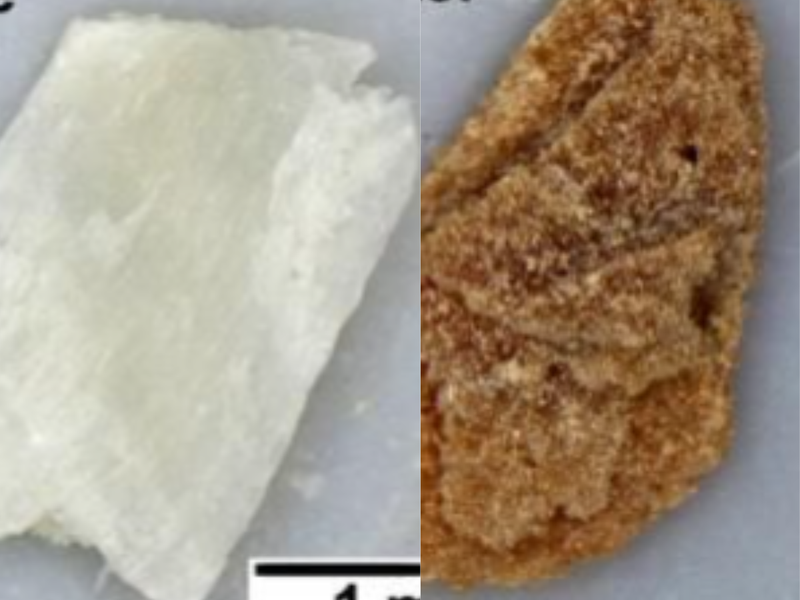
Researchers crushed mussel, cockle and oyster shells collected from a Dublin beach and added them to polluted water; the experiment cleaned the water while recovering valuable metals A team of researchers discovered that discarded seashells have the ability to purify water by removing rare earth metals. Among various shell types, oyster shells stood out for their unique porous structure that effectively transforms dissolved metals into solid minerals. Given the aquaculture industry’s yearly production of millions of tonnes… The Economic Times · Sep 11
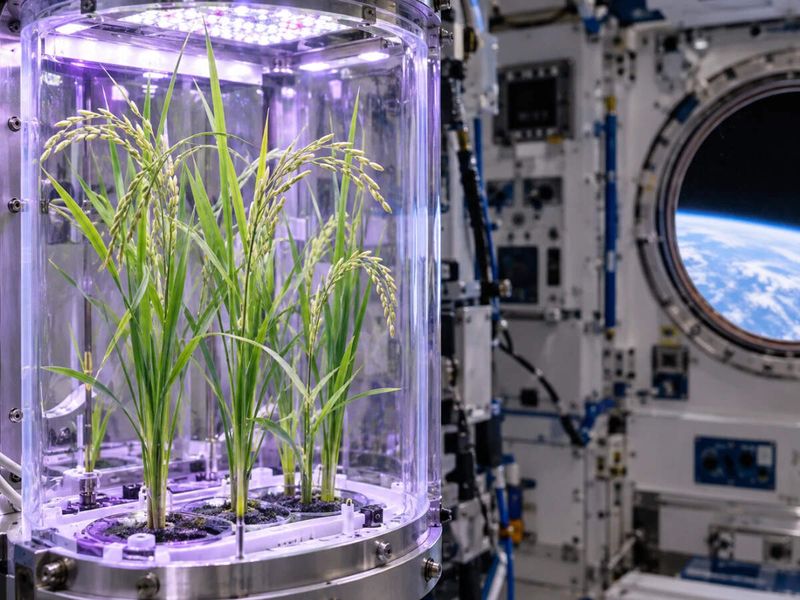
In 2022, China grew rice from seed to seed on Tiangong for 120 days; six seeds produced 59, and their descendants reached a third generation on Earth Chinese astronauts have made remarkable strides in agricultural innovation by growing rice aboard the Tiangong space station. The experiment led to a successful seed-to-seed growth cycle, and subsequent generations thrived back on Earth, yielding rice with enhanced sweetness and nutritional value. This success opens exciting possibilities for future food cultivation… The Economic Times · Sep 11
'Hope' Ending Explained: Could There Be A Sequel? Director Teases "Maybe" 'Hope' director Na Hong-jin reveals the original script was "too long and too dense for a single movie." Inverse · Sep 10
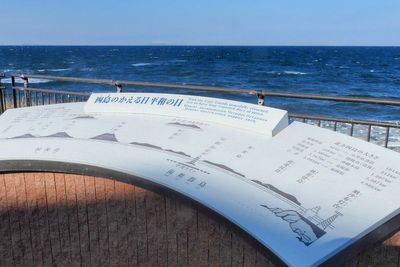
Japan Backed UN Map Resolution Then Protested Russian Colouring of Disputed Kuril Islands Japan has protested the Equal Earth map's depiction of four disputed Kuril Islands, prompting a change to its Japanese-language version while the English version remains unchanged. International Business Times UK · Sep 10
NASA wants you to take pictures of clouds – here’s why The space agency is launching a citizen scientist challenge this month The Independent UK · Sep 10
Bill Gates is betting on a power source buried 15,000 feet underground, the massive Google-backed geothermal project that could change how America gets electricity Bill Gates is backing Fervo Energy's cutting-edge geothermal technology designed for clean energy production. This advanced process involves drilling deep into the earth's crust to harness geothermal energy for electricity generation. Fervo has also landed a major contract to supply Google with this sustainable power source, set to deliver consistent,… The Economic Times · Sep 10
3 Under-$20 Stocks Tied to the Future of U.S. Energy and Materials USA Rare Earth, Energy Fuels, and Uranium Energy trade under $20 and carry Moderate Buy ratings, with analyst price targets implying 40% to 90% upside amid rare earth and nuclear growth trends. MarketBeat · Sep 10
3D printing to colonise Mars after the Moon: the biomaterials tested by scientists As the Artemis programme readies a Moon landing with an Italian habitat module, research tests 3D-printed homes on Mars using regolith and yeast. From Hong Kong labs to NASA, 3D tech could redefine life in space. Euronews · Sep 10
How did an ‘impossible’ photon survive 2 billion light-years? Scientists point to a transformation involving axion-like particles An extremely energetic photon from GRB 221009A has puzzled physicists. This photon traveled over two billion light-years to reach Earth detectors. Standard physics predicts such high-energy photons should not survive this vast cosmic journey. Researchers are exploring axion-like particles and Lorentz invariance violation as explanations. These new theories offer a… The Economic Times · Sep 10
The Economic Times · Sep 10 In 1985, Soviet engineers sent two balloons floating through Venus for 46.5 hours. Their motherships then used the planet’s gravity to chase Halley’s Comet Soviet spacecraft Vega 1 and Vega 2 undertook a dual mission to Venus and Halley's Comet. These probes deployed landers and balloons onto Venus before flying past the comet. Vega 1 and Vega 2 successfully transmitted data from Venus's atmosphere and surface. The spacecraft then gathered crucial information about Halley's…
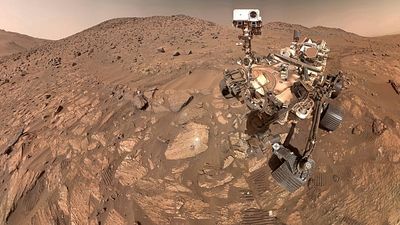
The Economic Times · Sep 10 In 2025, scientists found 'strongest hints yet' of life on Mars and K2-18b—but, a survey of hundreds of astrobiologists say we still haven’t found aliens Recent scientific findings on K2-18b and Mars sparked alien life speculation. A survey revealed few astrobiologists believed these discoveries confirmed extraterrestrial life. Researchers found the K2-18b exoplanet evidence less convincing than Martian rock features. Many scientists remained neutral, awaiting further analysis and ruling out non-biological explanations. These intriguing clues offer…
The Independent UK · Sep 10 For these Midwest farmers, regenerative agriculture is about more than soil health. It's spiritual A farmer in Minnesota has transformed a conventional farm using both formal agricultural education and the Indigenous wisdom he learned as a youth growing up in the Guatemalan rainforest
The Economic Times · Sep 10 In 1970, Lunokhod 1 drove 10 km across the Moon before contact ended in 1971; in 2010, LRO found it, and its reflector gave a signal four times Lunokhod 2’s After decades of disappearance, the Soviet rover Lunokhod 1 was found anew by NASA's Lunar Reconnaissance Orbiter. In 2010, physicists utilized laser pulses to pinpoint its reflector, sparking fresh interest in studying the Moon's core. This event not only underscores the importance of meticulous data management but also serves as…
The Economic Times · Sep 10 Northern Lights: Visual treat likely for 20 US states tonight; here's how to get the best view The northern lights, or aurora borealis, that recently illuminated skies over North Dakota, Canada and Iceland followed geomagnetic storms triggered when charged particles from the Sun interacted with gases in Earth’s atmosphere.
The Guardian - UK · Sep 10 ‘Scots are the kindest people on earth!’ Meet the Americans moving to Scotland Since Donald Trump’s re-election in 2024, there has been a 63% rise in Americans renting properties in Scotland. Politics is one reason – but there are many other surprising motivations …
The Economic Times · Sep 10 A hotter planet: August heat smashes climate records Earth experienced its hottest month ever in August, surpassing climate thresholds. This extreme heat resulted from human-caused climate change and a strong El Nino. Global ocean temperatures also tied their all-time record for the warmest month. The United States recorded its hottest summer, breaking records from the Dust Bowl era.…
The Independent UK · Sep 10 Global heat stuck on high. Scientists say August was Earth's hottest month they've measured. The European climate service Copernicus said the Earth just sweltered through its hottest month on record in August
The Conversation · Sep 9 Gondwana really was a supercontinent. And it helped kick-start life on Earth Some 550 million years ago, the Earth looked very different to what it does today. The Southern Hemisphere was dominated by an enormous, single continent known as Gondwana.
The Economic Times · Sep 9 Microsoft is funding a bet on mud: Inside the race to rewet 23 square miles of North Carolina peat before it dries out and burns North Carolina's peatlands, vital carbon stores, are being restored by Pantheon Regeneration. These ancient ecosystems hold twice the carbon of all Earth's forests combined. Draining these lands releases significant greenhouse gases into the atmosphere annually. Pantheon plans to sell carbon credits to fund permanent peatland conservation efforts. This initiative aims…
The Conversation · Sep 9 Africa’s rocks hold ancient stories. We need better ways to document and protect them From the Vredefort Dome in South Africa (the world’s oldest and largest known meteorite-impact structure) to the volcanic lakes of the Great Rift Valley in Kenya, Africa’s landscapes hold some of Earth’s oldest stories. Morocco’s M’Goun Unesco Global Geopark records more than 200 million years of geological history, while Tanzania’s…




















 The Economic Times
 The Conversation
 The Independent UK
 International Business Times UK
 The Times of India
 MyLifeXP
 Times Life
 The Guardian - UK
 Euronews
 Bored Panda
 France 24
 The Guardian - US
