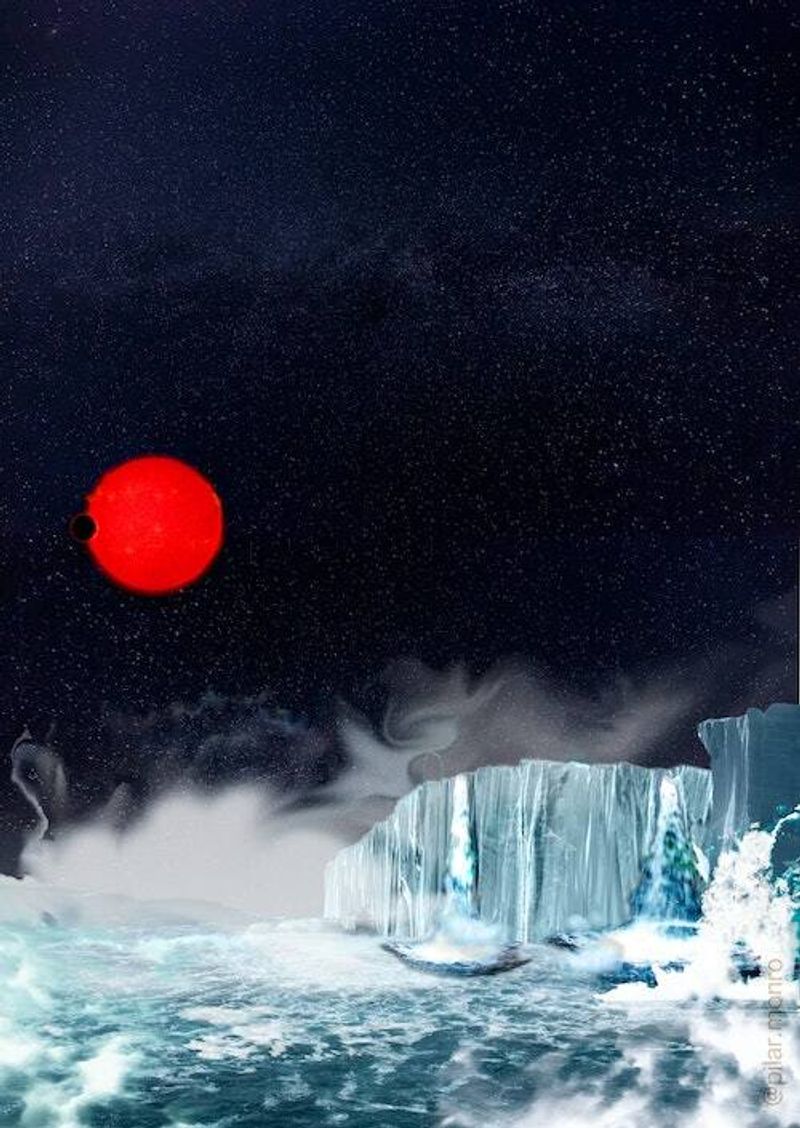
One unusual planet type could be abundant in the universe — study A new study of exoplanet densities reveals that many are about 50% water, whether it’s liquid or ice. Inverse · Sep 8, 2022
How massive stars steal planets – new research Our Sun has a rather lonely existence in the Milky Way galaxy. It sits on its own, four light years away from the nearest star, with only its planetary system for company. But it wasn’t always like this. We almost exclusively observe young stars in groups, so-called stellar nurseries, where… The Conversation · Sep 8, 2022
Seven times people discovered the Americas – and how they got there When Columbus landed in 1492, the Americas had been settled for tens of thousands of years. He wasn’t the first person to discover the continent. Instead, his discovery was the last of many discoveries. The Conversation · Sep 8, 2022
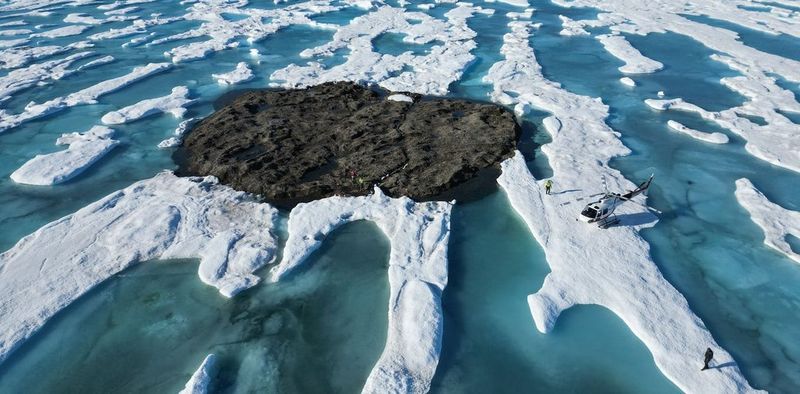
Ghost islands of the Arctic: The world’s ‘northern-most island’ isn’t the first to be erased from the map In 2021, an expedition off the icy northern Greenland coast spotted what appeared to be a previously uncharted island. It was small and gravelly, and it was declared a contender for the title of the most northerly known land mass in the world. The discoverers named it Qeqertaq Avannarleq –… The Conversation · Sep 8, 2022
Humans on Mars could depend on this lunchbox-sized device for survival An MIT-designed module on the Mars Perseverance rover successfully made oxygen on the Red Planet, marking a crucial step toward future crewed missions and even long-term settlements. Inverse · Sep 8, 2022
Commentary: Can space save Earth? The world economy is in the doldrums, pessimism is rife around the world, and most young people, according to one survey, believe climate change means the end of human life on Earth. Los Angeles Times · Sep 8, 2022
Trump once called for nuclear moon tests “Space Policy Directive-6” set the goal of testing nuclear energy on the moon by 2027 Salon · Sep 8, 2022
What’s next for Artemis I after 2nd scrub? ORLANDO, Fla. — What went wrong with Artemis I was on the launch pad at Kennedy Space Center, so that’s where NASA has decided to try and fix it. Orlando Sentinel · Sep 7, 2022
James Webb Telescope captures detailed new images of stars being born in Tarantula Nebula It's hoped the detailed, infrared images will give astronomers new insight into how stars are formed. ABC News · Sep 7, 2022
Technology: NASA telescope captures Tarantula Nebula NASA's James Webb Space Telescope has captured the image of the Tarantula Nebula, the space agency said. Read more on Dynamite News: Dynamite News · Sep 7, 2022
Explained | NASA’s sonification project- translating James Webb telescope images into sound It is now possible to hear images. The Hindu · Sep 7, 2022
Australian work on million-year ice core to resume after pandemic freeze Australian scientists will soon travel more than 1200 kilometres over Antarctic ice to discover the secrets of atmospheric climate change. ABC News · Sep 7, 2022
Why do we always need to wait for 'launch windows' to get a rocket to space? Earlier this week, the Artemis I Moon mission was scrubbed again; now we have to wait for a new launch window. The Conversation · Sep 7, 2022
Webb telescope catches Tarantula Nebula in crisp detail WASHINGTON: A stellar nursery nicknamed the Tarantula Nebula has been captured in crisp detail by NASA's Webb telescope, revealing hitherto unseen features that deepen scientific understanding, the agency said Tuesday. Bangkok Post · Sep 7, 2022
Inverse · Sep 6, 2022 45 years ago this week, Voyager 1 began its journey into history The probe launched weeks after its sibling craft, Voyager 2. Since its launch, it got a close encounter with an intriguing moon and entered interstellar space.
ABC News · Sep 6, 2022 Thwaites 'doomsday' glacier could begin rapid melt with 'just a small kick', researchers say Scientists have mapped underwater terrain near the Thwaites Glacier in West Antarctica for the first time, showing the massive glacier has the potential to retreat at twice the speed observed over the past decade.
Inverse · Sep 6, 2022 Look! Stunning new Webb image of the Tarantula Nebula is an early Halloween treat James Webb Space Telescope's newest infrared images reveal star formation in the Tarantula Nebula and may shed light on nebulae in the early universe.
Daily Mirror · Sep 6, 2022 Astounding photos show rare marine ‘milky seas’ phenomenon for first time After satellite images potentially showing the unique event were published by researchers a sailor made contact saying she had seen it with her own eyes and taken photos
Inverse · Sep 6, 2022 Ancient ice volcanoes may have stained Pluto’s moon blood red Cryovolcanoes may have erupted methane from the interior of Pluto's largest moon, Charon, creating the strange landscape of Mordor Macula at its north pole.
Salon · Sep 6, 2022 Why NASA's Artemis 1 mission matters NASA’s Artemis 1 mission to the Moon sets the stage for routine space exploration beyond Earth
ABC News · Sep 6, 2022 NASA releases pictures of exoplanet 'six to 12 times the mass of Jupiter' in unprecedented detail The exoplanet is 385 light-years away from from Earth but one step closer to finding other habitable planets in our universe.
Orlando Sentinel · Sep 5, 2022 While Artemis scrubs, SpaceX treats Space Coast to launches ORLANDO, Fla. — While hundreds of thousands of people made their way to the Space Coast two weekends in a row for a shot to see the most powerful rocket to ever lift off from Earth, a couple of scrubs for NASA’s Artemis I mission left them disappointed.
Inverse · Sep 5, 2022 You need to see the most elusive planet at opposition in the sky this month Neptune will be at its brightest, enabling you to see a rarely glimpsed planet.
The Guardian - UK · Sep 5, 2022 Starwatch: a pleasing view of Jupiter and the moon to greet the new season The nights are drawing in to help stargazers, and this pair will be brilliantly bright