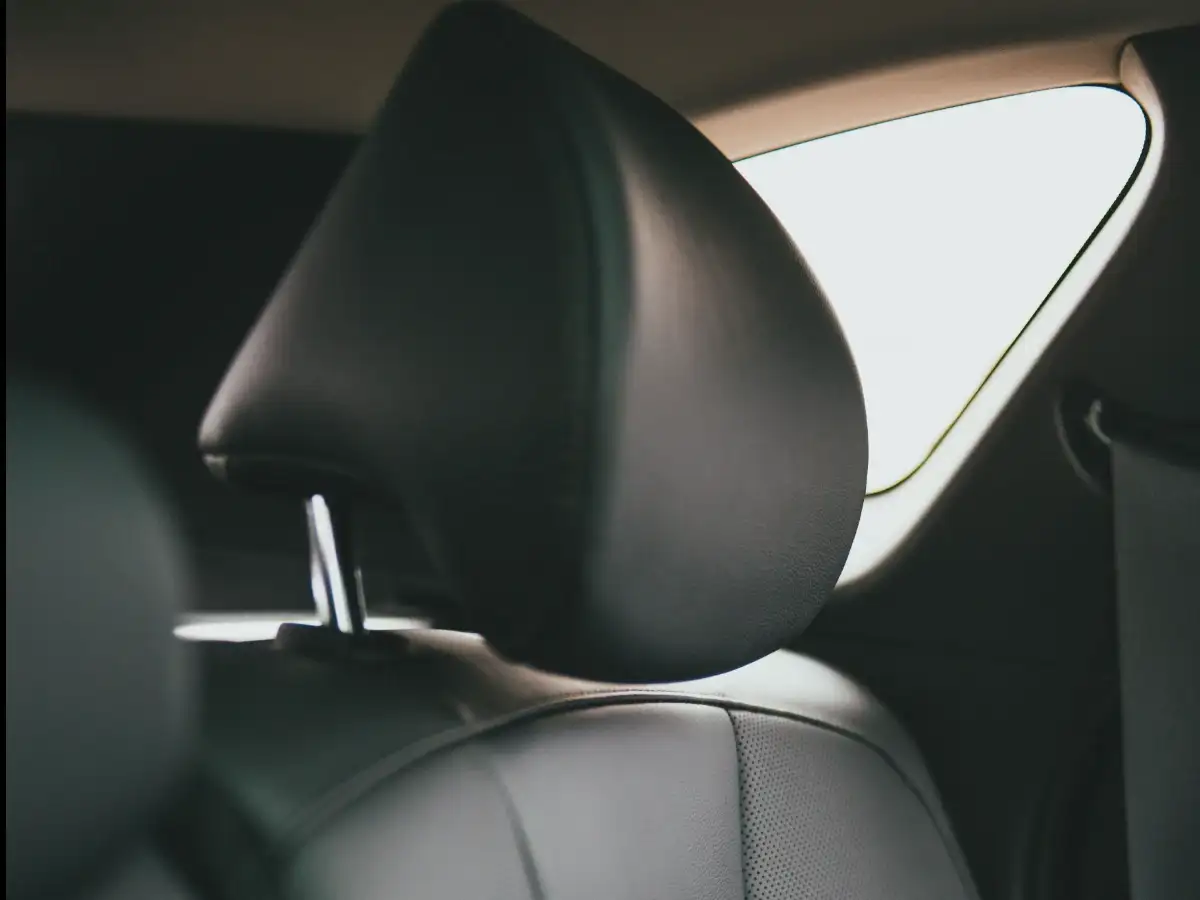
Most of us tend to consider the headrest as one of the more comfortable parts of a car. We use it on long journeys to support our heads, lean back against it at a traffic light, or rest while someone else is driving. What may not come to mind is that this padded support is also a closely regulated safety feature. The National Highway Traffic Safety Administration's laboratory test procedure for head restraints, TP-202aS-01, specifies a maximum backset of 55 mm for front outboard restraints, referring to the distance between the back of the head and the front surface of the restraint. The same procedure sets requirements for height, energy absorption and structural strength.
Why the gap behind your head is more important than a cushion

It is important to consider why the 55 mm requirement exists. Neck injuries can occur in rear-end collisions, including crashes that do not necessarily involve very high speeds. During a rear impact, the seat and the occupant's torso move forward relative to the head, which can produce rapid movement of the neck. Keeping the head restraint close to the head can help limit this movement and reduce the potential for neck injury. NHTSA says the federal head-restraint standard is intended to reduce the frequency and severity of neck injuries in rear-end and other collisions.
NHTSA's testing document explains how the backset is checked in a laboratory setting. Engineers use a head restraint measurement device to establish the position of the restraint and take repeated backset measurements. The procedure records three measurements and uses their average to determine whether the restraint passes the 55 mm requirement. The procedure also specifies minimum head-restraint heights, including a minimum of 800 mm for front outboard seating positions, subject to specified roof-line exceptions.
For drivers, the practical point is that the position of the restraint matters. A restraint set too low may not provide the intended support for the head, while excessive reclining of the seat can increase the distance between the head and restraint. A useful adjustment is to position the restraint so that its upper portion provides support behind the head and neck, rather than leaving it at the setting used by the previous driver.