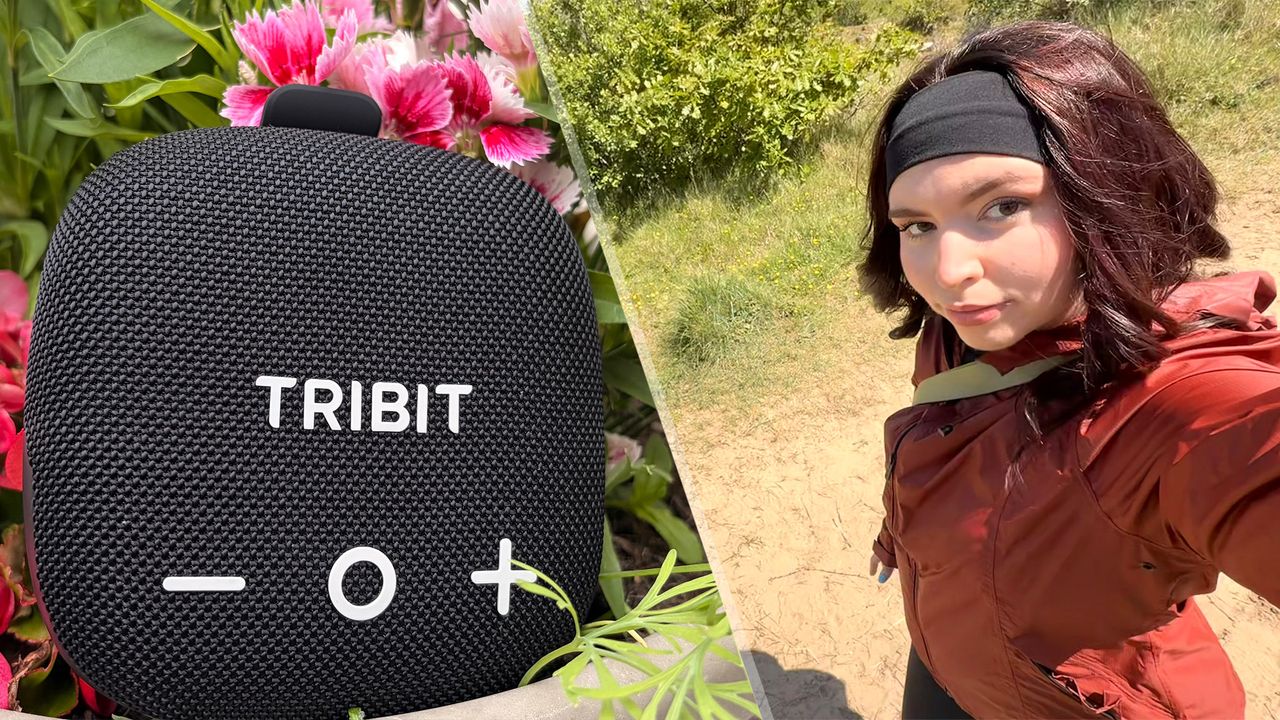
For me, hiking is a form of escapism. Getting out into nature is one of the easiest ways to switch off from the stressors of day-to-day life and reflect on what's happening, or block it out altogether.
But another way I like to unwind is by listening to music. It seems only natural to want to combine the two pastimes.

When I head to a campsite for the weekend, I usually like to bring one of the best Bluetooth speakers with me, like the Tribit PocketGo or the Tribit StormBox Micro 3. And while it can be tempting to take the speaker into the woods to soundtrack a hike, that's probably not the best idea. Here's why.
Sound travels farther than you think
Even though it's just you and your speaker walking the trail, the sound it's making travels a lot farther than you'd think. In an open area, there's not much around to stop the sound from traveling, and not to mention the echo that can be caused by the shape of the landscape.
Many people, including myself, like to sit and listen to the sounds of their surroundings when on their walk. When the sound carries, it can disturb other people on their trail appreciating these sounds — or, worse, disturb the sleeping habits of nocturnal animals.
To combat this, it's best to use some of the best over-ear headphones to keep the listening party private.
Better safe than sorry
This probably goes without saying, but when you're out walking, hiking, or running, you need to stay aware of your surroundings. Depending on the difficulty of the trail, it's important to stay aware of all of the sounds around you.
When you block out environmental sounds, you can miss out on important safety cues like wild animals, falling rocks, or even someone nearby who needs help. Even when listening at lower volumes, it can block out these ambient sounds.
I always think it's best to take in the sounds of nature too. As I mentioned, it helps me clear my mind and can be very good for lowering stress hormones.
A nice compromise here are open earbuds like the Sony LinkBuds Clip, Soundcore AeroClip or Bose Ultra Open. These earbuds let you listen to your music without disturbing nearby wildlife as well as let you keep an ear out for potential danger.
Impact on wildlife
Most importantly, if you care about wild animals' wellbeing, playing music out loud on trails can disrupt local wildlife. This can have a detrimental effect on the entire ecosystem and even lead to entire species being driven out of an area.
It impacts predators and prey in the wild alike, disrupting the food chain in the areas as well as breeding patterns.
Activities such as finding desirable habitat and mates, avoiding predators, protecting young and establishing territories all depend on the acoustical environment.
The US National Park Service
The United States government's National Park Service states that sound plays an important role in ecosystems: "Activities such as finding desirable habitat and mates, avoiding predators, protecting young and establishing territories all depend on the acoustical environment."
Many speakers are marketed for use in the outdoors, and they do a good job at projecting sound when outside. If you're at the beach with friends or having a picnic they're great to have on-hand, but we should be mindful about where we use them.
Next time you're on the trail, keep the speaker back at camp and throw on a pair of headphones or open earbuds. Mother Nature will thank you for it.
More from Tom's Guide
- Netflix’s new rom-com with Jennifer Lopez and ‘Ted Lasso’s’ Brett Goldstein is now streaming — and it’s got all the charm of a corporate training video
- I found this $10 IKEA tool in the smart home section that'll help you keep cool without breaking the budget
- I spent two weeks with the $99 Fitbit Air — here are my 3 reasons to buy (and 3 reasons to skip)