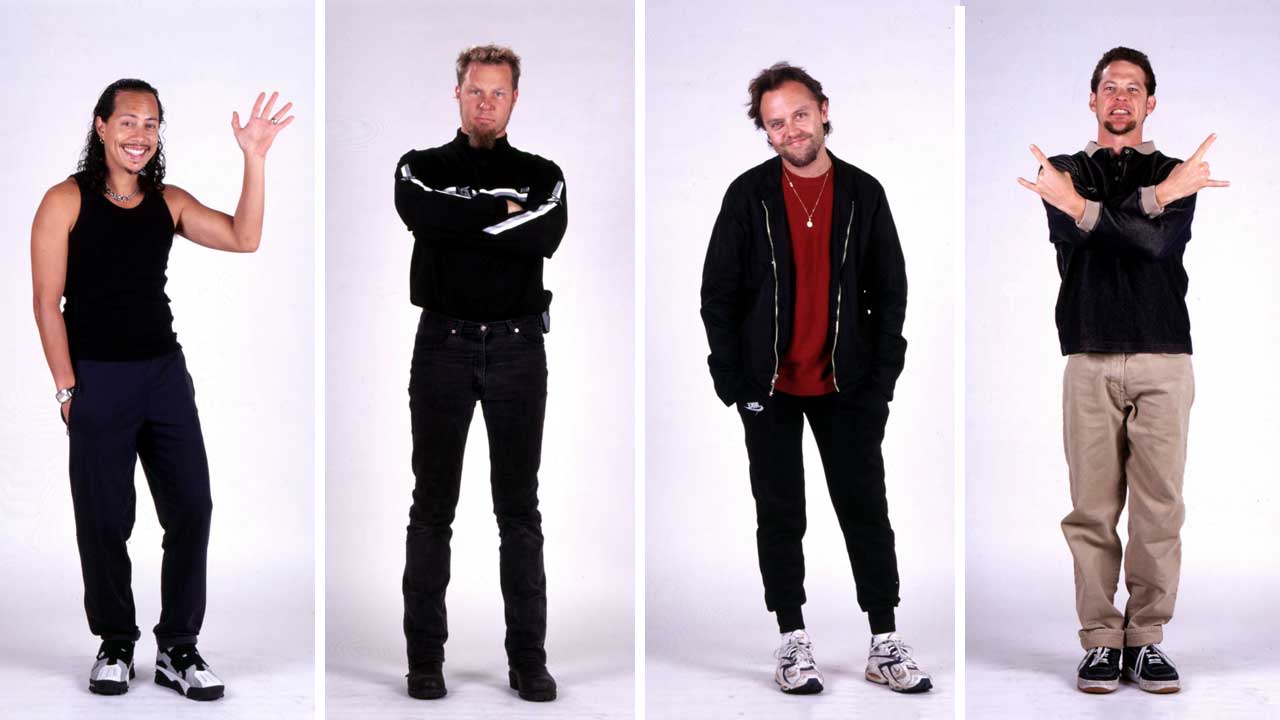
For Metallica, the 90s were just like the 80s – only in reverse. The 10 years it took them to go from unloved New Wave Of British Heavy Metal copyists, when they formed in LA in 1981, to globe-straddling multi-platinum-selling rock titans on a sales par with Michael Jackson and U2, with the release of their fifth album, Metallica, aka the Black Album, in 1991, saw them evolve faster than a speeding bullet.
The move from hair-metal LA to anything-goes San Francisco, occasioned by bringing in SF natives, bassist Cliff Burton and guitarist Kirk Hammett; the sparking of a whole new genre in rock – thrash metal – and in its wake close-but-no-cigar imitators such as Megadeth and Slayer; the ability to fit comfortably onto the front covers Kerrang!, NME, The Village Voice, Rolling Stone and The Times of London, New York and LA; the death of Burton and the resulting exultation of a band afforded legend status before they’d even made a video; the conquering of first Britain then Europe then America then the rest of mankind.