In the ancient Book of Documents, the number five serves as a blueprint for human contentment. The concept is wufu , the Five Blessings. It is not a superstition about luck, nor is it a mystical guarantee of good fortune. It is a specific, practical checklist for a complete life: longevity, wealth, health, virtue, and a natural death in old age.
Wealth represents only one fraction of the equation. The final blessing, dying naturally after exhausting a long life, stands out as the most grounded. It strips away the magical thinking often assigned to numerology. It reflects a simple human desire to live fully rather than having life unexpectedly cut short.
This same pragmatism appears in classical Chinese decoration. Artisans frequently painted five bats on ceramics, architecture, and wood. The spoken word for bat, fú , shares a phonetic root with the word for good fortune. Five bats meant five blessings. Together, they represented harmony and balance, a state where different positive elements coexist without friction.
Why Five Has Become Trump’s Unusual China Number
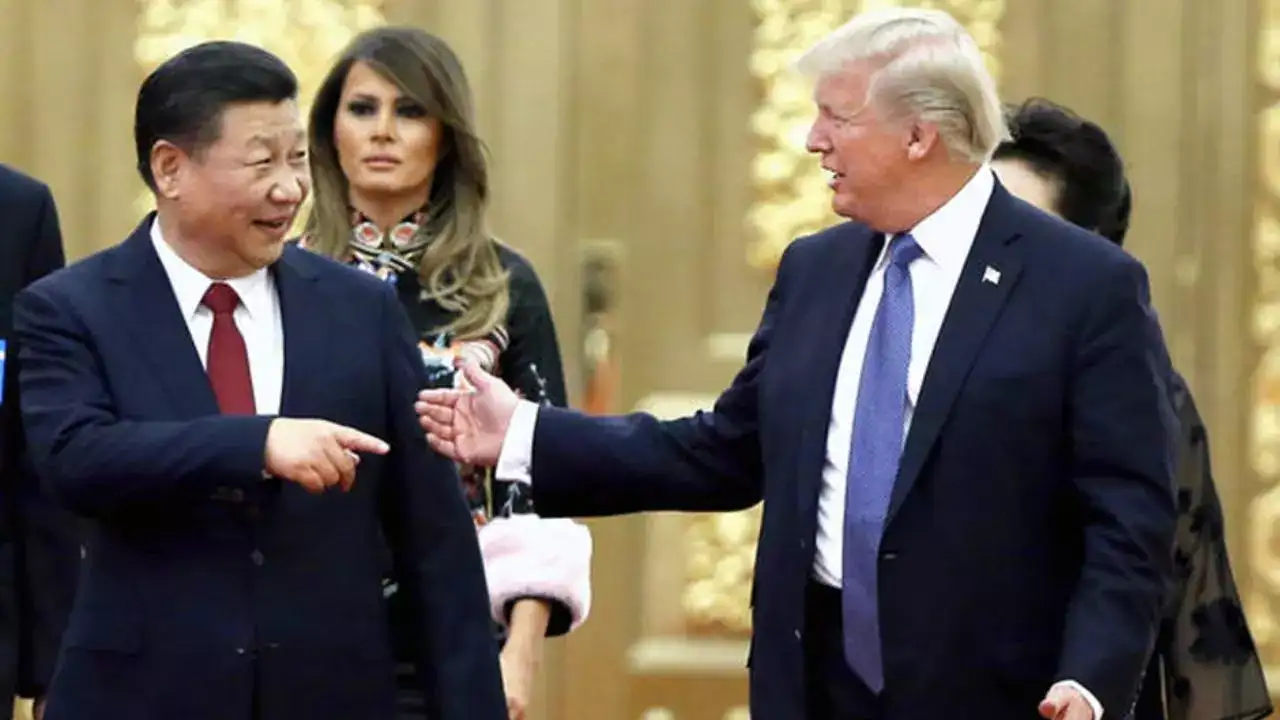
That historical harmony creates a sharp contrast with the reality facing Donald Trump and Xi Jinping. The two presidents are preparing to meet, with a formal arrival ceremony planned at Joint Base Andrews followed by a state dinner at the White House. But the guest list reveals exactly how complicated this relationship has become. Expected attendees include Jeff Bezos, Sundar Pichai, Sam Altman, Tim Cook, and Jensen Huang.
The presence of Silicon Valley’s most powerful executives points to a structural shift. The US-China dialogue has outgrown traditional arguments over shipping containers, steel tariffs, and factory floors. Technology is now permanently welded to diplomacy. Trump is trying to manage a relationship defined by five distinct, heavy issues. The number surfaces here not as an ancient omen, but as an inventory of unresolved problems.
The friction starts with trade. Years of tariffs, purchase agreements, and market access disputes have left a trail of unfulfilled expectations. Previous negotiations demonstrate the massive gap between a presidential announcement and a finalized contract. The Associated Press recently noted a stark discrepancy in agricultural trade: Beijing had pledged to buy $30 billion in US farm products, yet projected purchases hovered around just $21.5 billion. A separate proposed order for 200 Boeing aircraft remains incomplete.
Rare earths represent a entirely different kind of bottleneck. These minerals sit quietly inside a huge range of modern consumer products and defense technologies. China holds a dominant position in processing these materials. The United States is actively looking for ways to rebuild its supply chains and break its reliance on a single nation, but extracting and refining these elements is a slow, difficult process.
Artificial intelligence adds a third layer of tension. Washington views AI through a lens of national security, looking for mechanisms to protect sensitive technology and limit strategic risks. Beijing approaches the same technology as a sovereign right. It is determined to build its domestic tech industry without accepting US-imposed restrictions that could slow its momentum.
Looming above commerce, minerals, and processors is Taiwan. The political and security stakes here operate on a completely different scale, detached from soybean exports or silicon chips.
These issues share a room during Xi’s visit, but they do not share a solution. An agreement on rare earth exports does nothing to settle Taiwan. A sudden purchase of Boeing jets will not resolve the clash over artificial intelligence restrictions.
That is the core of Trump's diplomatic puzzle. The Chinese concept of wufu assumes that five separate blessings can exist comfortably in the same life, complementing each other. Trump faces the exact inverse. He has several massive, divergent problems that actively pull in opposite directions. He wants economic gains from Beijing while simultaneously trying to protect U.S. strategic interests. Beijing, in turn, arrives with its own priorities and its own distinct leverage.