
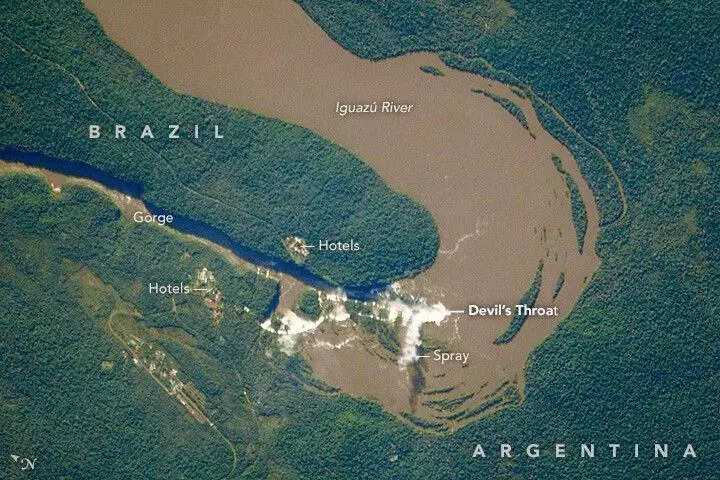
Along the border of Brazil and Argentina, the Iguazu River widens, slows, and then drops. The land simply falls away. Iguazu Falls stretches roughly 2.7 kilometres across a basalt plateau, forming what is generally described as the largest waterfall system in the world. Around 275 individual cascades make up the site. Heights vary between 60 and 90 metres, depending on the section and the season. At its centre sits a broad semicircle known as Devil’s Throat, where water funnels into a narrow gorge and rises again as spray. The plume is often visible from aircraft and satellite images, creating a spectacular natural display admired by tourists and researchers alike. On both sides of the river, national parks protect the surrounding subtropical forest, which supports diverse wildlife and unique plant species. The falls have held UNESCO World Heritage status since 1984.









