
Get all your news in one place.
100's of premium titles.
One app.
Start reading
Homes & Gardens
Homes & Gardens
Drew Swainston

Why You Should Start 'Grasscycling' This Week – It's the Secret to a Hydrated Summer Lawn

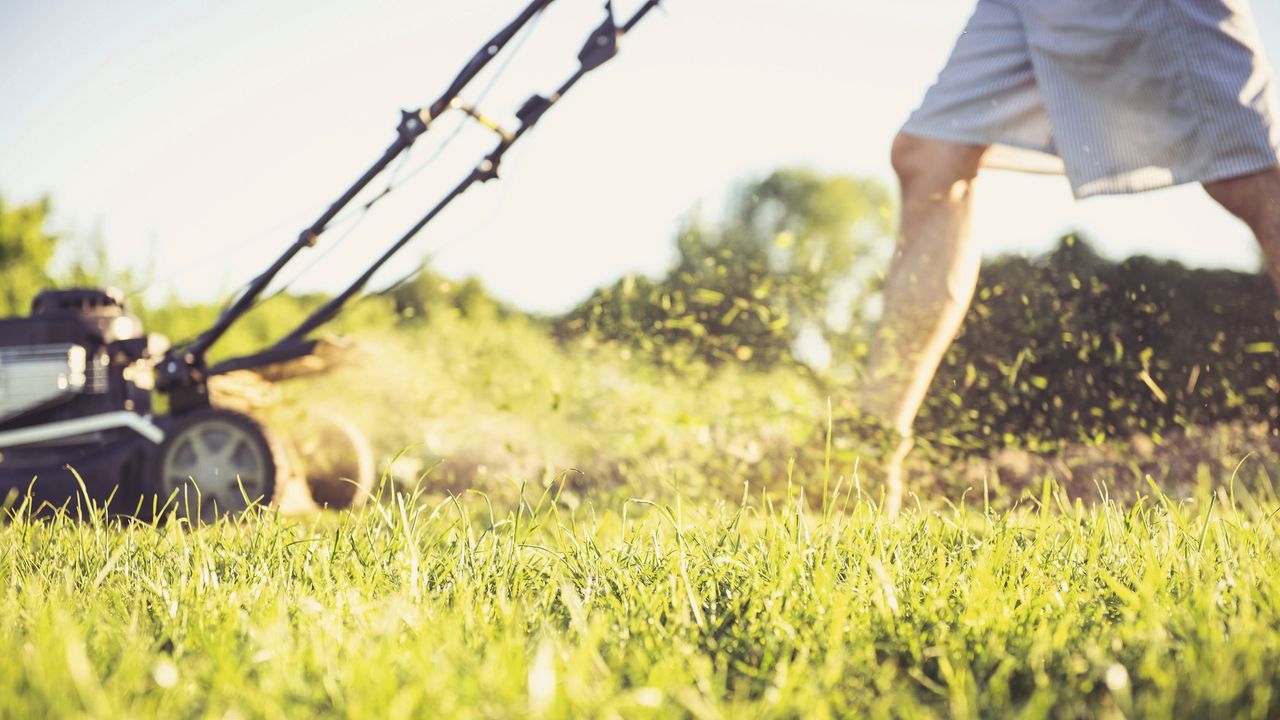
A gardener is mowing the lawn on a sunny evening, and leaving the grass clippings behind.

You will always create grass clippings when mowing a lawn. There is an alternative to bagging them up, though. Savvy households can reuse the clippings to create a healthier, more hydrated lawn during the summer.

‘Grasscycling’ means leaving grass clippings on the lawn after mowing. Doing so gives the lawn nutrients, reduces the need to water, and saves you the time and effort of dealing with them. It is a simple, effective way to maintain a healthy lawn.

If you find yourself wondering what to do with grass clippings after mowing, this could be the answer you are looking for. (And this electric battery-powered lawn mower from Amazon has a built in mulching mode.) However, there are circumstances when you still need to bag the clippings. To avoid any confusion, I spoke to lawn experts to find out when and when not to leave clippings on the lawn to help you have healthy, beautiful summer grass.

Why Leave Grass Clippings on the Lawn

(Image credit: Getty Images/iStockphoto/BradWolfe)

Leaving the clippings on the lawn is an easy, effective way to help keep your grass healthy throughout the summer.

The clippings are full of nutrients, especially nitrogen, and will return these essential nutrients to the soil as they break down. It is a natural way to add organic matter and fertilize a lawn. It also helps cut lawn care costs, as it is free fertilizer.

Jason McCausland, Technical Coordinator at Weed Man, always recommends leaving grass clippings, as it helps promote a healthy lawn.

He says: ‘By leaving the clippings to decompose on your lawn, you’re adding valuable nutrients back into the soil. Follow a regular mowing schedule, skip the raking, bagging, and disposing of these clippings. Use them, and your lawn will thank you.’

In addition to providing nutrients for strong grass, leaving clippings helps retain moisture in the soil, reducing how often you need to water the lawn during the summer.

Brandon Seymour, owner of Granuly Organic Lawn Care, explains how it acts as a natural mulch to conserve vital moisture.

‘They [the clippings] shade the soil surface, reduce evaporation, and help the root zone stay cooler during hot weather,’ he says. ‘It's not a substitute for proper irrigation, but it can help the lawn use water more efficiently, especially in sandy soils where moisture drains quickly.’

To leave the cuttings, you need to mow the lawn often. You can only leave clippings if they are short, less than an inch. A regular mowing regime is pivotal if you plan to leave grass clippings on the lawn.

‘The key is mowing often enough that you're following the one-third rule, meaning you never remove more than one-third of the grass blade in a single mowing,’ adds Brandon.

‘When the clippings are short, they settle into the canopy and recycle valuable nutrients back into the soil. If you're investing time and money feeding your lawn, it doesn't make much sense to bag them.’

It can be simple to leave grass clippings on the lawn. Many modern lawn mowers have mulching modes, or you can use a mulching plug that blocks the chute on standard mowers. You can get mulching plugs at Amazon for different types of mowers.

Shop Mulching Lawn Mowers

This mower is ideal for up to 1/4 acre and runs for up to 30 minutes on a full battery. It comes with a mulching plug to leave grass clippings on the lawn.

A mower that cuts a 21-inch path and offers 50 minutes of run time on a single charge. You can choose between mulching, side discharge, or bagging your grass clippings.

This mower has a powerful 170cc OHV engine and cuts a wide 21-inch path. You can easily switch between collecting clippings and mulching them to leave on the lawn.

When Not to Leave Grass Clippings on the Lawn

(Image credit: Future)

With all the positives outlined above, you may be chomping at the bit to mow and not collect the grass on your next time out. However, there are a few exceptions where you shouldn’t leave grass clippings on the lawn that you need to be aware of.

As mentioned, the clippings need to be short if they are to be left. If you have long grass that clumps together when mown, it is better to bag and remove the clippings. Long clippings won’t break down quickly, and heavy clumps can smother the turf. You could end up with unsightly bare patches in the grass.

It is the same if you are cutting wet grass. The damp clippings stick together and form thick mats that will smother the lawn if left on the surface. These clumps are not only unpleasant to look at but prevent light and air reaching the grass underneath and encourage fungal diseases.

If the lawn is showing any signs of disease – the likes of dollar spot, rust, and summer patch are common issues during the warmer months – it is always best practice to remove any infected grass clippings rather than leave them.

The same advice applies if you’ve recently treated the lawn for weeds or disease. ‘If you’ve used any weed killer, pesticide, etc, anything that isn’t natural that you’d not want biodegrading back into the lawn, I wouldn’t recommend using the clippings as mulch,’ advises Chrissie Handley from Online Turf.

‘You can put that chemical straight back into the ground, which may stunt your grass growth.’

If you can’t get out and mow regularly enough to produce small grass clippings, don’t despair. You don’t have to leave clippings for healthy summer lawn care. Having longer grass does protect your lawn in a heatwave.

Jonathan Davis, grass expert at Lawnsmith, explains: ‘Letting your grass grow slightly longer ahead of a heatwave can help shade the soil and retain moisture.

‘And watering your lawn a few times a week, ideally early in the morning, will help hydration reach its roots. These are safe and effective ways of caring for it in summer.’

Mowing is a typical summer task, but did you know there are temperatures at which you shouldn’t mow? If you mow the lawn in a heatwave when temperatures are 90°F or above, you can put extreme stress on the grass. It is advisable to mow at the cooler parts of the day, or leave the grass longer during extreme heat to retain moisture.

If you love inspiring garden ideas, outdoor advice, and the latest news, why not sign up for our newsletter and get the latest features delivered straight to your inbox?

Meet the Experts

Battery Walk Behind Mower Self-propelled Battery Walk Mower Self-Propelled Gas Lawn Mower
Sign up to read this article
Read news from 100's of titles, curated specifically for you.
Already a member? Sign in here
Related Stories
Top stories on inkl right now
One subscription that gives you access to news from hundreds of sites
Already a member? Sign in here
Our Picks
Fourteen days free
Download the app
One app. One membership.
100+ trusted global sources.