
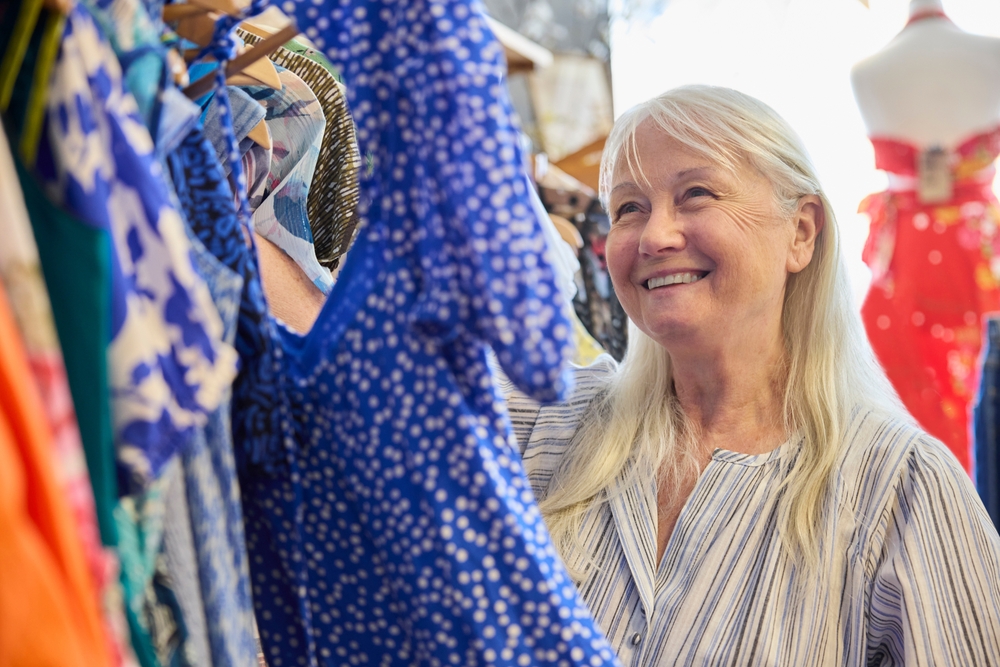
Have you noticed how the aisles of Goodwill and thrift stores seem a bit more curated than they used to be? Like someone with a latte might stroll past you holding a vintage Vuitton and a Rowan & Martin midcentury lamp before Sunday brunch?
It’s not your imagination — there’s a real shift happening in who’s walking through those swivel doors. Once primarily the haunt of bargain hunters and treasure seekers, thrift shopping is steadily drawing in a new crop of customers: financially comfortable moms who, not because they need to pinch every penny, but because they’re suddenly feeling the weight of a quieter squeeze on their wallets. And the reasons go way beyond just saving a buck.

What’s Driving the Trend? It’s Not Just About Tight Budgets
The cost of just about everything — groceries, childcare, gas, school supplies — has been creeping up in recent years. Even households that once felt cushioned by dual incomes and savings are noticing that their PayPal balance doesn’t stretch as far as it used to. That’s not speculation — general inflation and rising living costs have nudged consumers of all stripes toward more mindful spending, and thrift stores are one of the places showing that shift in real time.
Many affluent shoppers — including moms with flexible budgets — are showing up because thrift stores offer value in a way regular retail rarely does these days: unique finds, sustainability, and a thrill that mainstream brands can’t replicate.
More Than a Savings Play: Sustainability and Style
In case you hadn’t heard, sustainability has become a serious fashion driver. What started as a moral whisper in consumer choices is now a full‑on roar. Shoppers are no longer willing to toss fast fashion into landfills without a second thought; they want pieces that have a story, a smaller environmental footprint, and character. Thrifting delivers that on all counts.
Thrift stores aren’t just cheap anymore — they’re chic. Social media’s obsession with vintage, unique wardrobes, and retro home decor means secondhand has become a badge of creative style rather than a fallback. When a mom who might otherwise shop premium retail spots finds a gorgeous vintage dress for a fraction of the typical price, it feels like both winning and being smart. It’s a style flex with a conscience.
Thrifting as Community and Lifestyle, Not Just Budgeting
Thrift shopping hasn’t lost its roots. Goodwill and similar stores still fund job training, community programs, and support services. But what has changed is who is shopping. Thrift stores are no longer mono‑demographic; they’re multi‑generational, multi‑income, and increasingly mainstream.
For many moms, thrifting has become a social outing, a way to involve kids in value‑based consumption, or even a weekend ritual that beats another trip to a crowded mall. It’s a place to bond with friends over a communal hunt for the perfect piece of furniture or jacket, and it’s a way to model consumer mindfulness to their children.
How Stores Are Responding
Thrift stores aren’t immune to the economics that shape regular retail. Even though inventory is donated, operational costs like rent, wages, and utilities have risen. That can mean prices at thrift stores are sometimes higher than older generations might remember. A vintage Levi’s jacket that once might have gone for pocket change can now sit at a higher tag simply because donors’ tastes have changed and because stores price merchandise based on brand and condition rather than simply clearing inventory.
The popularity of thrifting itself has shifted supply and demand dynamics. With more shoppers — from Gen Z trendsetters to affluent moms — desiring the same items, certain pieces become more competitive, and that can push prices up organically. But thrift stores also aren’t shy about updating their spaces and presentation to appeal to a broader customer base.
Tips for Moms (and Other Shoppers) Who Want the Best Deals
If you’re thinking of diving into thrifting yourself, it helps to think like a treasure hunter, not a panicked bargain chaser. First, go to multiple locations — inventory varies wildly from store to store and week to week. Pay attention to when new stock hits the floor; some shoppers swear by certain days as the best times to snag primo finds. Bring a tape measure and plan around what you’re hunting for, whether it’s clothing, furniture, or kitchenware. And don’t forget to look past clothing — home goods, books, lamps, and vintage tech can be gold mines.
Thrifting Is a Lifestyle Shift Worth Celebrating
The rise of thrifting among affluent shoppers isn’t a scandal, and it isn’t exactly proof that wealthier consumers are “taking over” Goodwill. What’s happening is that diverse groups are converging around something that’s fun, value‑driven, and increasingly socially meaningful. As living costs continue their unpredictable dance, thrifting has emerged as a space where savvy meets sustainability, and where value meets style.
Have you ever found something at a thrift store that made you feel like a genius — whether you saved a bunch of cash or scored something truly unique? Share your best find in the comments.
You May Also Like…
Money-Saving Hacks for Parents Shopping Clearance Clothes After the Holidays
How to Build a Family Emergency Fun Jar for Unexpected Winter Activities
Why “Back to School” Shopping Feels Like a Mortgage Payment Now
6 Baby Names Inspired by Vintage TV and Movies
How to Create a Family Savings Jar with Kids That Feels Like a Game
The post Why Wealthy Moms Are Turning to Goodwill as Living Costs Quietly Spike appeared first on Kids Ain't Cheap.