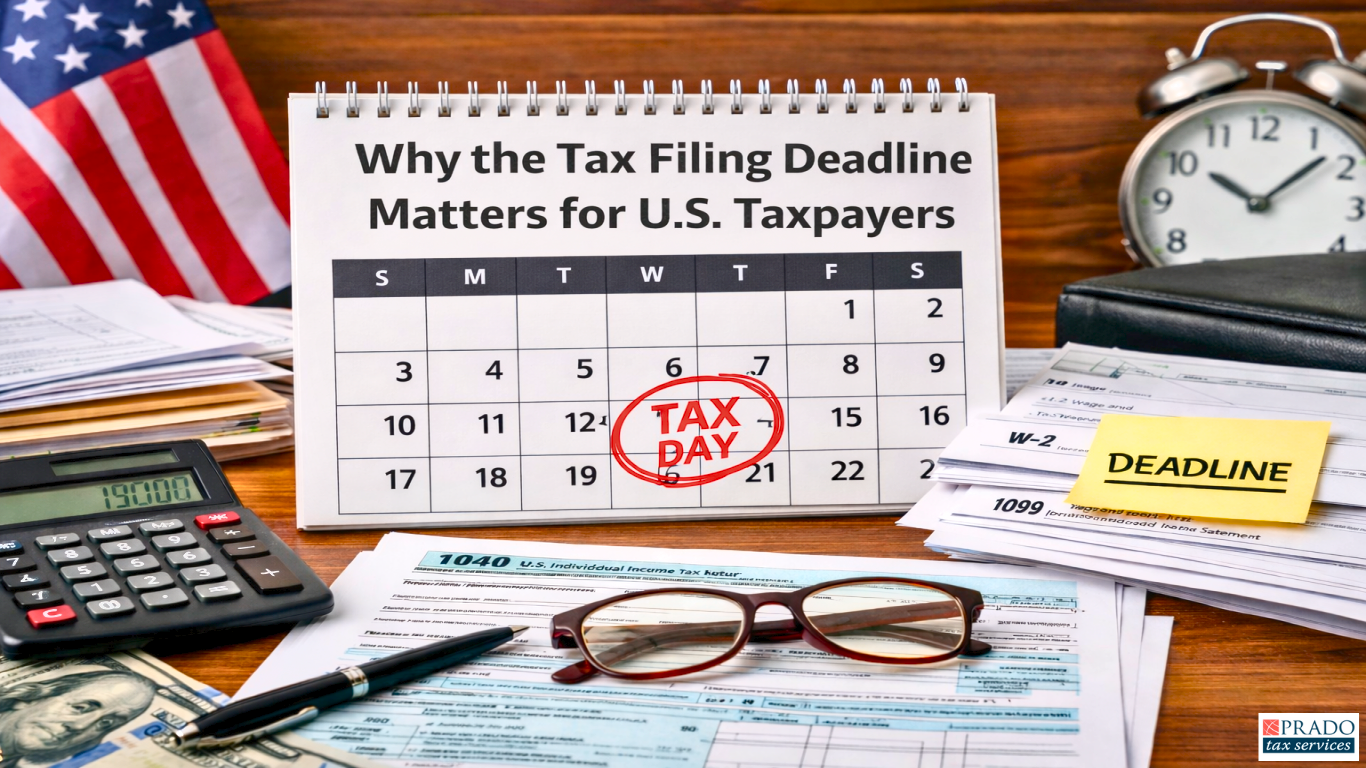
The federal tax filing deadline, generally April 15, occurs every year, yet many taxpayers view it simply as the point at which forms must be submitted for their personal tax return. Once the personal tax return is filed, attention often shifts elsewhere.
In practice, the deadline serves a broader purpose in personal tax filing. It influences how personal tax filings are processed, how refunds are issued, how payments are applied, and how future personal tax records are reviewed. The IRS structures its annual processing cycle around this date, and when personal tax filing timing falls outside that structure, the impact may not be immediate but can surface later.
For that reason, the tax filing deadline matters even when a personal tax situation appears straightforward. Its importance extends beyond compliance and directly affects what happens after the filing of a personal tax return.
The IRS publishes annual deadline updates and holiday adjustments, making early planning more effective than last-minute action.
The Deadline Is Not Arbitrary, and It Is Not Only About Penalties
At first glance, the tax filing deadline may appear to be an administrative cutoff designed solely to enforce compliance. In reality, the deadline exists to keep a complex reporting system synchronized, particularly for personal tax filing, where multiple data sources must align.
Why the date exists
The tax filing deadline provides the IRS with a fixed window to receive and reconcile information from multiple reporting sources tied to personal tax returns. Employers, financial institutions, and payment platforms submit income data on schedules aligned with IRS requirements. Personal tax filing functions efficiently only when those reporting streams converge within the same timeframe.
This alignment is a primary reason the deadline carries significance in personal tax matters.
How the system actually moves
When the filing of a personal tax return occurs on time, submissions are processed in organized batches. Income data can be matched more efficiently, and reviews remain routine. Late personal tax filings disrupt this sequence. Even when a return is accurate, a late submission increases the likelihood of delays and additional verification.
IRS tax filing procedures are built around timing rather than intent. The system is designed to operate within defined windows, not to adjust dynamically for individual circumstances. This is why tax professionals at Prado Tax Services emphasize aligning their personal tax filing service and decisions with IRS timelines whenever possible.
Common Misunderstandings
Many taxpayers assume that missing the personal tax filing deadline results only in penalties. In practice, it can also change how a personal tax return is routed and reviewed. Timing alone can place a return into a more closely reviewed processing category, even when the information reported is correct.
What Happens When the Tax Filing Deadline Is Missed
Several outcomes occur once the deadline passes:
- Processing category changes: A return filed after the tax filing deadline enters a different processing queue, regardless of accuracy.
- Late filing versus late payment: These are separate issues. The filing of a tax return triggers late filing penalties, while unpaid balances accrue interest. Filing on time, even without full payment, can reduce penalties and allow access to IRS payment arrangements.
- Processing delays: Income tax return filing after the deadline often results in additional automated checks, increasing processing time.
- Delayed notices: IRS income tax returns filed late may generate correspondence months later, after the tax year seems complete.
- No immediate enforcement: Missing the deadline does not automatically result in enforcement action, but it does reduce flexibility and increase waiting periods
Refunds, Delays, and Timing Expectations
Refund timing is often where the impact of the tax filing deadline becomes most noticeable.
When tax filing occurs near the deadline, the IRS processes a high volume of returns simultaneously. Even accurate filings can experience delays under these conditions. If documentation is incomplete or data does not align, processing time can extend further.
Early income tax return filing does not automatically result in faster refunds. Returns are verified against employer reports, bank statements, and third-party filings, which arrive on their own schedules. If verification data is delayed, refund processing can pause, regardless of the tax filing start date.
IRS tax filing systems focus on timing alignment as much as numerical accuracy. Returns submitted late or with missing information often remain pending until verification is complete. These delays reflect procedural requirements rather than penalties.
Understanding this distinction helps manage expectations after the filing of a tax return.
The tax return is complete.
Accuracy matters more than speed, every time.

Rushing through tax filing often leads to avoidable issues. Errors commonly arise from incomplete forms, incorrect data transfers, or overlooked reporting requirements. These mistakes can significantly delay processing.
The tax filing deadline prioritizes completeness, not speed. IRS income tax returns are cross-checked against third-party reports. When inconsistencies appear, the return is flagged for review, extending processing time.
Submitting an accurate return after careful review often results in faster resolution than a rushed filing. Most IRS notices stem from mismatched data rather than intent or negligence.
For those asking how to file taxes correctly, preparation is often more important than filing early. Organized records, complete documentation, and realistic timing support smoother processing and reduce avoidable delays. Rushing through tax filing may sound efficient, but for business tax filing, accuracy usually matters more than speed. This is the approach followed by the bilingual team (English and Spanish) at Prado Tax Services, where careful review and proper timing are prioritized to support accurate and compliant business tax return filing.
Extensions change the clock, not the responsibility
Extensions are frequently misunderstood during tax filing.
An extension changes only the deadline for submitting paperwork. It does not alter the original due date for payment. Any tax owed remains payable by the standard tax filing deadline, even when an extension is granted.
The filing of a tax return under an extension provides additional time to complete forms accurately. It does not charge interest on unpaid balances or alter IRS review standards under IRS tax filing rules.
Here’s the clearest way to see the difference.
|
What an extension changes |
What an extension does not change |
|
Filing of the tax return can happen later |
Tax payment is still tied to the original tax filing Deadline |
|
More time to gather documents |
Interest can still apply to unpaid amounts |
|
Reduced pressure to rush Tax Filing |
IRS review standards remain the same |
Extensions are most effective when paired with an estimated payment and used to resolve documentation issues rather than delay action.
State Tax Filing Deadlines and Why California Requires Extra Attention
While federal tax filing deadlines receive the most attention, state tax filing deadlines operate under their own rules. Each state sets its own filing and payment requirements, which may align with federal deadlines but are not governed by them. This distinction becomes especially important when managing both IRS and state tax obligations at the same time.
For taxpayers filing state returns, timing matters just as much as it does at the federal level. State agencies rely on their own reporting schedules, payment systems, and review processes. Filing late at the state level can lead to penalties, interest, or delayed processing even when a federal return is filed on time.
California Tax Filing Deadlines Explained
California generally follows the April 15 tax filing deadline unless adjusted for weekends or holidays. The state provides an automatic extension to file, but this extension applies only to submitting the return, not to paying taxes owed. Any unpaid balance is still due by the original deadline, and interest may apply after that date.
This distinction often confuses, particularly for taxpayers managing both federal and California tax obligations. Prado Tax Services frequently assists taxpayers in coordinating IRS and California filing timelines to avoid unnecessary delays or follow-up issues.
Common Misunderstandings About California Tax Deadlines
Many taxpayers assume that federal and California tax deadlines are always the same. While they often align, California follows its own authority and reviews filings independently. Meeting a federal deadline does not automatically satisfy California requirements.
Another common belief is that a California extension means no payment is due. In reality, extensions apply only to filing. Any tax owed is still due by the original deadline, and interest can apply to unpaid balances even when a return is filed later.
Some taxpayers also believe that filing late carries no consequences if no balance is due. While penalties may not apply in those cases, late filing can still affect processing, future compliance, or the handling of amended returns and credits.
There is also a misconception that California penalties work the same way as IRS penalties. California applies its own penalty and interest rules, which differ from federal tax filing standards.
When income isn’t simple, deadlines carry more weight
This is where the tax filing Deadline stops feeling abstract and starts affecting real decisions.
When income comes from multiple places
- Side income, contract work, rental payments, and investment activity rarely arrive on one clean timeline.
- Once income comes from more than one source, Tax Filing depends heavily on when documents show up, not just what they say.
- Some forms arrive early. Others show up close to the deadline. Corrections can land even later.
Why timing increases risk
- Income tax return filing becomes riskier when everything is pushed to the end.
- Missing a single document can delay the filing of a tax return or lead to amendments after submission.
- For a tax filer with multiple income streams, accuracy depends more on patience than speed.
How the IRS reviews complex returns
- The IRS doesn’t treat complex returns differently in intent.
- Still, IRS income tax returns tied to mixed income sources face more data matching checks.
- Late or incomplete submissions naturally receive more review because additional verification is required.
Where planning makes the difference
- Knowing when income documents usually arrive helps determine whether to file, wait, or request more time. That decision works best when aligned with IRS tax filing rules, not last-minute pressure.
- For people managing business income or multiple sources, timing and documentation play a much bigger role. Missing details tend to surface later, when changes are harder to fix.
When getting help is practical, not overkill
Some tax situations remain straightforward. Others require additional coordination.
When tax filing involves multiple forms, timing considerations, or uncertainty around documentation, professional support can be practical rather than excessive. This becomes particularly relevant as the tax filing deadline approaches and decisions must be made under time constraints.
A qualified tax filing service can assist in organizing records, confirming required forms, and ensuring the accurate filing of tax returns. When used appropriately, such services reduce errors that commonly lead to delays, notices, or follow-up requests associated with IRS income tax returns. The purpose is not to shift responsibility, but to improve clarity and compliance.
Taxpayers also rely on a tax return service when income tax return filing includes unfamiliar reporting requirements, corrected documents, or late-arriving forms. In these situations, support is most effective when it prioritizes accuracy and proper timing over rapid submission.
The principle remains consistent. Assistance does not alter filing obligations. It supports proper adherence to them.
Those obligations are established and enforced by the Internal Revenue Service, and timing plays a direct role in how returns are reviewed under IRS tax filing procedures.
Planning around official dates instead of racing the clock
The federal tax filing deadline is generally April 15, unless adjusted due to weekends or federal holidays. When adjustments occur, the IRS shifts the deadline to the next business day.
Extensions follow the same structure. They allow later filing of the tax return but do not extend payment deadlines.
Typical filing milestones
- Federal tax filing deadline: April 15 (or next business day if adjusted)
- Extension request deadline: Same as the filing deadline
- Extended filing deadline: October 15 (or next business day if adjusted)
These dates align with third-party reporting schedules. IRS income tax returns are reviewed by matching incoming data, and filings outside the standard window often require additional verification.
Why does the deadline keep showing up in every tax conversation
The tax filing deadline isn’t just a date on the calendar. It’s a coordination point for how income is reported, reviewed, and processed across the entire tax system. When tax filing decisions align with that timing, everything that follows tends to move more smoothly.
Understanding the deadline this way makes it easier to work with it. Not as pressure, but as a reference point. Something to plan around rather than react to. For taxpayers who want clarity around timing, documentation, or next steps, connecting with Tax Advisors and Preparers like Prado Tax Services, based in the Bay Area, CA, can help ensure tax filing decisions are made with accuracy and proper planning.