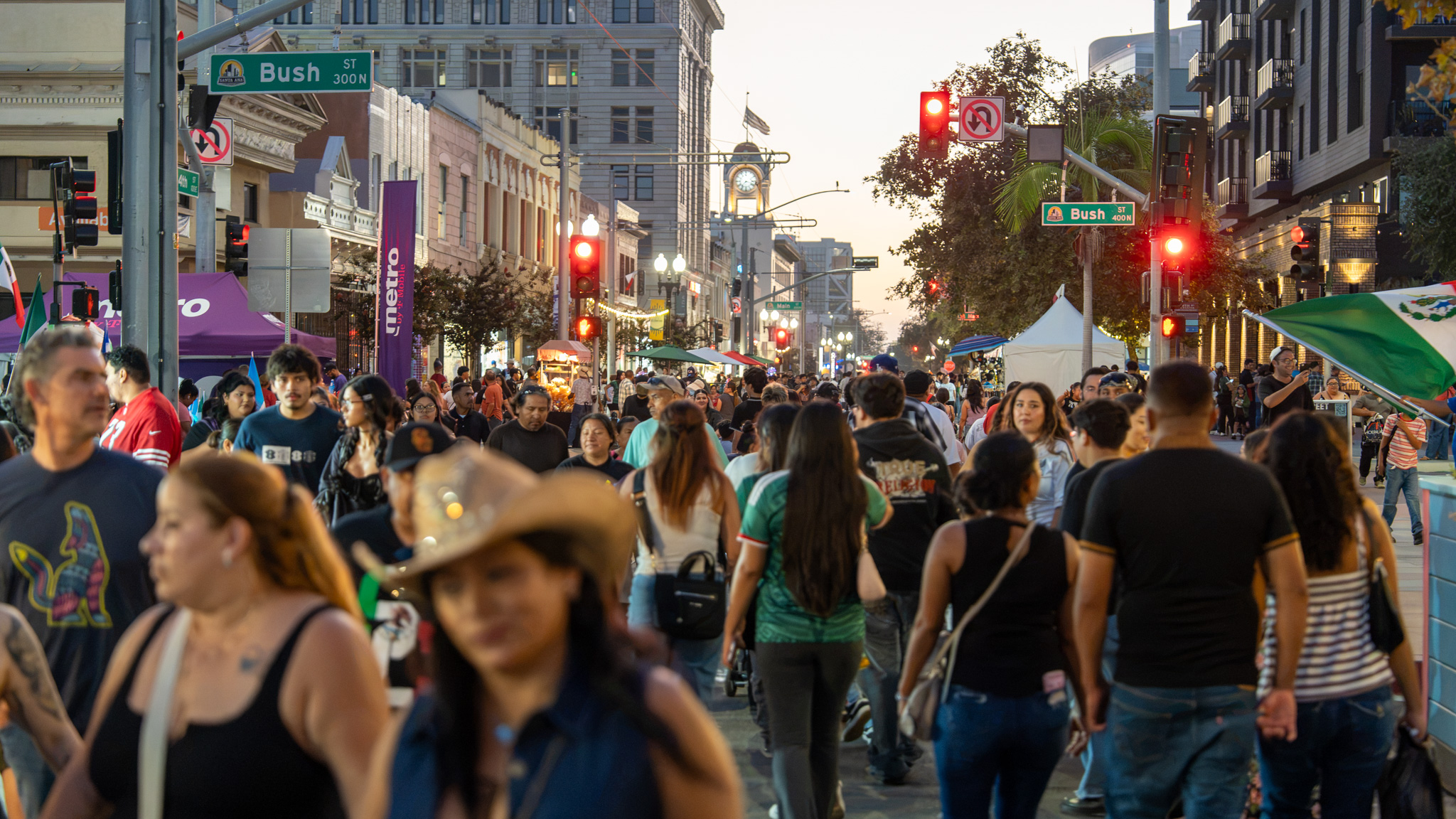
Downtown Santa Ana became an unlikely referendum on a year of immigration anxiety this past weekend, when more than 80,000 people turned out over two days for the city's Fiestas Patrias — a crowd that city officials say ranks among the largest Mexican Independence Day gatherings in Southern California. The number carries weight well beyond bragging rights. Orange County's only self-declared sanctuary city spent much of the past year on edge over federal immigration sweeps, yet tens of thousands of Latino families still packed Main Street, sang along to banda sets and cheered on a parade rather than staying home.
The festival ran noon to 11 p.m. on Saturday, September 12, and noon to 10 p.m. on Sunday, September 13, with the city shutting down a broad stretch of downtown — including Main, Sycamore, French, Bush, 4th and Spurgeon streets — from early Thursday morning through Monday evening, according to street-closure notices published ahead of the weekend. Entry cost nothing both days, a longstanding policy in a city where roughly three-quarters of residents identify as Hispanic or Latino.
Saturday's Grito Ceremony Draws the Crowd Together
The night's emotional centerpiece arrived at 7 p.m., when Mexico's consul in Santa Ana, Maxaira Baltazar, stood with City Council members on the main stage for El Grito de Independencia — the ceremonial cry that echoes Miguel Hidalgo's 1810 call for Mexican independence from Spanish rule. Regional acts including Banda La Prestigiosa and Los Cadetes de Linares played in the hours before the ceremony, while Grupo Escolta and Lorenzo Méndez con Banda carried the main stage into the night afterward.
Sunday centered on the parade, which ran from 11 a.m. to 1 p.m. as more than 50 community organizations — folklórico groups, local businesses, youth programs — moved from Main Street and Washington Avenue toward Civic Center Drive, where an exhibition stage kept the performances going. The city put the crowd along the route at over 4,000, a separate tally from the weekend's overall 80,000-plus turnout, per the city's own recap. Mariachi Los Camperos and regional favorite Legado 7 closed out the day once the procession wrapped.
A Sanctuary City Under Pressure Still Showed Up
The turnout is hard to separate from the political backdrop. Santa Ana bills itself as the only sanctuary city in Orange County, meaning local police and staff are barred from assisting federal immigration agents. That designation faced real strain this year: ICE operations in and around the city last summer set off protests and pushed the council to close a loophole this month barring city workers from taking outside jobs with ICE or its contractors. Local reporting ahead of Fiestas Patrias weekend noted that federal enforcement actions at large public festivals have historically been uncommon, sanctuary status or not. Whichever reassurance carried more weight — the city's protections or simple determination to celebrate — families didn't stay off the streets this year.
Closer to Five Decades Than Six
Fiestas Patrias has grown from a small neighborhood gathering into what city officials now describe as one of the county's marquee cultural events, complete with a livestream and a rotating slate of regional headliners. But the timeline deserves a correction: Santa Ana's own announcements mark 2025 as the 45th annual celebration, meaning 2026's edition is roughly its 46th — a four-and-a-half-decade run, not six. This year's festival carried title backing from Telemundo 52 and Tuscany Espresso, with Raising Cane's and Republic Services as foundation-level partners, underscoring how much commercial interest the event now commands alongside its cultural pull.
What the Numbers Add Up To
For Santa Ana's Mexican-American community — many of them multigenerational residents anchoring one of Orange County's largest Latino populations — the weekend doubled as both celebration and statement. A festival that started as a modest block party can still draw a stadium-sized crowd into the street, even in a year when public gatherings have felt riskier for immigrant families across the region.