
Get all your news in one place.
100's of premium titles.
One app.
Start reading
The Conversation
The Conversation
Diane Watt, Professor of English, University of Surrey

Why snappy dogs, scratchy cats, and hungry worms were part of a medieval woman’s vision of the afterlife

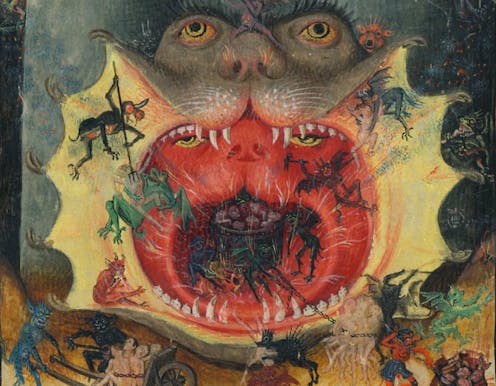
Detail from The Mouth of Hell in The Hours of Catherine of Cleves (1440). The Morgan Library & Museum

The afterlife is not typically associated with aggressive pets and insatiable worms. But these are exactly the creatures that appeared to an unnamed woman recluse living in Winchester, England, over the course of three nights in the summer of 1422. The woman was an anchoress. That means she had chosen – and subsequently vowed – to live in solitary confinement within a small cell attached to a church for the rest of her life.

The recluse wrote a vivid account of her vision and sent it to her confessor and a circle of influential churchmen. Her letter, known today as A Revelation of Purgatory, makes her one of the earliest known women writers in the English language.

Sign up to read this article
Read news from 100's of titles, curated specifically for you.
Already a member? Sign in here
Related Stories
Top stories on inkl right now
One subscription that gives you access to news from hundreds of sites
Already a member? Sign in here
Our Picks
Fourteen days free
Download the app
One app. One membership.
100+ trusted global sources.







