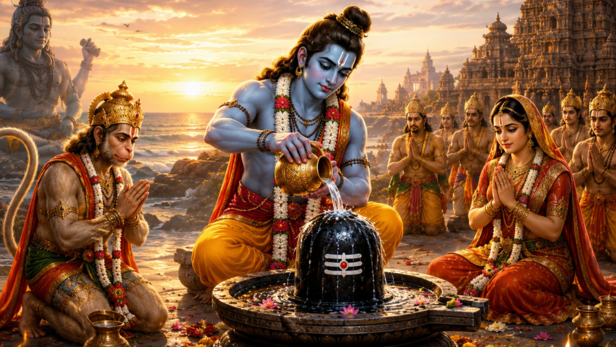
The defeat of Ravana is one of the most celebrated moments in the Ramayana. For devotees across India, it represents the victory of dharma over adharma, truth over arrogance, and righteousness over evil. Yet according to Hindu tradition, the end of the war in Lanka was not a moment of simple celebration for Rama. Even after achieving victory, Rama carried a deep sense of spiritual responsibility and emotional weight. Ravana was not an ordinary enemy. He was a mighty king, a brilliant scholar, and one of the greatest devotees of Shiva. Many scriptures and traditions describe him as a Brahmin by birth who possessed extraordinary knowledge of the Vedas and sacred rituals. Because of this, Rama believed that killing Ravana during the war carried spiritual consequences, even though the battle itself was fought to restore justice and rescue Sita.
According to long standing Hindu belief, Rama wanted to seek purification and offer respect to Shiva after the destruction caused by the war. This spiritual journey eventually led to the creation of the famous Ramanathaswamy Temple, one of the holiest pilgrimage sites in India today.