Get all your news in one place.
100's of premium titles.
One app.
Start reading
Latin Times
Latin Times
Politics
Mateo Moreno

Why Mexico and Brazil Are Both Refusing Trump's Military Playbook in South America

A US Marines MV-22B Osprey aircraft flies over the city on its way to the US Embassy, in Caracas, on May 23, 2026, during an air evacuation drill. (Credit: Photo by Federico PARRA / AFP via Getty Images)

  • Trump told the UN General Assembly the United States will use its full military power anywhere in the Western Hemisphere it judges necessary, seven months after American forces seized Venezuela's Nicolás Maduro in Caracas.

  • Mexico's Claudia Sheinbaum and Brazil's Lula da Silva both rejected the threat of outside intervention, while Cuba's delegation walked out of the chamber as Trump spoke.
  • More than a dozen governments joined Trump's anti-cartel "Shield of the Americas" coalition at a sideline meeting, but Brazil and Mexico remain outside that framework.
A Hemisphere Put on Notice

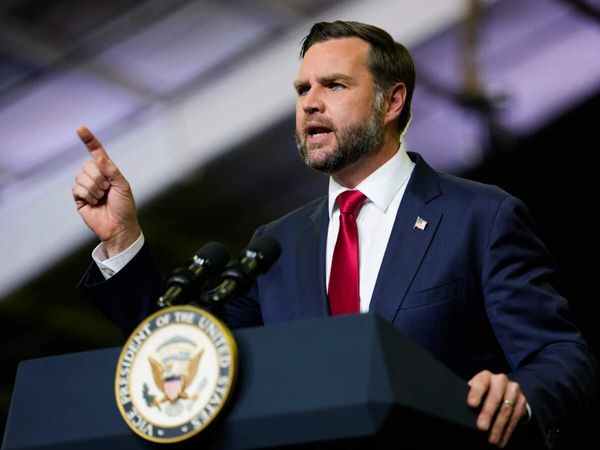
Standing before the UN General Assembly on September 22, President Donald Trump told the world's leaders that the United States would keep asserting military dominance across the Western Hemisphere, casting the policy as protection against "hostile foreign adversaries" gaining ground near American borders, per the CBC's account of the address. He pointed to Venezuela as evidence the strategy works, and vowed that further interventions could follow if Washington judged them necessary.

Trump has spent the past year building a legal and military framework around that promise. He branded regional drug cartels "the ISIS of the Western Hemisphere" during the address, according to Reuters, language that echoes the foreign-terrorist-organization designations his administration issued for eight Mexican cartel networks. The doctrine already produced a concrete result on January 3, when U.S. special forces raided a fortified compound outside Caracas and flew Maduro and his wife, Cilia Flores, out of the country to face drug-trafficking charges, a mission the Pentagon called Operation Absolute Resolve, as detailed by the Council on Foreign Relations.

MEXICO-GOVERNMENT-PRESSER
Mexico's President Claudia Sheinbaum speaks during her daily press conference at Palacio Nacional in Mexico City on September 24, 2026. Photo by YURI CORTEZ / AFP via Getty Images

Mexico Pushes Back Without Picking a Fight

Trump turned directly to Mexico during the speech, calling the country the epicenter of hemispheric cartel violence and arguing it needed to reclaim control of territory he said was run by criminal networks, a framing reported by Mexico News Daily. President Claudia Sheinbaum answered two days later at her morning press conference, choosing sarcasm over confrontation. She noted she could just as easily point to America's own drug-use and gun-manufacturing problems, "but I'm not going to say that," according to remarks translated and reported by voz.us. Her government has spent much of 2026 anchoring cooperation with Washington to a standing four-part framework built around sovereignty, mutual trust, shared responsibility and coordination that stops short of subordination, a formula her administration has restated repeatedly in official communiqués with U.S. counterparts, including the Mexican foreign ministry.

US-UNITED NATIONS-DIPLOMACY
Brazil's President Luiz Inacio Lula da Silva speaks during the 81st United Nations General Assembly at the United Nations Headquarters in New York, on September 22, 2026. Photo by ANGELA WEISS / AFP via Getty Images

Brazil Refuses the "Backyard" Label

Hours before Trump spoke, Brazilian President Luiz Inácio Lula da Silva opened the General Assembly's annual debate with his own warning, describing a resurgence of hegemonic ambition across the region without naming the United States outright, as reported by Al Jazeera. "Brazil does not belong in anyone's backyard," he told the assembled delegates. Lula argued that dividing the world into spheres of influence was an outdated approach to diplomacy, and said his government would keep responsibility for its own borders rather than accept naval patrols, pushing instead for international coordination against the arms and money flows that fund organized crime, according to UPI's coverage of the speech.

US-UNITED NATIONS-DIPLOMACY
Cuba's Minister for Foreign Affairs Bruno Eduardo Rodríguez Parrilla speaks during the 81st United Nations General Assembly at UN headquarters in New York on September 26, 2026. Photo by CHARLY TRIBALLEAU / AFP via Getty Images

Cuba Leaves the Room, Then Fires Back

The sharpest moment of the session came when Trump called Cuba an "absolutely failed state" and predicted the collapse of its government. Cuban delegates rose and left the chamber in protest while he was still speaking, an exit confirmed by WLRN. Cuban Foreign Minister Bruno Rodríguez responded that afternoon on social media, dismissing the characterization as false and describing Washington's fuel and trade restrictions on the island as "an act of genocide and collective punishment," per WLRN's follow-up reporting from Rodríguez's formal UN address four days later.

Not every government in the hemisphere is resisting Washington's approach. On the sidelines of the Assembly, Trump met with representatives from the Shield of the Americas, a U.S.-led anti-cartel coalition he launched in March, and pressed member states to formally designate two dozen criminal groups as common threats to regional stability, according to Al Jazeera's coverage of the meeting. More than a dozen countries — including Argentina, Colombia, Ecuador and Peru — signed on to tougher sanctions against the designated networks, a step the Washington Times reported still requires domestic legislation in several member states before it takes effect. Brazil and Mexico, the region's two largest economies, remain outside the coalition entirely.

What to Watch Next

The split leaves Latin America visibly divided heading into the rest of the Assembly session: one bloc of governments betting on closer security ties with Washington, another treating the same military buildup as a threat to be resisted through international law rather than negotiation. With Brazil's own presidential election weeks away and Mexico's security relationship with the U.S. still unresolved, further statements from regional capitals are expected in the coming days.

Sign up to read this article
Read news from 100's of titles, curated specifically for you.
Already a member? Sign in here
Related Stories
Top stories on inkl right now
One subscription that gives you access to news from hundreds of sites
Already a member? Sign in here
Our Picks
Fourteen days free
Download the app
One app. One membership.
100+ trusted global sources.