Get all your news in one place.
100's of premium titles.
One app.
Start reading
The Independent UK
The Independent UK
Athena Stavrou

Why hasn’t the UK sent warships to the Strait of Hormuz?

Sir Keir Starmer is under pressure from Donald Trump as the US president calls on Nato allies to send warships to reopen a key oil route.

Households and businesses around the world are facing soaring energy prices in the wake of the outbreak of war in the Middle East.
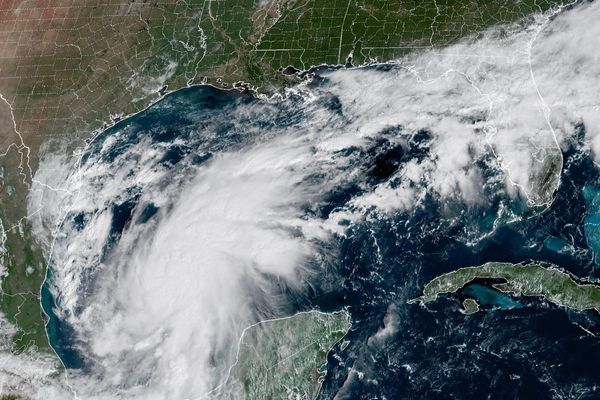
Amid ongoing US-Israeli attacks, Iran has restricted the passage of ships through the Strait of Hormuz, where about 20 per cent of the world’s daily oil usage passes through.

As oil prices soar, the US president pledged to form an international coalition to escort commercial shipping vessels through the maritime chokepoint.

But Sir Keir has so far appeared to resist the US president’s call to deploy warships to secure the Strait of Hormuz, following weeks of simmering tensions between Mr Trump and the prime minister.

Donald Trump has called for UK warships to play a role in opening up the Strait of Hormuz (Leon Neal/PA) (PA Wire)

Here The Independent look at what Mr Trump has demanded of Britain and why the UK hasn’t yet sent warships to the strait:

What has Donald Trump asked for?

Donald Trump has warned that the Nato alliance faces a “very bad” future unless allies send warships to help reopen the Strait of Hormuz.

Piling pressure on Nato allies to deepen their involvement in the escalating conflict over the weekend, the US president urged Britain to send ships to the area to protect oil tankers from Iranian attacks.

In an interview with the Financial Times, Mr Trump reiterated his call for allied assistance in the Straight of Hormuz, telling the paper: “It’s only appropriate that people who are the beneficiaries of the strait will help to make sure that nothing bad happens there.”

Sir Keir on Sunday spoke to Mr Trump on Sunday, but did not respond to the US president’s demands. (PA Wire)

It follows previous calls for the UK, China, France, Japan and South Korea to send ships to secure the route.

Arguing that Nato faces a “very bad” future should its member states fail to help, the president added: “We’ll see if they help us. Because I’ve long said that we’ll be there for them but they won’t be there for us.”

Why has Britain not sent a warship?

Speaking at a press conference on Monday, the prime minister said the UK “will not be drawn into the wider war” but confirmed he is working with allies on a plan to reopen the Strait of Hormuz.

Instead of sending a warship, ministers are mulling over the possibility of sending mine-hunting drones to the region.

Sir Keir on Sunday spoke to Mr Trump for the first time since he called for help from other nations to secure the Strait of Hormuz on Sunday, but did not respond to the US president’s demands.

But on Monday, the prime minister did not rule out getting involved in getting the straits open but said: “We want as many partners as possible involved as possible.”

He insisted it is “vital” to keep the straits open because of the impact on fuel prices and supply.

As a result of the blockade, the price of oil jumped to more than $100 (£74) a barrel last week for the first time since 2022 (AFP via Getty Images)

Energy secretary Ed Miliband said there was “a range of things” that the UK and its allies could do to secure the route on Sunday.

Mr Miliband added: “We are intensively looking with our allies at what can be done, because it’s so important that we get the strait reopened.”

Why is the Strait of Hormuz so important?

A crucial oil route, the effective closure of the Strait of Hormuz has ground trade in the region to a halt and prompted energy prices around the globe to soar.

Following the outbreak of war with the US, Iran has taken control of the passage, effective a fifth of the world’s oil which passes through the route.

A crucial oil route, the effective closure of the Strait of Hormuz has ground trade in the region to a halt and prompted energy prices around the globe to soar (Copyright 2026 The Associated Press. All rights reserved.)

As a result of the blockade, the price of oil jumped to more than $100 (£74) a barrel last week for the first time since 2022.

The cost of heating oil, which is used by around 1.5 million homes in Britain, has doubled since the crisis began.

In a bid to address concerns at home, Starmer announced a £53 million support package to help households grappling with spiralling energy costs on Monday.

He set out targeted support for the most vulnerable of the 1.5m households reliant on heating oil, which - unlike gas and electricity - is not covered by the energy price cap.

Chancellor Rachel Reeves is expected to set out the full details of the package of support next week, which is expected to involve direct payments to vulnerable households. However, it is not known exactly how many homes will receive the support.

Sign up to read this article
Read news from 100's of titles, curated specifically for you.
Already a member? Sign in here
Related Stories
Top stories on inkl right now
One subscription that gives you access to news from hundreds of sites
Already a member? Sign in here
Our Picks
Fourteen days free
Download the app
One app. One membership.
100+ trusted global sources.