
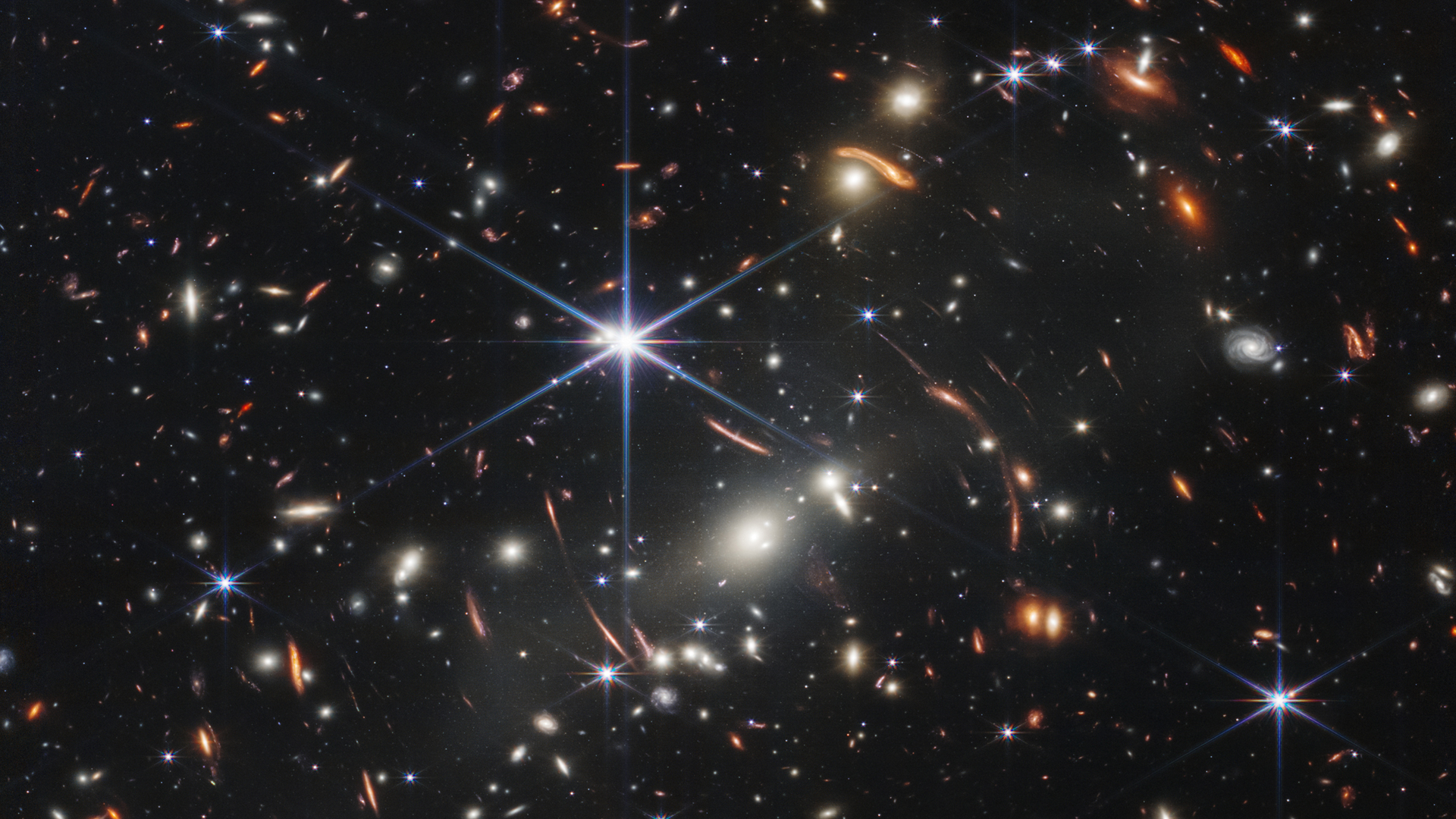
Structures known as "zippers" and "twisters" in the early universe may explain why dwarf galaxies tend to line up with each other, as well as hint at how dark matter operates in the universe.
Every major galaxy like the Milky Way has a retinue of smaller dwarf galaxies orbiting it. The Milky Way has several dozen, including the famous Large and Small Magellanic clouds. Beginning in the 1970s, astronomers noticed that these dwarf galaxies' positions and orbits weren't entirely random. Instead, dwarf galaxies tended to exist within the same plane. For example, the 11 brightest satellites of the Milky Way share a plane, and many dwarf galaxies around the Andromeda galaxy form what is known as the Great Plane of Andromeda.