
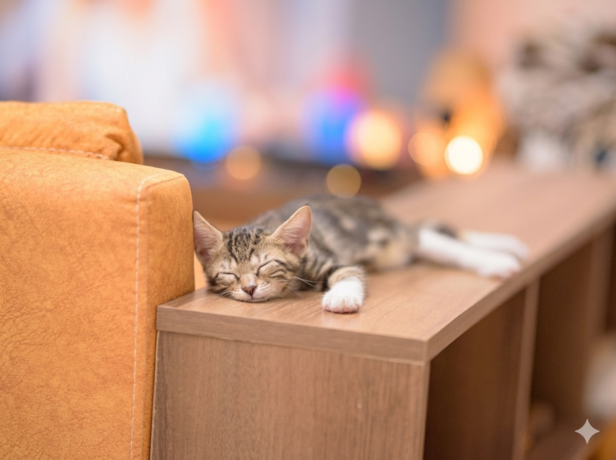
If you’ve ever owned a cat, you’ve probably wondered why your furry companion spends most of the day curled up and sleeping. Unlike humans, cats follow a completely different sleep cycle that is deeply rooted in their evolutionary instincts. Even domesticated cats retain the habits of their wild ancestors, which explains their unusual sleeping patterns. Understanding why cats sleep so much not only satisfies curiosity but also helps pet owners ensure their cats are healthy and comfortable.

Evolutionary Instincts: Energy Conservation for Hunting
Cats may look lazy, but their sleeping habits are actually a survival strategy inherited from their wild ancestors. In nature, cats rely on short bursts of energy to hunt prey. Unlike animals that graze or forage throughout the day, cats must be quick, focused, and powerful when they act. To support this lifestyle, their bodies are designed to conserve energy whenever possible. Even domestic cats, who no longer need to hunt for survival, still carry this instinct. Their long hours of sleep act like a “battery recharge,” preparing them for sudden activity such as playing, jumping, or chasing. This is why your cat may sleep all day and suddenly become highly active for a short period it’s mimicking a natural hunting cycle.
Crepuscular Nature and Unique Sleep Cycle
Cats are crepuscular animals, which means they are naturally most active during dawn and dusk. This behavior comes from their wild roots, where their prey such as rodents and birds are also active during these times. As a result, cats adjust their sleep schedule accordingly. You may notice your cat sleeping peacefully during the afternoon but becoming energetic early in the morning or late at night. Their sleep is not continuous like humans; instead, it consists of multiple naps spread throughout the day. This pattern allows them to stay alert and ready to react quickly if needed. It’s also why cats often wake up easily at the slightest noise, even while appearing deeply asleep.
Light Sleep vs Deep Sleep: Always Alert
A fascinating aspect of feline sleep is that most of it is light sleep. During this phase, a cat’s body rests, but its senses remain active. Their ears may twitch, and their eyes might stay slightly open. This allows them to respond instantly to any potential threat or opportunity. Only about 20 to 30% of their sleep is deep sleep, which is when true physical recovery happens. During deep sleep, cats may curl up tightly and become less responsive. You might even see small movements, like whisker twitching or paw jerks signs that they could be dreaming. This balance between light and deep sleep ensures that cats remain both rested and alert, a crucial trait for survival in the wild.
Factors That Affect Sleep: Age, Diet, and Environment
Not all cats sleep the same amount, and several factors influence their sleeping habits. Age plays a major role kittens and older cats tend to sleep much more than young adults. Kittens need extra rest for growth and development, while senior cats conserve energy due to slower metabolism.Diet is another important factor. Cats that eat balanced, protein-rich meals tend to have healthier energy levels, while poor nutrition can lead to excessive laziness or lethargy. Overfeeding can also make cats less active, increasing their sleeping time unnecessarily. Environment also matters. Cats feel most comfortable sleeping in warm, quiet, and safe spaces. A stress-free environment encourages healthy sleep, while anxiety or discomfort can disrupt their rest. As a pet owner, creating a cozy and secure space can significantly improve your cat’s sleep quality.
Cats sleep a lot because it is part of their natural design, not laziness. Their long sleeping hours help conserve energy, support their predatory instincts, and maintain overall health. By understanding their sleep habits, pet owners can better care for their feline companions. As long as your cat is active, eating well, and behaving normally when awake, there’s no need to worry your sleepy cat is simply following its natural rhythm.