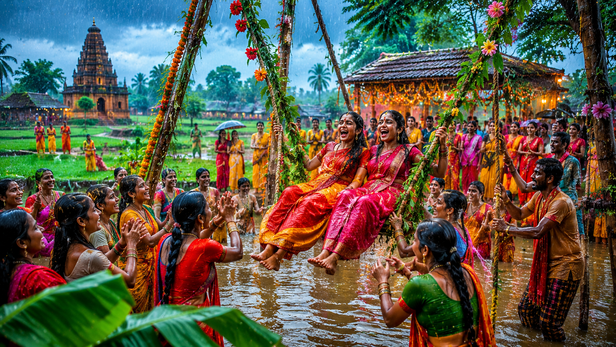
What if a simple plate of kheer, puri, and mango carried centuries of tradition, faith, and gratitude? Every year, as dark clouds gather over the fields and the scent of rain fills the air, families across Bihar prepare for a festival that many outside the region have never heard of. Known as Adra, this unique celebration marks much more than the arrival of the monsoon. It is a festival where nature, farming, family, and devotion come together in a beautiful way. Hidden behind its simple customs is a powerful story that continues to unite generations even today.
A Festival That Begins With The First Signs Of Rain
The arrival of Ardra Nakshatra signals the beginning of the farming season.
As June reaches its peak, farmers across Bihar look toward the sky with anticipation. The arrival of Ardra Nakshatra is traditionally associated with the beginning of the monsoon season. For agricultural communities, this period marks the start of preparation for sowing crops. The first rains bring relief after months of heat and dryness. Adra is not merely a festival on the calendar; it is a celebration of hope. Every cloud, every drop of rain, and every breeze carries the promise of a new harvest and renewed prosperity.
The Meaning Hidden In The Word 'Ardra'
The word Ardra symbolizes moisture, the foundation of life.
The word "Ardra" means moisture or wetness, one of nature's most essential gifts. Without moisture, seeds cannot sprout, crops cannot grow, and life struggles to flourish. Ancient traditions recognized this connection long before modern science explained it. The festival reminds people that prosperity begins with nature's blessings. By celebrating Ardra, communities express gratitude for the rain that sustains their lives. It is a beautiful example of how traditional wisdom connects everyday survival with spiritual appreciation.
The Famous Adra Thali Everyone Waits For
One of the most anticipated parts of the festival is the Adra Thali. Families prepare delicious dishes such as dal puri, kheer, seasonal vegetables, and the beloved Malda mango. Before anyone eats, the food is offered to the divine as a symbol of gratitude. The meal is then shared among family members, relatives, and guests. This tradition transforms food into something much more meaningful. Every dish represents abundance, blessings, and the joy of sharing together during the arrival of the monsoon season.
Why Malda Mango Holds A Special Place
A unique feature of Adra is the tradition of eating Malda mangoes. By the time Ardra Nakshatra arrives, the mango season is nearing its end. Families enjoy this final celebration of one of India's most loved fruits before the seasonal transition begins. Beyond its sweet taste, the mango symbolizes gratitude for nature's bounty. It reminds people to appreciate every season before it passes. This simple custom has become one of the most cherished memories associated with the festival.
Worship For Rain, Prosperity And Protection
Religious devotion forms an important part of Adra celebrations. According to tradition, Ardra Nakshatra is associated with Lord Shiva. Devotees offer prayers to Lord Shiva, along with prayers to rain deities and family deities. These rituals are performed with hopes for timely rainfall, healthy crops, and prosperity throughout the year. For farming communities, these prayers are deeply connected to daily life. They reflect a timeless belief that nature's blessings and human effort must work together to create abundance.
A Festival That Brings Communities Together
In many parts of Mithila and rural Bihar, Adra is celebrated collectively. Villagers gather for community prayers, traditional rituals, and shared meals. These gatherings strengthen relationships and create a sense of belonging. Elderly family members pass down customs to younger generations, ensuring that cultural traditions remain alive. The festival serves as a reminder that true prosperity is not measured only by harvests but also by the strength of family and community bonds. This spirit of togetherness remains one of Adra's greatest treasures.
More Than A Festival, A Celebration Of Life
At its heart, Adra is much more than a seasonal celebration. It marks the beginning of a new agricultural cycle, a fresh chapter for farmers, and a moment of gratitude toward nature. The festival teaches valuable lessons about patience, appreciation, and harmony with the environment. As the first monsoon showers touch the earth, Adra reminds people that every ending leads to a new beginning. It is a celebration of renewal, faith, and the enduring relationship between humanity and nature.
Frequently Asked Questions (FAQs)
1. What is the Adra Festival of Bihar?Adra Festival is a traditional seasonal celebration observed in Bihar and the Mithila region during the arrival of Ardra Nakshatra. It marks the beginning of the monsoon season and symbolizes gratitude toward nature, agriculture, and family unity.
2. Why is Adra Festival important?
The festival is closely linked to farming and rainfall. It is believed that the arrival of Ardra Nakshatra signals the start of agricultural activities, making it an important occasion for farmers who depend on timely monsoon rains for a successful harvest.
3. When is Adra Festival celebrated?
Adra Festival is celebrated during the period of Ardra Nakshatra, which generally falls between late June and early July. In 2026, it is observed during the monsoon transition period when the Sun moves through Gemini according to traditional Hindu astrology.
4. What does the word "Ardra" mean?
The word "Ardra" means "moisture" or "wetness." It represents the life-giving water that nourishes the earth, supports agriculture, and sustains all living beings.
5. What is special about the Adra Thali?
The Adra Thali is a traditional festive meal prepared on this occasion. It usually includes dal puri, kheer, seasonal vegetables, and Malda mangoes. The food is first offered to the divine and then shared among family members and relatives.


