
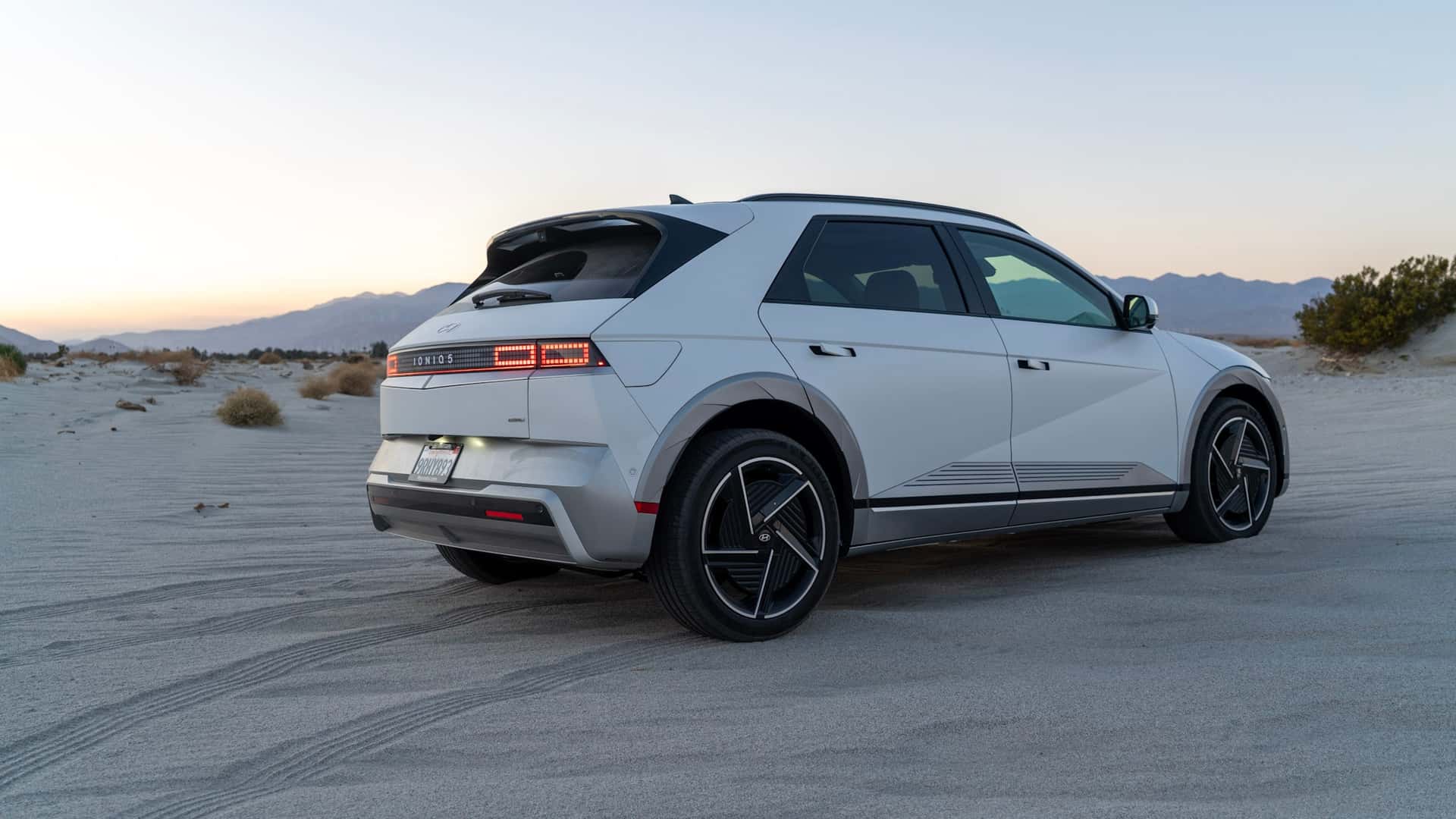
- Car-buying website Edmunds predicts a huge flood of lease turn-ins in 2026.
- That will include electric vehicles, many of which were leased during the tax credit era.
- Coupled with depreciation, this means that a giant supply of low-mileage EVs are hitting dealer lots, many with excellent range and outstanding features.

Some people say that given recent trends, the auto industry bet wrong on electric vehicles. I see things differently. I think it bet wrong on high prices.
New car prices skyrocketed to around $50,000 this year, and EV models went even higher, especially after the $7,500 federal tax credit vanished. You can blame a number of trends for this. Inflation is certainly one of them. But in general, automakers looked at the car-buying trends of the 2010s—when Americans kept going bigger and better and nicer—and anticipated they too could keep going up and up forever.
Today, with interest rates still high and amid persistent inflation, people feel differently about new car purchases. More than ever, they're after a good deal. And in 2026, the used EV market seems poised to give it to them.
New data from the car-buying website Edmunds indicates that next year will see a surge in off-lease vehicles returning to the market. "The sharp drop in leasing activity in 2022 left 2025 with unusually thin inventories of lower-mileage, near-new vehicles, limiting affordable choices for many shoppers," Edmunds analysts said. "As leasing began to recover in 2023, the resulting 2026 lease returns will start to help fill a gap that was especially visible in 2025."
If you want numbers around that, Edmunds estimates that around 400,000 more lease returns will return to the market in 2026. "A healthier flow of off-lease returns will give consumers more flexibility—especially those priced out of the new-vehicle market or looking to avoid today's higher monthly payments," analysts said.
They don't say this explicitly, but I'll take things a step further: it's about to be a great year to get an awesome, affordable used EV.
Gallery: 2024 Kia EV6: Long-Term Test, One Year Later


As Edmunds notes in that data, about 71% of EVs sold in recent years were leased. This stemmed from a quirk in the EV tax credit rules: to qualify for the full $7,500, a car had to be built in North America—but if it was leased, any EV qualified for the credit regardless of where it was made. And carmakers started offering obscenely cheap lease deals just to entice people to go electric. Thus, nearly everyone who got a new EV in recent years leased it (including yours truly).

But since most lease deals are two or three years long, many of those EVs are due back next year (also including yours truly's car). And EV depreciation has been unfortunately steep—about 13% or more than gas cars, in part because there's no standard to evaluate battery health. These initial owners' losses, however, could soon be your gain. Many well-equipped used EVs now retail for $30,000 or less, often with excellent range, tons of features and more power than a comparable gas car.
Take the Ford Mustang Mach-E, still a staff favorite after all these years. According to CarGurus data, they now sell for an average of $28,970—which made me spit out my drink when I read it. If you buy a lease turn-in, like a 2023 Mach-E Premium with 290 to 306 miles of range, with loads of tech and probably less than 30,000 miles on the odometer. Find me a gas car deal that good. I'll wait. Or you give in to your evil side and get the Mach-E GT, with 480 horsepower. Those can also be had for much cheaper than they went for originally.

Or the Kia EV6, which I have. My car was over $50,000 when I got it (thanks, cheap lease deals). Today, CarGurus says their average used retail prices are around $27,427, as of this writing. Again, that gets you into a comfortable, family-friendly crossover with excellent performance, around 300 miles of range, Tesla Supercharger access (via an adapter) and the best charging speeds in its class for less than $30 grand.
And the Tesla Model Y is still hard to beat, especially if you buy one used. Right now, CarGurus says they retail for around $29,429 on the pre-owned market, and that gets you a lot of car for not a ton of money.
But if you're new to EV-buying, you may be thinking: what about the battery? The good news is that study after study shows us that modern EV batteries hold up remarkably well. With a lease turn-in around 30,000 miles or so, it's unlikely you will see any real battery degradation—and thus, loss of range—for a long time. On older Teslas, we've seen plenty of examples getting past 200,000 and even 300,000 miles with 80% battery capacity or more. It's simply not an issue like people think it is.

The EV tax credit once included a discount of up to $4,000 for used models, but that's unfortunately no longer the case. But depreciation is still opening the door to a great deal. So if you've been putting off car-shopping until 2026, your patience may soon be rewarded if you go electric—and then you probably won't go back to gas.
Contact the author: patrick.george@insideevs.com