Get all your news in one place.
100's of premium titles.
One app.
Start reading
The Canberra Times
The Canberra Times
Dana Daniel

There's a new US ambassador coming to town

Visitors who travel to Prime Minister Anthony Albanese's official Canberra residence by electric vehicle need not fear a flat battery.

Public Eye has confirmed that an EV charger has been installed at The Lodge, at a cost of $2415, "to accommodate low emissions Commonwealth vehicles."

The Comcar fleet that ferries politicians, departmental secretaries and visiting dignitaries around is now dominated by BMW fully electric luxury iX40 and iX50 SUVs, after Finance phased out petrol-guzzlers in pursuit of the government's net zero emissions by 2030 target.
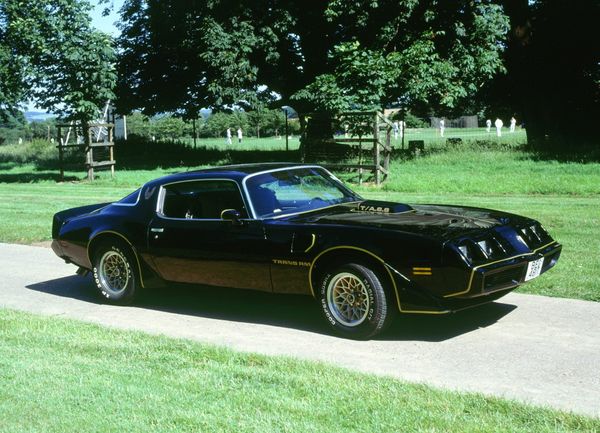
Mr Albanese has had a private-plated EV since late 2024, according to his travel entitlement disclosures, but perhaps it's wife Jodie Haydon - or another family member - behind the wheel?

The Prime Minister shared in 2022 that he'd been banned from driving upon taking office due to security concerns, bar the occasional "sneaky" trip under Australian Federal Police escort.

As per the usual protocol, he is transported in a high-security, armoured BMW 7 series limousine.

While an electric version - the BMW i7 Protection - was released in Europe two years ago, it is yet to hit Australian shores.

Incoming US ambassador David Brat in 2018. Picture AAP

After a lengthy diplomatic void, the United States embassy is set to finally welcome a new ambassador.

And it seems that David Brat, the former Republican congressman announced as ambassador to Australia by US President Donald Trump on Saturday AEST, will have a refreshed staff when he moves into his Yarralumla digs next month.

A list of job vacancies has been posted on the embassy's website, including a cleaner - who may need to wipe a layer of dust from the ambassador's office, after the permanent role sat vacant for almost two years - along with a plumber, a maintenance worker and a social media manager.

The US embassy is also hiring an economic specialist, a procurement agent - and, of course, a human resources assistant to look after the new recruits.

A pay bump is on the way for some federal public servants, but the union says it falls "widely short."

Agencies that sit outside of the Australian Public Service have to wait until March before they can put in place new comprehensive enterprise bargaining agreements.

That means employees of the Commonwealth Scientific and Industrial Research Organisation (CSIRO), Australian Securities and Investments Commission (ASIC) and departments of the House of Representatives and Senate have to wait for any chance of a significant pay rise.

The Australian Public Service Commission has issued guidance to these agencies, which have agreements due to expire before 28 February, to offer interim base pay increases of 3 per cent (or 1.5 per cent over six months).

With Australia's headline inflation at 3.8 per cent in the year to June 30, Community and Public Sector Union national secretary Melissa Donnelly says it "falls widely short of what members need and expect."

"We have been very clear - pay rises must keep up with the cost of living," Ms Donnelly says.

"The government is going to have to do a lot better in upcoming negotiations."

The APSC says interim arrangements will "enable affected non-APS agencies to realign their bargaining cycles so agencies, employees and their representatives can bargain with more certainty around APS-negotiated outcomes and the Commonwealth pay offer."

The CPSU is pursuing a three-year pay increase of 15 per cent, a figure Finance Minister Katy Gallagher has warned is unlikely.

The APSC has crunched the numbers on APS remuneration and found that base salaries increased by 4.2 per cent in 2025, while the average gender pay gap fell from 4.4 per the previous year to 4.1 per cent.

The persisting gap was "driven primarily by the different representation of females and males across classifications," rather than pay differences for the same roles.

The APS Remuneration Report also tallied performance bonuses, which Commonwealth agencies have been told to cut back and award only for roles that involve "demonstrable at-risk outcomes, like those involving significant investment or public milestones."

It found the number of agencies that made such payments fell from six to five, and just 374 of the 187,279 APS employees counted received a bonus.

The APSC shouted out the Department of Foreign Affairs and Trade for having ended bonuses for non-Senior Executive Service employees, which meant its median bonus payment spiked from $800 in 2024 to $27,224 in 2025.

The average performance bonus across the APS was $76,940.

Assistant minister for productivity, competition, charities and treasury Andrew Leigh has put the big supermarkets on notice yet again.

After ABC Four Corners aired an investigation into food fraud, misleading country-of-origin packaging labels and adulterated products on Australian supermarket shelves, Dr Leigh popped up to spruik the Albanese government's response.

"Australians deserve accuracy on their shelves and should know that what supermarkets and retailers are saying is accurate," he told reporters in Parliament House on Friday.

The Australian Competition and Consumer Commission (ACCC) would be "using their appropriate resources to inquire into some of the claims that have been made around misleading labelling," he said, adding that the government had already taken "strong action" on price gouging and "shinkflation."

We can't help but imagine the dinner table conversation chez Leigh, with a member of the Fenner MP's family working part-time at a Woolworths, according to his register of interests.

Sign up to read this article
Read news from 100's of titles, curated specifically for you.
Already a member? Sign in here
Related Stories
Top stories on inkl right now
One subscription that gives you access to news from hundreds of sites
Already a member? Sign in here
Our Picks
Fourteen days free
Download the app
One app. One membership.
100+ trusted global sources.