
Get all your news in one place.
100's of premium titles.
One app.
Start reading
The Conversation
The Conversation
Robert Wyss, Professor Emeritus of Journalism, University of Connecticut

When coal smoke choked St. Louis, residents fought back − but it took time and money

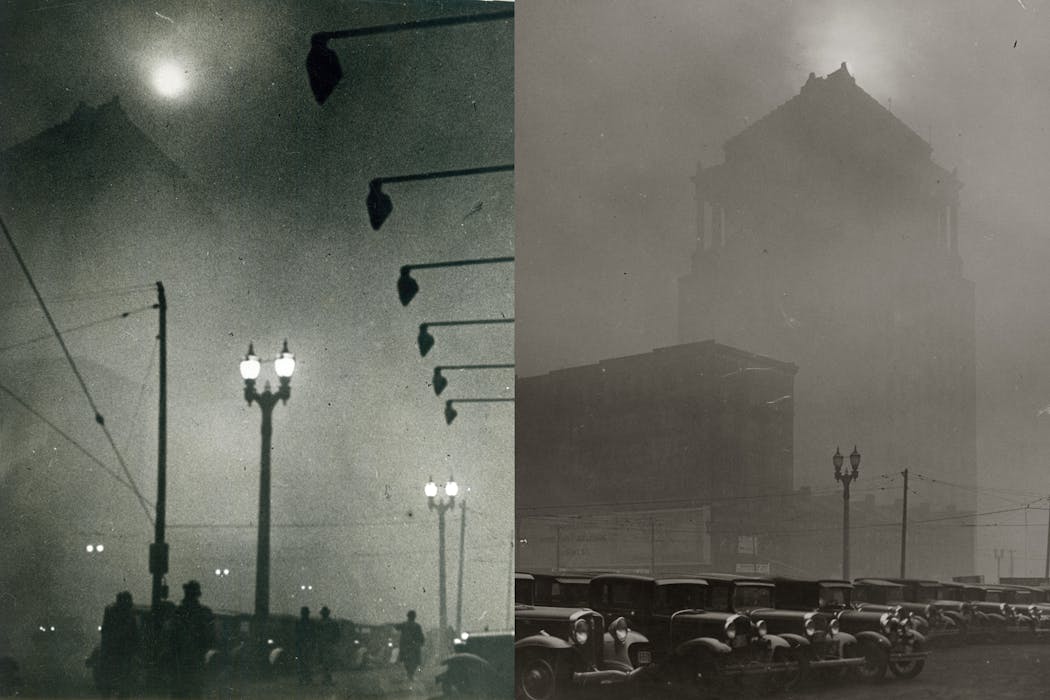
Scenes from downtown St. Louis on 'Black Tuesday,' Nov. 28, 1939, show how thick the smoke was even in the middle of the day. Missouri Historical Society

It was a morning unlike anything St. Louis had ever seen. Automobile traffic crawled as drivers struggled to peer through murky air. Buses, streetcars and trains ran an hour behind schedule. Downtown parking attendants used flashlights to guide vehicles into their lots. Streetlamps were ignited, and storefront windows blazed with light.

Residents called Nov. 28, 1939, “Black Tuesday.” Day turned to night as thick, acrid clouds blackened the sky. Even at street level, visibility was just a few feet. The air pollution was caused by homes, businesses and factories, which burned soft, sulfur-rich coal for heat and power. The soft coal was cheap and burned easily but produced vast amounts of smoke.

Sign up to read this article
Read news from 100's of titles, curated specifically for you.
Already a member? Sign in here
Related Stories
Top stories on inkl right now
One subscription that gives you access to news from hundreds of sites
Already a member? Sign in here
Our Picks
Fourteen days free
Download the app
One app. One membership.
100+ trusted global sources.







