
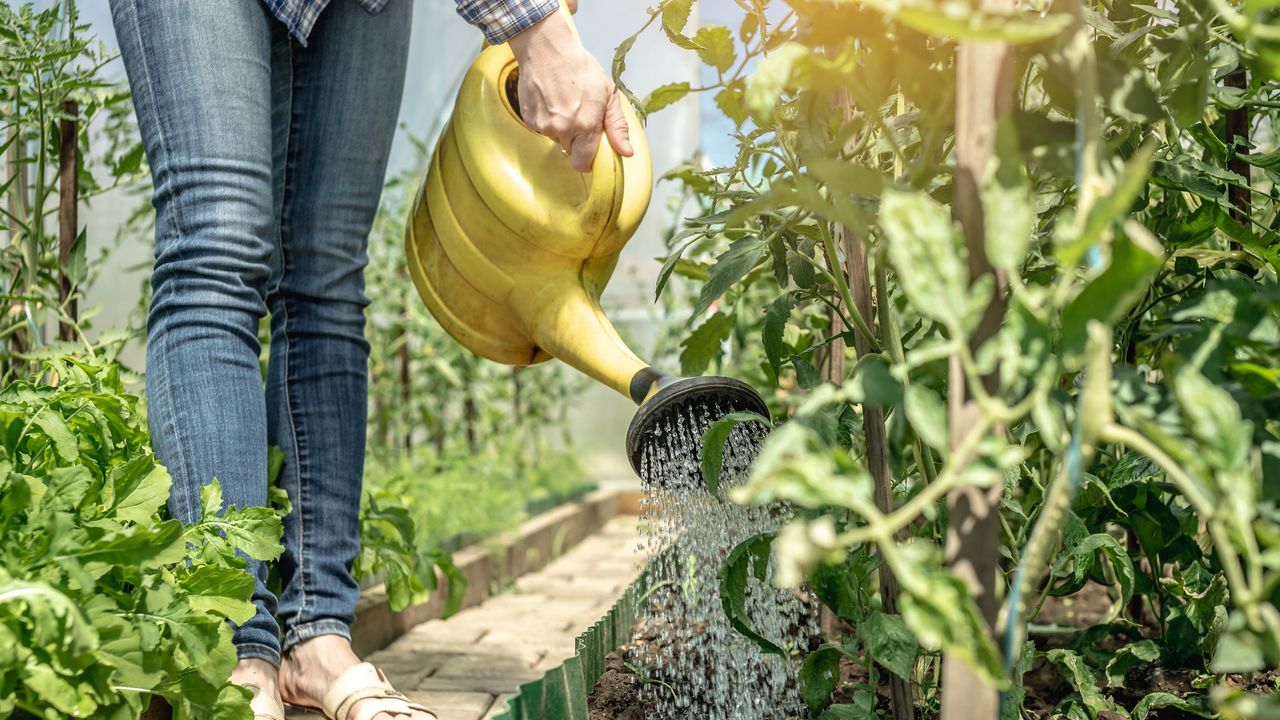
If your tomato plants are like mine at the moment, they’ll be growing strongly, producing flowers, and maybe even showing the first fruits. It is a crucial time in the season, and there are certain things you need to do with tomato plants in July to keep them healthy; the most important is watering.
As the focus shifts from producing foliage to developing and ripening fruit, it is pivotal to keep the plants well-watered, especially when the temperatures soar. If they dry out, they will drop flowers, and inconsistent watering can lead to split fruits and blossom-end rot. Tomato plants also need to be fed and pruned this month to ensure no energy is wasted and to help your plants avoid succumbing to disease.
When growing tomatoes, July is an exciting month as you see the first glimpses of those tantalizing harvests to come. A few crucial maintenance tasks this month ensure your plants remain in perfect health and you can enjoy rich pickings in the weeks to come. With watering a key concern, expandable hose like the Flexzilla one on Amazon is perfect for the job and stores super easily.
Stay on Top of Watering
Tomatoes are thirsty plants. They usually need one or two inches of water a week, but this requirement increases during a heatwave, especially when the plants are flowering and fruiting. If yours, like mine, are now just starting to bloom and showing the first fruits, it is a crucial time to keep up regular watering.
Use your fingers or a soil moisture meter (available at Amazon) to measure the water levels an inch or two under the surface of the soil. If it is dry, then water plants deeply. This may need to be done daily, or more often if the tomatoes are in containers.
Another useful tip is to always water the soil, and not the foliage. Soaking the leaves puts the plant at risk of common fungal tomato diseases, such as powdery mildew.
It is hard to be exact about how much water tomato plants need; it can vary depending on your climate, where the plants are growing, and whether they are in the ground or in containers – tomatoes in pots are going to dry out much faster than those in the ground.
Staying on top of watering is important. If the soil dries out completely, plants can drop their flowers. And consistency is key, as inconsistent watering causes tomatoes to split or the fruits to suffer from blossom-end rot.

These trays are designed to fit around the base of tomato plants. Fill them with water, and they slowly seep water directly into the plant's root zone. Each set has five trays.

A soaker hose slowly directs water to the plants' roots. This lightweight soaker hose is made of 65% recycled rubber and is ideal for efficiently watering tomato plants in summer.

A watering wand is useful for directing water to the soil rather than the foliage. This 15-inch watering wand is made with strong, premium zinc alloy.
Feed Plants Regularly
The best plants and harvests always come from fertilizing tomatoes at least weekly during the summer with a fertilizer that is rich in phosphorus and potassium.
All advice for growing tomatoes will tell you to feed plants regularly with tomato feed once they start flowering, which mine are now doing, as will many gardeners’ at this point in the season.
I am using a seaweed-based fertilizer this year, but you can use any liquid tomato feed for the task. This tomato booster at Walmart, for example, is a great liquid feed and has an NPK of 3:8:7.
It is up to you how often you wish to feed them, but my preference is every week or two, depending on where the plants are growing.
If you grow tomatoes in pots or grow bags, like I am in my greenhouse at home and did for many years as a professional gardener, I always think it is important to have a regular weekly feeding regime. I have steadfastly stuck by this routine for years and got big harvests from plants in greenhouses when I was growing for restaurants – and I still do it at home.
You can opt to feed tomatoes growing in the ground weekly, or stretch it to every two weeks as the soil doesn’t leach nutrients as quickly as potting soil in containers.
Prune to Focus the Plants Energy
Tomatoes grow vigorously when they get the sun and warmth they desire. Sometimes it can be too vigorous, and they need controlling.
Check your plants at least weekly in July to prune tomato plants and remove suckers. These shoots form between the main stem and the leaves on vining or indeterminate tomato varieties, and they do grow quickly. But they take energy away from the rest of the plant.
Snip away these side shoots before they get too large, so the plant’s energy is focused on forming flowers and developing fruits rather than unnecessary extra shoots.
Side shoots can be nipped off with your fingers if they are small. Otherwise, you want to use pruning snips or pruning shears to remove shoots and leaves. I use a pair of these Felco pruning snips, available at Amazon, and they are ideal for precise pruning tasks like these.
Too many stems also impair airflow and increase the risk of disease, as fungal diseases can take hold if plants are congested.
Talking of disease, you should also prune away the lowest leaves this month, as well as any yellow tomato leaves. Removing the bottom foliage stops soil-borne fungal and bacterial spores from splashing up onto the plant, and helps with airflow, too.
Provide Support and Shade
When a heatwave strikes, it may be important to shade plants, especially if they are growing in a greenhouse. Tomatoes love heat, but not too much. They get stressed when the temperatures exceed 90°F, and this can cause them to drop flowers.
If it looks like your temperatures may be hitting those dangerous levels, cover plants with shade cloth. A 30-50% shade cloth (such as this shade cloth at Amazon) can provide sufficient protection from the excessive heat and sun scorch.
Tomato plants will be growing quickly at this stage of the season. You should already have supports in place for them, as ideally you put them in place when you transplant tomato seedlings.
However, if yours are not yet supported, remember to do this quickly. The plants get tall and top-heavy, and not supporting them leads to flopping stems and, in a worst-case scenario, snapping.
Use a stake or bamboo pole and tie the plants in with soft ties to prevent damaging the stems. Or you can use tomato cages to surround the plants and keep them upright.
What to Shop

A drip irrigation kit is an efficient way of watering the base of plants. This set has two different types of emitters and comes with 50 feet of both main and drip-line tubing.

This concentrated organic fish and seaweed blend fertilizer makes up to 64 gallons of feed. It is suitable for trees, lawns, flowers, and vegetables; including tomatoes.

These tomato cages are made from solid 6-gauge steel and reach 64 inches tall. Their 8-leg design and cattle-panel style provide the maximum support for plants.
FAQs
Can You Plant Tomatoes in July?
July is late to plant tomatoes, but you can still plant fast-growing determinate or bush varieties of tomatoes and get a crop before the end of the season. You can get a four-pack of live patio tomato plants at Amazon that are determinate varieties and fruit quickly.
Any list of what to do with tomato plants in July may include picking for those gardeners who started their plants off early in the year. The harvesting season starts in July, so keep a close eye on when to harvest tomatoes so you get those first fruits at the right time. Once the color deepens and the fruits have a little give when squeezed, they are ready to pick.
If you love inspiring garden ideas, outdoor advice, and the latest news, why not sign up for our newsletter and get the latest features delivered straight to your inbox?