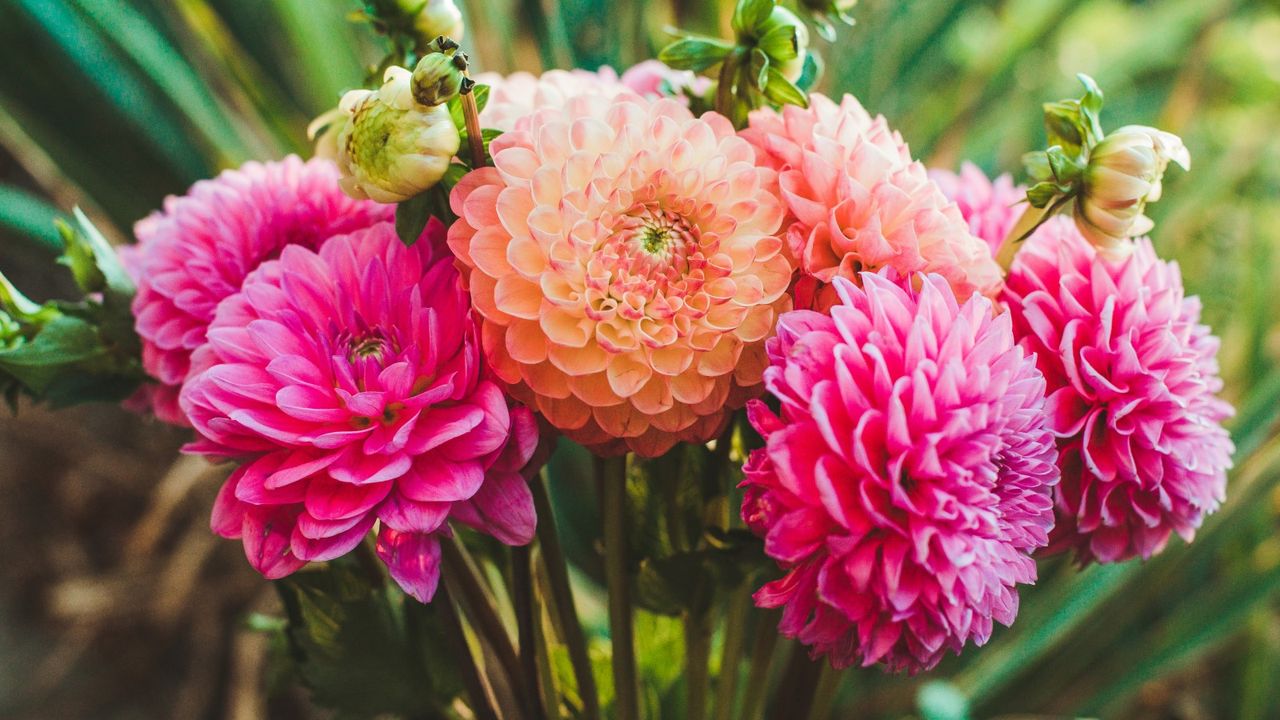
June is an exciting month for dahlias, and it’s one of my favorite times in the garden. I love growing dahlias because they change so fast this time of year – suddenly plants are taller, fuller, and, in warmer parts of the US, some are already starting to form buds. It’s also the point when good dahlia care starts to pay off later in summer.
A nostalgic favorite, growing dahlias have become hugely popular again in recent years, and it’s easy to understand why. There are so many beautiful dahlia types to grow, from small pompon and waterlily varieties to dramatic dinnerplate and cactus dahlias. They also come in almost every color imaginable, making them one of the most versatile summer flowers for US gardens.

A few simple jobs in June – like staking, feeding, watering deeply, and pinching back stems – can make the difference between weak plants with a few flowers and strong, bloom-filled dahlias that keep going right into fall.
1. Plant Out Tubers and Young Plants
If you haven’t had the chance to plant dahlia tubers yet because of late spring weather, early June is usually your last good window in cooler parts of the US. Dahlias love warmth and don’t do well in cold, soggy soil, so it’s often better to wait until overnight temperatures are consistently mild before planting.
Choose a sunny spot with rich, well-draining soil. Most dahlias need at least six hours of direct sun each day, although gardeners in hotter southern states may find plants benefit from a little afternoon shade during peak summer heat.
When you plant dahlia tubers, set them around 4 to 6 inches deep and leave about 2 feet between taller varieties to improve airflow later in the season. Water them in well, then avoid overwatering until you see strong new growth, since overly wet soil can quickly rot young tubers.
If you’re still shopping, many of the best places to buy dahlia tubers include specialist flower farms, local garden centers, and online dahlia growers, which often offer a much wider range of dahlia types than big-box stores.
2. Stake Tall Varieties Early
Staking dahlias is one of those jobs that’s easy to delay – until a summer storm rolls through and flattens your plants overnight. By this time of the year, many dahlias are growing fast, and their hollow stems can snap surprisingly easily once the flowers start getting larger and heavier. Getting the right support in place early makes a huge difference later in the season.
I always try to add stakes while plants are still fairly small. It’s much easier, and you avoid damaging tubers or roots trying to force supports into the ground later on. Bamboo canes work well for individual plants, especially in garden borders where you want supports to blend in naturally. As stems grow, loosely tie them in with soft twine or plant ties so they still have room to move.
For taller or heavier dahlias, tomato cages can be a lifesaver too, particularly in containers or windy gardens where plants need extra stability. The bigger the blooms, the more support plants usually need by midsummer.
Two useful options I’d recommend are the Heavy Duty Bamboo Garden Stakes from Amazon for staking individual stems discreetly, and the Adjustable Tomato Cage Trellis from Amazon for supporting larger, top-heavy plants in pots or borders.
3. Pinch Out Growing Tips for Bushier Plants
Once dahlias reach around 12 to 16 inches tall, it’s time to pinch out dahlias – one of those simple but surprisingly important jobs that really shape how the plants perform later on. It can feel a bit counterintuitive to cut back healthy growth just as everything is taking off, but it makes a big difference.
By removing the central growing tip, you encourage the plant to branch out instead of shooting upward on a single stem. The result is a fuller, sturdier plant with many more blooms once summer really gets going.
All you need to do is pinch or snip the main stem just above a set of leaves. You might lose a week or so of early flowers, but the payoff is a much better display overall. Most taller border and cutting dahlia types benefit most from this, while smaller bedding varieties usually don’t need it.
For this job, a clean, sharp tool makes it much easier and helps avoid damaging tender stems. A popular choice with gardeners is the Fiskars Micro-Tip Pruning Snips, which are ideal for precise work when you pinch out dahlias or trim small side shoots without crushing the plant.
4. Start Feeding Regularly
June is the month when dahlias start growing quickly and using up nutrients fast, so this is the point where it really pays to fertilize dahlias regularly. At this stage, I usually start with a balanced liquid fertilizer every couple of weeks while the plants focus on building strong leaves and stems.
Once buds begin to form later in the season, I switch to a higher-potassium feed to support stronger flowering and better blooms. A good option many US gardeners use is Miracle-Gro Water Soluble Bloom Booster Flower Food from The Home Depot, which is designed to encourage more flowers rather than leafy growth.
It’s worth being careful with high-nitrogen fertilizers at this stage, since they tend to push lots of foliage but fewer blooms – not what most of us want from dahlias.
I also like to top things off with a layer of compost or well-rotted mulch around the base of plants. It helps the soil retain moisture during hot spells and gradually improves fertility as the season progresses.
5. Water Deeply During Dry Spells
Young dahlias can dry out surprisingly fast in early summer, especially during heat waves or windy spells. When that happens, they can stall quickly, so keeping an eye on moisture levels really helps keep dahlias blooming steadily later in the season.
Instead of light watering every day, it’s better to give plants a deep soak once or twice a week, depending on rainfall and temperature. This encourages roots to grow deeper into the soil, which leads to stronger, more resilient plants as summer goes on.
Container-grown dahlias are a different story – they usually need more frequent watering, particularly in hot US climates where pots can dry out in a single day.
Whenever you can, water at the base of the plant in the early morning. Avoid wetting the foliage late in the day, since that can lead to mildew and other fungal issues once humidity builds in midsummer.
6. Watch for Slugs, Snails, and Aphids
Fresh dahlia growth in June is a magnet for pests, and it’s something most gardeners run into sooner or later. Slugs and snails are usually the first troublemakers – they can strip tender new shoots almost overnight after rain.
It helps to check plants regularly, especially early in the morning or late in the evening when damage is easiest to spot. When it comes to dahlia pests, many gardeners in the US lean on simple, wildlife-friendly methods like barriers, traps, or hand-picking rather than reaching straight for chemicals.
Aphids are another common issue on soft new growth this time of year. The good news is that healthy gardens often balance things out naturally once ladybugs and other beneficial insects arrive. If populations do build up, a gentle but effective option many American gardeners use is Bonide Insecticidal Soap from The Home Depot, which works well for knocking back aphids without being harsh on tender growth.
Good spacing between plants also helps improve airflow, which in turn reduces the risk of fungal problems later in summer.
7. Take Basal Cuttings From Vigorous Plants
If you’re hoping to grow your dahlia collection without spending more money, June is still a good time to take basal cuttings from healthy, fast-growing plants. Choose nonflowering shoots around 3 to 4 inches long and remove them cleanly near the base. Place them into small pots filled with moist potting mix and keep them somewhere warm and lightly humid while roots develop. Not every cutting will take, but successful ones can grow into flowering plants by late summer and provide extra tubers to overwinter for next year.
June is an important month for dahlias. A bit of attention now, especially with staking, feeding, and pinching back stems, makes a noticeable difference later on, leading to stronger plants and a much longer flowering season.
And once dahlias hit their peak in July and August, it’s easy to see why they’ve become so popular in US gardens again. Few plants can compete with their range of colors, shapes, and sizes, and all that variety – from different dahlia types to bold, statement blooms – more than justifies the extra care they need in early summer.