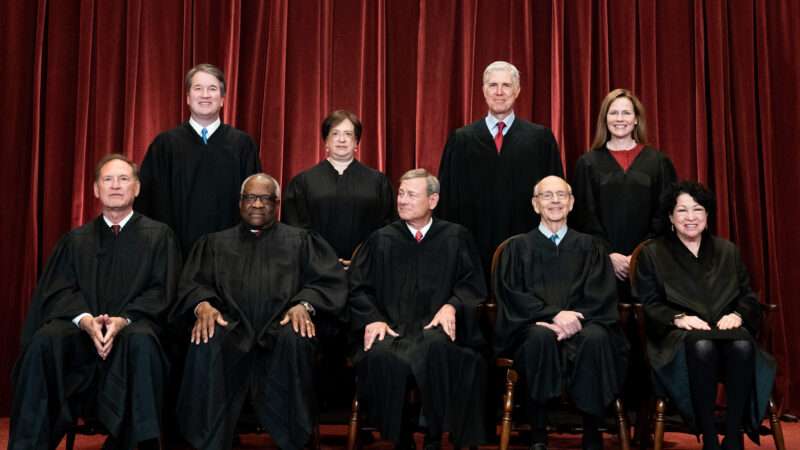
"The Constitution makes no reference to abortion," argues Justice Samuel Alito's leaked "1st Draft" opinion in Dobbs v. Jackson Women's Health Organization, "and no such right is implicitly protected by any constitutional provision, including the one on which the defenders of Roe [v. Wade] and [Planned Parenthood v.] Casey now chiefly rely—the Due Process Clause of the Fourteenth Amendment. That provision has been held to guarantee some rights that are not mentioned in the Constitution, but any such right must be 'deeply rooted in this Nation's history and tradition' and 'implicit in the concept of ordered liberty.'" Alito concludes: "The right to an abortion does not fall within this category."
Alito distorts the relevant legal history and thus misstates the historical pedigree of abortion rights. "When the United States was founded and for many subsequent decades, Americans relied on the English common law," explains an amicus brief filed in Dobbs by the American Historical Association and the Organization of American Historians. "The common law did not regulate abortion in early pregnancy. Indeed, the common law did not even recognize abortion as occurring at that stage. That is because the common law did not legally acknowledge a fetus as existing separately from a pregnant woman until the woman felt fetal movement, called 'quickening,' which could occur as late as the 25th week of pregnancy."