Get all your news in one place.
100's of premium titles.
One app.
Start reading
Latin Times
Latin Times
Politics
Clara Espinoza

What Mamdani's Office of Worker Power Actually Means for Delivery Workers and Nannies

NEW YORK, NEW YORK - SEPTEMBER 6: Politicians including Sen. Bernie Sanders (I-VT) (3rd-R) and New York mayoral candidate Zohran Mamdani (4th-R), march during the 2025 NYC Labor Day Parade on September 6, 2025 in New York City. Hundreds of workers from various unions marched in this year's parade. (Credit: Photo by Heather Khalifa/Getty Images)
  • Mayor Zohran Mamdani signed the executive order creating the Mayor's Office of Worker Power on Sept. 3 and unveiled it publicly on Labor Day, Sept. 7, naming organizer Tony Perlstein its first executive director.
  • City Hall describes the office's main job as connecting workers to unions and worker centers, not running a complaints desk — though it also pushes agencies to investigate employers even when no one has filed a complaint.
  • Existing city protections already cover every worker "regardless of job or immigration status," and anonymous complaints can be filed right now at nyc.gov/workers or by calling 311.
  • The office is still a one-person operation: Perlstein hasn't formally started yet, no other staff have been hired, and no budget has been made public.

New York City wants delivery riders, nannies and day laborers building unions, not just filing complaints, through an office that City Hall opened this week.
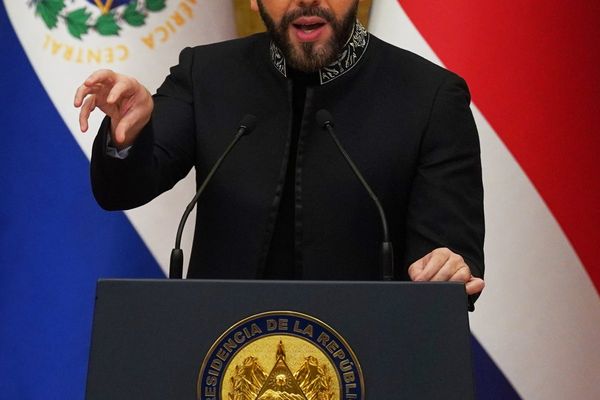
Mayor Zohran Mamdani put his signature on an executive order creating the Mayor's Office of Worker Power on September 3, then used the Labor Day holiday four days later to introduce it to the public, with longtime union organizer Tony Perlstein tapped as its first executive director. For the Latino workforce clustered in delivery, domestic work, day labor and hotel jobs, the office's real news is less about a new complaint line and more about a City Hall push to get more of those workers into unions, paired with a promise that agencies will chase down abusive employers even when nobody has come forward.

Organizing Sits at the Center, Not Enforcement Alone

Coverage since launch has occasionally cast the new office as a wage-theft watchdog first and foremost. That undersells what City Hall itself says the office is for. City Hall's own description positions MOWP mainly as a matchmaker: pulling rank-and-file employees, union leaders and worker centers into the same room, running public hearings on shared workplace problems, and pointing people toward groups already fighting for better conditions. Enforcement rides alongside that mission rather than leading it — Deputy Mayor for Economic Justice Julie Su oversees MOWP as part of her broader labor-policy-and-enforcement portfolio, giving the office a foot in both organizing and accountability.

Mamdani cast the mission in personal terms, saying the office exists so "workers have a seat at the table" well before conditions sour.

Who City Hall Says This Is Built For

Su has been explicit that immigrant and low-wage workers sit at the top of MOWP's priority list, naming immigration-based exploitation as a focus area the office intends to address head-on. Bakers, delivery drivers, home caregivers, hotel staff, baristas and construction crews were the exact jobs she named when describing whose working conditions the office is meant to touch. Many of those workers, Su said, want their conditions to change but simply "don't know what they can do to make that happen."

Investigations That No Longer Wait on a Complaint

The most consequential shift for mixed-status households sits in how cases start. Agencies have traditionally opened labor investigations only once a worker comes forward — a step plenty of people skip out of fear. Mamdani's order pushes past that, directing agencies to pursue violations more aggressively even without a filed complaint. Working alongside the Department of Consumer and Worker Protection, the Taxi and Limousine Commission and the NYC Commission on Human Rights, MOWP is developing protocols that let investigations begin on their own, prioritizing employers with repeat violations and workforces weighted toward low pay. Perlstein framed the logic bluntly: "We have to be proactive in identifying where violations are currently taking place."

Rights That Don't Change With Your Papers

None of this alters a rule the city has enforced for years: workplace protections apply to every worker in the five boroughs no matter their immigration status. Employers already cannot legally underpay someone, threaten a call to immigration authorities, or retaliate over a language spoken on the job because of that status. A worker with a wage or scheduling problem right now doesn't need to wait for MOWP to build out its systems — filing online at nyc.gov/workers or calling 311 opens a case today, and DCWP accepts those complaints anonymously.

That existing framework picked up new teeth over the summer. In August, DCWP struck a formal information-sharing arrangement with the Manhattan District Attorney's office, giving wage-theft cases a route into criminal court alongside the usual civil process. The stakes are real: an investigation into citizenship- and immigration-status-based workplace discrimination found complaint numbers have more than doubled since the current presidential administration took office, even as many affected workers stay quiet out of fear of deportation.

A Record Built Before This Announcement

MOWP isn't City Hall's first swing at this population. A crackdown on deceptive tipping has steered roughly $104 million in extra tips toward about 70,000 app-based delivery workers since January — close to $2,287 a year per rider — and the city opened its first Deliveristas' Hub near City Hall Park as a rest stop for couriers. In June, Mamdani signed heat-safety protections covering 1.4 million New Yorkers who work outdoors.

Reaction from organized labor leaned favorable. Building-service union 32BJ SEIU, representing 185,000 members across the five boroughs, said through its president, Manny Pastreich, that it applauds "Mayor Mamdani's creation of the Office of Worker Power." The New York Taxi Workers Alliance, whose roughly 21,000 members are mostly immigrant drivers, told reporters the office finally gives issues like unfair app-based account deactivations a real point of entry after years of being overlooked.

The office remains bare-bones for now. Perlstein is the only staffer in place, isn't expected to formally start for a couple of weeks, and City Hall hasn't released a budget. Su has said MOWP won't organize unionization drives itself — that stays with unions and worker centers — leaving referrals as its main tool for now. Until the office builds out further, the fastest path to help on an active wage or workplace problem remains what already existed before MOWP: nyc.gov/workers or 311.

```

Sign up to read this article
Read news from 100's of titles, curated specifically for you.
Already a member? Sign in here
Related Stories
Top stories on inkl right now
One subscription that gives you access to news from hundreds of sites
Already a member? Sign in here
Our Picks
Fourteen days free
Download the app
One app. One membership.
100+ trusted global sources.