
Get all your news in one place.
100's of premium titles.
One app.
Start reading
Space
Space
Science
Paul Sutter

What is dark matter made of? New study bolsters case for 'primordial' black holes

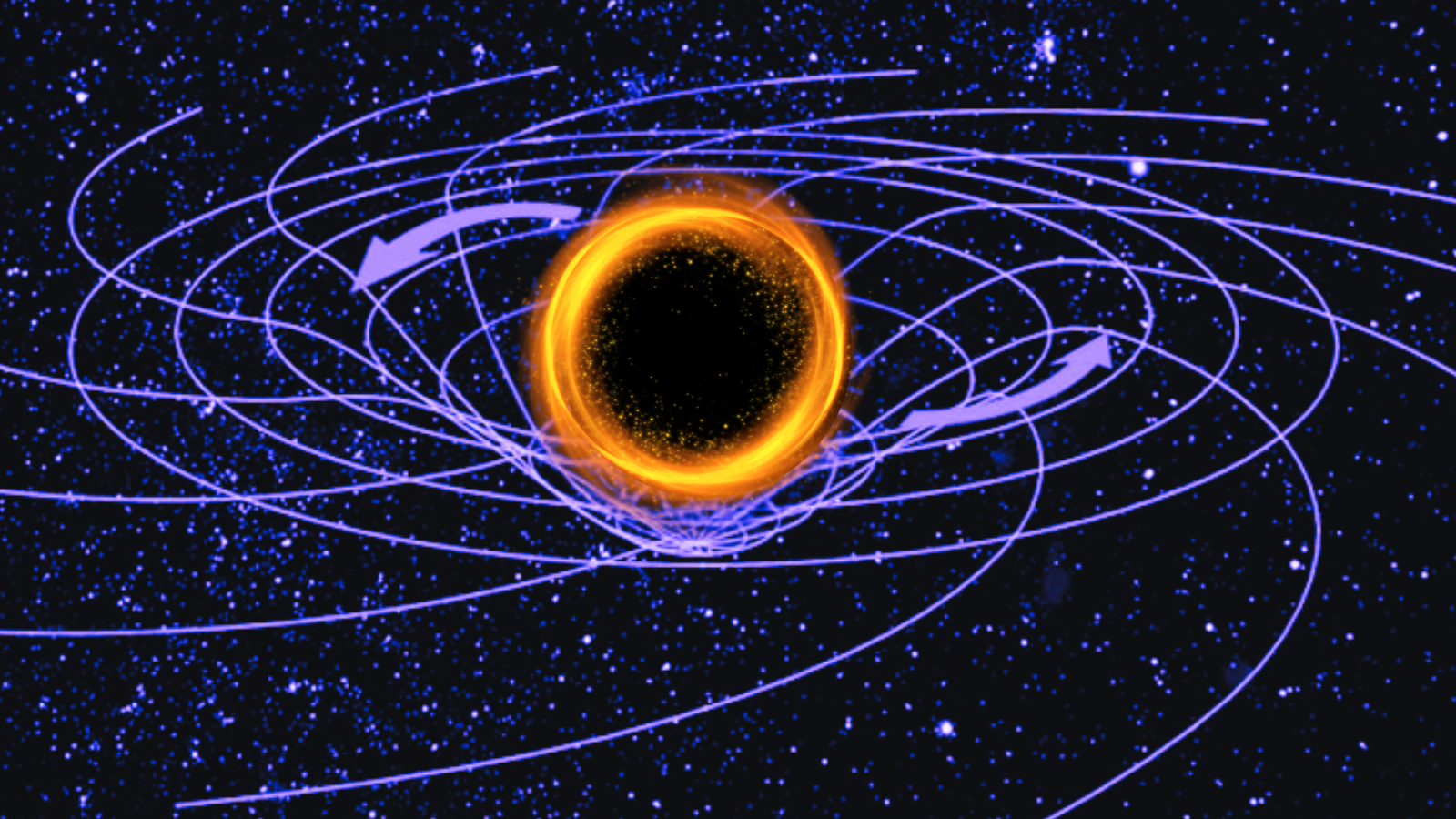
An illustration of a Kerr black hole dragging space around with it, the so-called "lense-thirring effect".

In the extremely early universe, primordial black holes could acquire a "dark charge," giving them an unnaturally long lifetime. This makes them an interesting, if exotic, candidate for dark matter, new research suggests.

In the 1970s, Stephen Hawking discovered that black holes aren't entirely black. Through a complex interaction between their event horizons and the quantum fields that soak space-time around them, they can slowly but steadily emit radiation. This causes black holes to lose mass, and in fact the smaller they become the more brightly they glow, until they disappear altogether in a shower of particles and radiation.

Sign up to read this article
Read news from 100's of titles, curated specifically for you.
Already a member? Sign in here
Related Stories
Top stories on inkl right now
One subscription that gives you access to news from hundreds of sites
Already a member? Sign in here
Our Picks
Fourteen days free
Download the app
One app. One membership.
100+ trusted global sources.







