
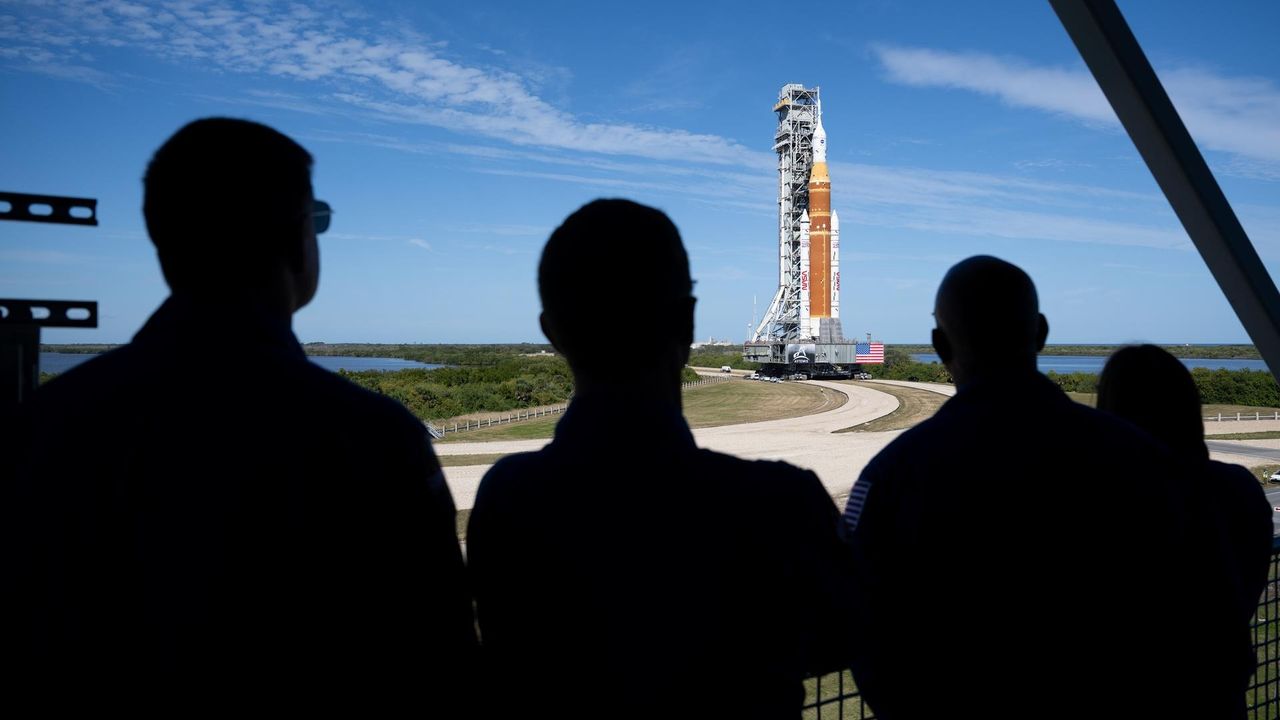
NASA is just hours away from launching Artemis 2, the first mission to ferry humans into the moon's vicinity in more than half a century.
The roughly 10-day flight — expected to lift off today (April 1) from Kennedy Space Center (KSC) in Florida at 6:24 p.m. EDT (2224 GMT) — will carry NASA astronauts Reid Wiseman, Victor Glover and Christina Koch, along with Canadian Space Agency astronaut Jeremy Hansen aboard the Orion spacecraft toward the moon. If all goes to plan, the crew will loop around the moon and return to Earth on a free-return trajectory, reaching roughly 4,700 miles (7,560 kilometers) beyond the moon's far side — farther than Apollo 8's historic lunar flyby and the most distant journey ever attempted by humans.