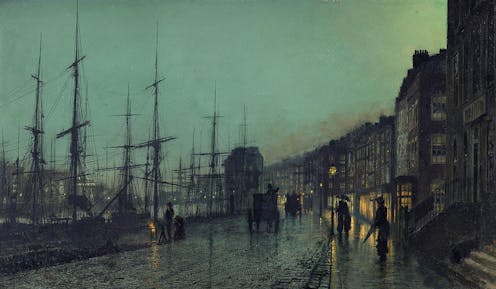
As well as being Scotland’s largest city, Glasgow was its industrial heart. Central to the civic story, is the River Clyde, famed as a global shipbuilding hub in the 20th century. But the Clyde, along with an abundant supply of coal, also made Glasgow the ideal location for the textile industry. In the 1820s, spinning mills, weaving mills, dye houses and garment factories sprang up, dominated the urban landscape.
Access to the public sphere and the professional world had been the prerogative of men in the 1800s. But the textile industry presented an opportunity for women. From the introduction of automatic looms and sewing machines, machinery became less physically demanding to operate. That gave women an advantage, and in Glasgow, they began to step out of their homes to claim a place on the factory floor.