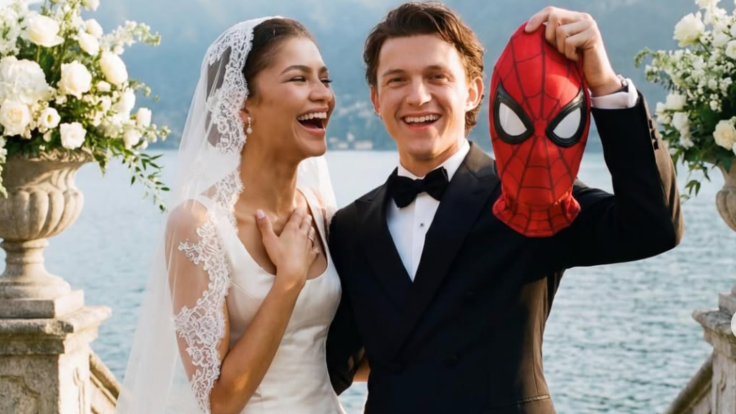
A single image purporting to show Tom Holland and Zendaya on their wedding day has erupted across social media, drawing more than 10 million Instagram likes and igniting a fierce debate over artificial intelligence and celebrity misinformation.
The picture, depicting the Hollywood couple in wedding attire and appearing to exchange vows, spread rapidly across fan accounts and meme pages in early 2026. Within days it had become one of the most engaged-with celebrity images on Instagram this year, despite widespread evidence that the photograph is not real.
Viral Image Sends Fans Into Frenzy
The viral surge highlights how AI-generated imagery is increasingly blurring the line between fan fiction and perceived reality online. The now infamous 'wedding photo' appears convincing at first glance, showing Holland in a formal black suit while Zendaya stands beside him in a white gown and veil, framed by warm lighting and a romantic backdrop.
The original post, shared on Instagram by heroemaniaco, quickly surpassed 10 million likes, fuelling speculation among fans who initially believed the image captured a real moment. Comment sections filled with congratulatory messages before others grew sceptical. Digital artists and technology observers pointed to subtle irregularities in the lighting and facial rendering, suggesting the picture was created using artificial intelligence tools rather than a traditional camera.
The incident demonstrates how easily convincing AI-generated content can circulate when attached to globally recognised celebrities.
No Evidence of a Secret Wedding
Despite the viral claims, there is no credible evidence that Tom Holland and Zendaya have married. Neither actor has publicly announced an engagement or wedding through verified social media channels or official representatives, and their recent public appearances and interviews make no reference to such an event.
Both actors have historically maintained strict privacy regarding their personal lives. Holland discussed the importance of keeping aspects of his relationship out of the spotlight during a widely viewed interview on 'The Graham Norton Show', stating that he values 'keeping things that are really ours private'. Zendaya has similarly spoken about the pressures of public scrutiny surrounding celebrity relationships during promotional interviews for her film projects.
The absence of any official confirmation has led digital investigators and fans to conclude that the viral wedding picture is almost certainly fabricated.
Post of an AI-generated Zendaya and Tom Holland wedding crosses 10 million likes on Instagram. pic.twitter.com/xZ2aW1RR7a
— Pop Base (@PopBase) March 7, 2026
Rise of AI Celebrity Imagery Online
Artificial intelligence image generators have advanced dramatically in recent years, allowing users to produce highly realistic photographs of public figures in fictional scenarios. Such images tend to spread quickly because they exploit emotional reactions—images portraying celebrities in milestone moments such as weddings, pregnancies or dramatic confrontations often trigger instant engagement before viewers question their authenticity.
Meta, the parent company of Instagram, has acknowledged the rapid growth of AI-generated media on its platforms and indicated it is developing systems to identify synthetic media and provide clearer labelling for users. However, the pace of AI development has made enforcement difficult. Once an image begins circulating across reposts and fan pages, it becomes almost impossible to track the original creator or apply labels consistently.
The Holland and Zendaya picture illustrates this problem clearly. The image spread through multiple reposts, edits and cropped versions before many viewers realised it had likely been created digitally.
Celebrity Culture Meets Synthetic Reality
For celebrities whose lives are closely followed online, the emergence of realistic AI imagery introduces new risks. Images that appear authentic can easily create false narratives around relationships, health, or personal milestones. In the case of Holland and Zendaya, the fabricated wedding image did not appear to cause reputational damage. Instead, it fed into an already popular cultural narrative surrounding the pair's real-life relationship.
Still, the incident highlights how the boundary between fan creativity and misinformation is becoming increasingly fragile. Digital culture researchers warn that celebrity content is often the testing ground for emerging internet technologies. Viral fan edits, deepfakes and AI-generated photographs frequently gain traction through celebrity fandoms before spreading into political or social contexts.
For millions of social media users, the viral Holland and Zendaya 'wedding' image served as a reminder that what appears real online may be entirely synthetic. Even so, the photograph's extraordinary engagement demonstrates a powerful truth about internet culture. When beloved celebrities appear to experience a fairy tale moment, millions of people want to believe it.
The Power Of A Single Image
The viral spread of the AI-generated wedding picture shows how a single convincing image can dominate global conversation within hours.
More than 10 million Instagram likes later, the photograph has become a case study in how artificial intelligence is reshaping celebrity culture and online reality.
For now, Tom Holland and Zendaya remain one of Hollywood's most closely watched couples. But their viral 'wedding photo' exists only in the imagination of artificial intelligence and the enthusiasm of millions of fans who shared it.