
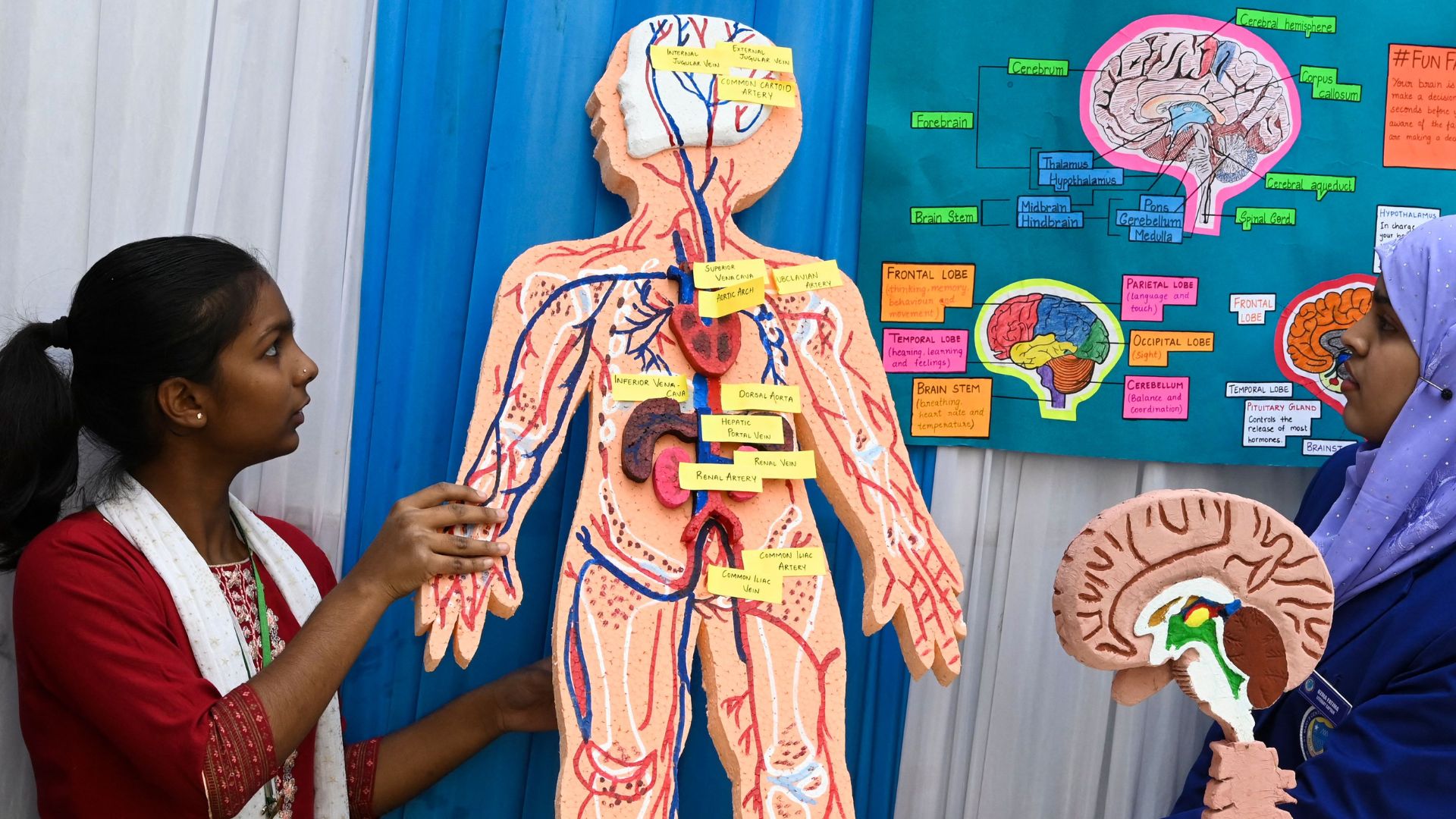
An organ is a group of tissues that work together to perform a specific task in the body, such as digesting nutrients or producing chemical messengers that enable brain cells to communicate. Although scientists hold different views on what exactly counts as an organ, the most-cited number of organs in the human body stands at 78. These include major functional units like the brain and the heart, as well as much smaller body parts, such as the tongue.
Organs come in all shapes and sizes to reflect the myriad of important functions they perform. But which of the body's organs weigh the most? The answer to that question may surprise you.













