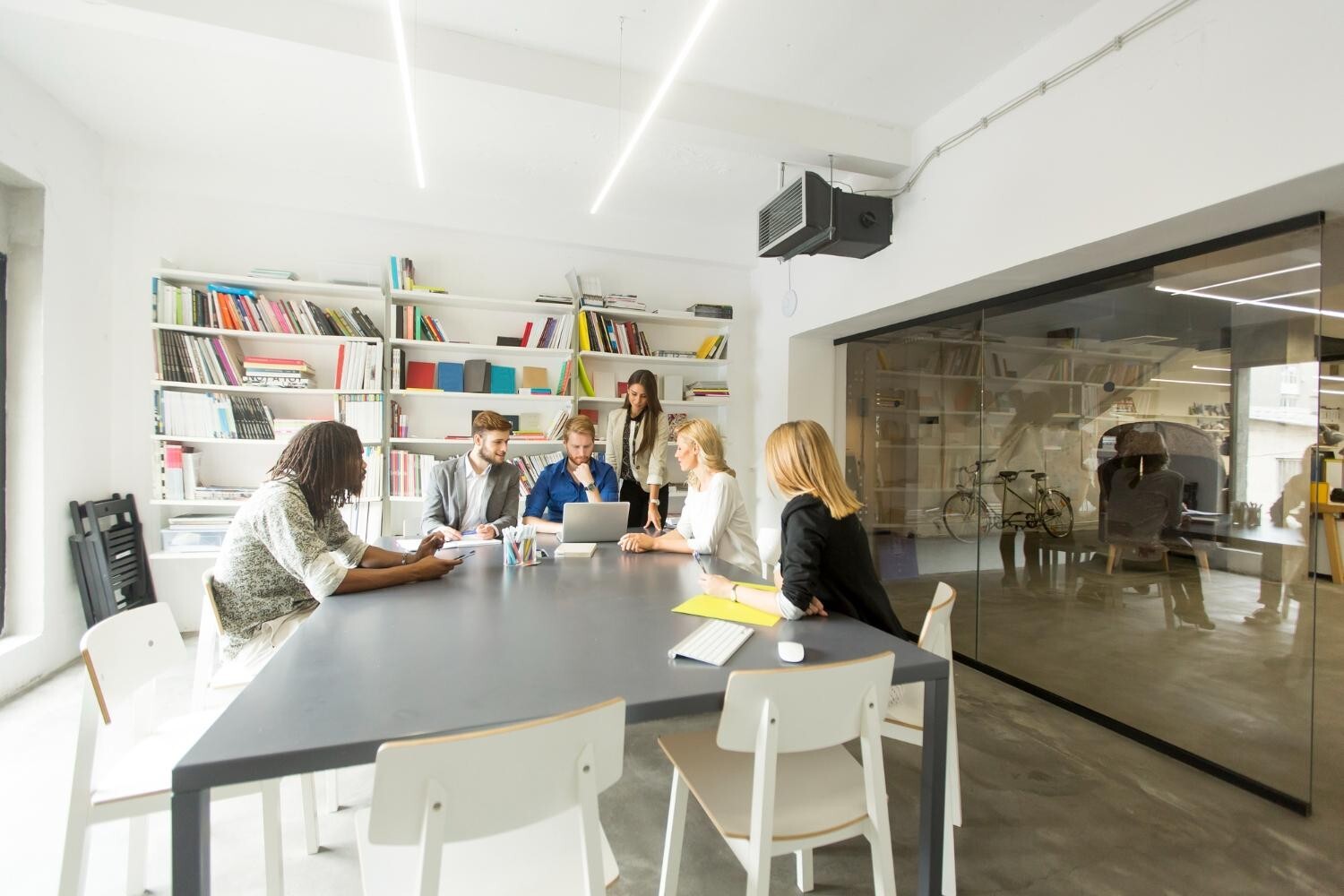
Most companies searching for studio space for rent think in terms of desks, square footage, and lease terms. Fair enough — those are the logistics. But a growing number of businesses are rethinking what a workspace should actually do for the people inside it. An innovation space goes beyond providing a place to sit and work. It's a physical environment engineered to accelerate creative problem-solving, cross-team collaboration, and rapid prototyping.
What Exactly Qualifies as an Innovation Space?
The term gets thrown around loosely, so a working definition helps. An innovation space is a dedicated environment — a full floor, a single room, or even a reconfigured corner — designed specifically to support ideation, experimentation, and iterative development. It differs from a standard office in three measurable ways:
|
Standard Office |
Innovation Space |
|
Fixed desk assignments |
Modular, reconfigurable furniture |
|
Quiet-focused culture |
Built for active discussion and testing |
|
Tools stored elsewhere |
Prototyping materials and tech on-site |
|
Scheduled meeting rooms |
Open-access collaboration zones |
Companies like Steelcase and Herman Miller have published workplace research showing that employees in purpose-built creative environments generate 15–20% more viable concepts during structured brainstorming sessions compared to those working in traditional conference rooms.
Faster Problem-Solving Through Spatial Design
When a team hits a wall on a project, the default move is to book another meeting room and talk through it again. An innovation room breaks that cycle by changing what people can physically do with their ideas.
Whiteboards covering full walls. Sticky note surfaces at standing height. Movable partitions that let groups split, regroup, and split again in minutes. Digital displays connected to shared project boards so remote team members see changes in real time.
A 2019 study from the Harvard Business School found that teams with access to dedicated creative workspaces solved complex business problems 22% faster than control groups using standard meeting rooms. The researchers attributed the difference largely to reduced "context switching" — the cognitive cost of mentally entering and exiting a creative mindset in spaces not built for it.
Attracting and Retaining Talent That Thinks Differently
Recruitment conversations have shifted. Salary and benefits still matter, but candidates evaluating offers — especially in product development, engineering, and design — increasingly ask about the work environment itself.
An innovative workspace signals something specific to prospective hires: this company invests in how work happens, not just what gets produced. That signal carries weight during the decision-making process.
Gallup's 2023 State of the Global Workplace report found that employees who strongly agree their workplace is set up to support their productivity are 3.5 times more likely to be engaged at work. Engagement, in turn, correlates directly with retention. The innovation room isn't a recruiting gimmick — the data ties physical environment directly to people staying or leaving.
Cross-Departmental Collisions That Actually Produce Something
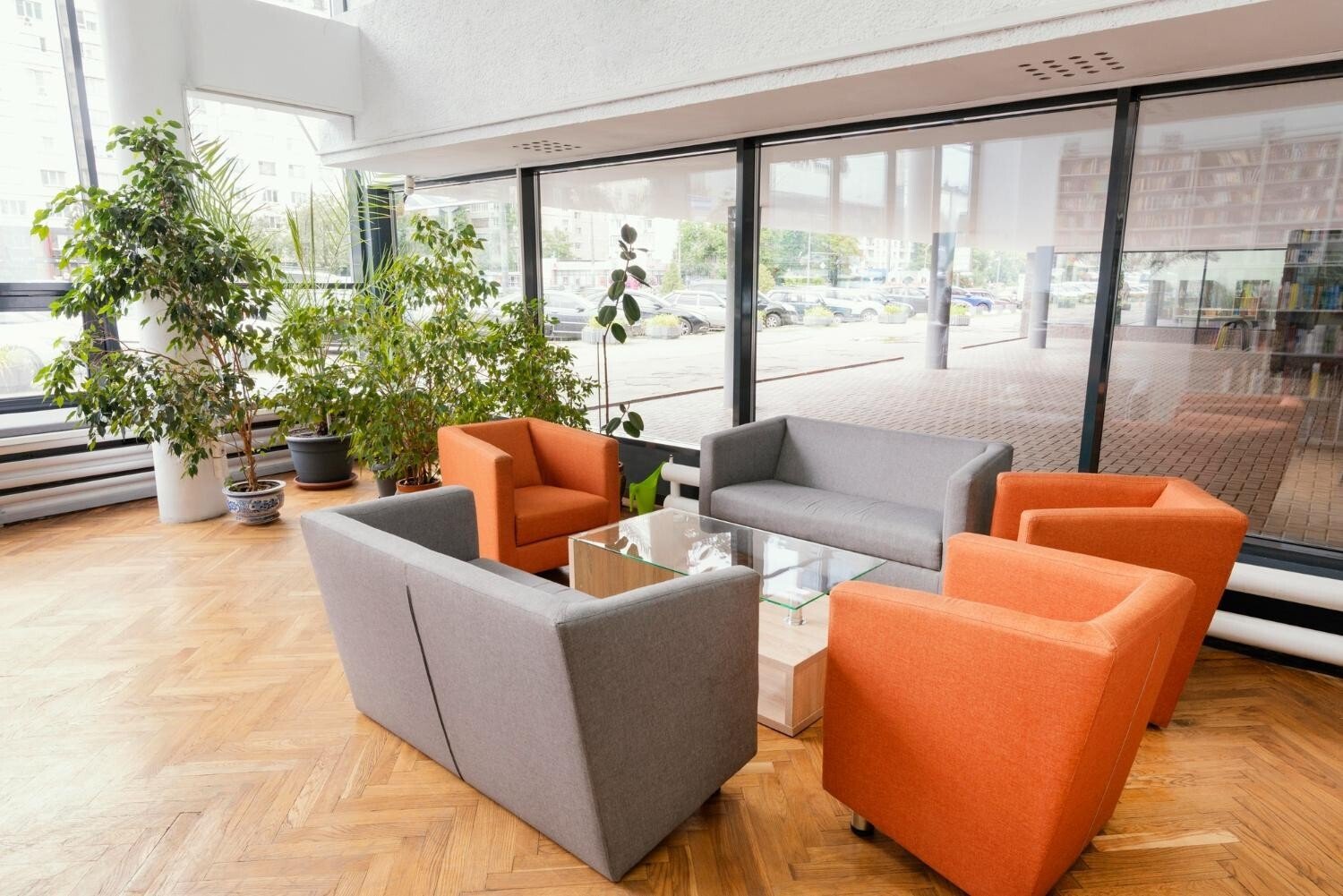
Most office layouts reinforce silos. Marketing sits on one floor, engineering on another, and they interact mainly through scheduled syncs and email threads. An innovation space placed at a neutral point in the building — or designed as a shared resource across departments — creates unplanned interactions between people who wouldn't normally overlap.
These "collisions" have measurable value. MIT's Human Dynamics Laboratory tracked communication patterns across multiple organizations and found that face-to-face interactions between different departments were the single strongest predictor of team performance — stronger than email volume, meeting frequency, or individual talent metrics.
The physical design of an innovative workspace can encourage these moments without forcing them. Shared coffee stations inside the space, a central project display that rotates weekly, comfortable seating that invites people to linger.
A Dedicated Place to Fail Cheaply
Every business says it values experimentation. Fewer actually build infrastructure for it. An innovation room gives teams a physical location where rough prototypes, half-baked mockups, and early-stage concepts have a permanent home. Nothing gets shoved into a drawer at 5 PM because someone else needs the conference table tomorrow morning.
This matters because the cost of failure scales with delay. A cardboard prototype tested in week one costs almost nothing. The same concept discovered to be flawed after three months of development costs salaries, materials, and opportunity. Having a space where early-stage testing happens continuously — not in scheduled sprints — compresses that feedback loop. According to a 2021 McKinsey report on product innovation, organizations that maintained persistent experimentation spaces brought products to market 30% faster on average than those relying on ad-hoc arrangements.
The Revenue Connection Most People Miss
It's easy to frame an innovation space as a "nice to have" — a cultural perk that looks good in a company brochure. The financials tell a different story.
PwC's Global Innovation 1000 study, which tracked R&D spending and output across the world's largest corporate investors in innovation, found no correlation between total R&D budget and financial performance. What did correlate? The presence of structured innovation processes and environments. Companies that scored highest on "innovation capability" — which included physical workspace design — outperformed their peers in revenue growth by an average of 11%.
An innovative workspace doesn't replace strategy or talent. But it removes friction from the process that turns ideas into revenue.
Flexibility That Outlasts Any Single Project
A well-designed innovation space adapts. When the current priority is a product launch, it becomes a war room with sprint boards and prototype stations. When the focus shifts to customer research, the same room reconfigures into an interview lab with recording equipment and observation seating.
This flexibility extends the useful life of the investment far beyond any single initiative. Traditional build-outs lock a room into one function — the boardroom stays a boardroom for fifteen years. Modular innovation environments, by contrast, evolve with the business. Steelcase's workplace futures research suggests that companies reconfigure dedicated creative spaces an average of four times per year — no renovation costs required.
An innovation room earns its budget line when it shortens the path between a rough idea and a tested concept. The companies getting real returns from these spaces share one trait: they treat the room as operational infrastructure, not decoration. If your teams spend more time booking conference rooms than building prototypes, the math probably favors making the switch.