Get all your news in one place.
100’s of premium titles.
One app.
Start reading
Louder
Louder
Entertainment
Jo Kendall

“We heard King Crimson synchronised music with visuals at gigs. I thought we could use that, since we didn’t have Mick Jagger to run around or anything”: Remembering Rick Davies, from tramping around Germany to leading Supertramp around the world

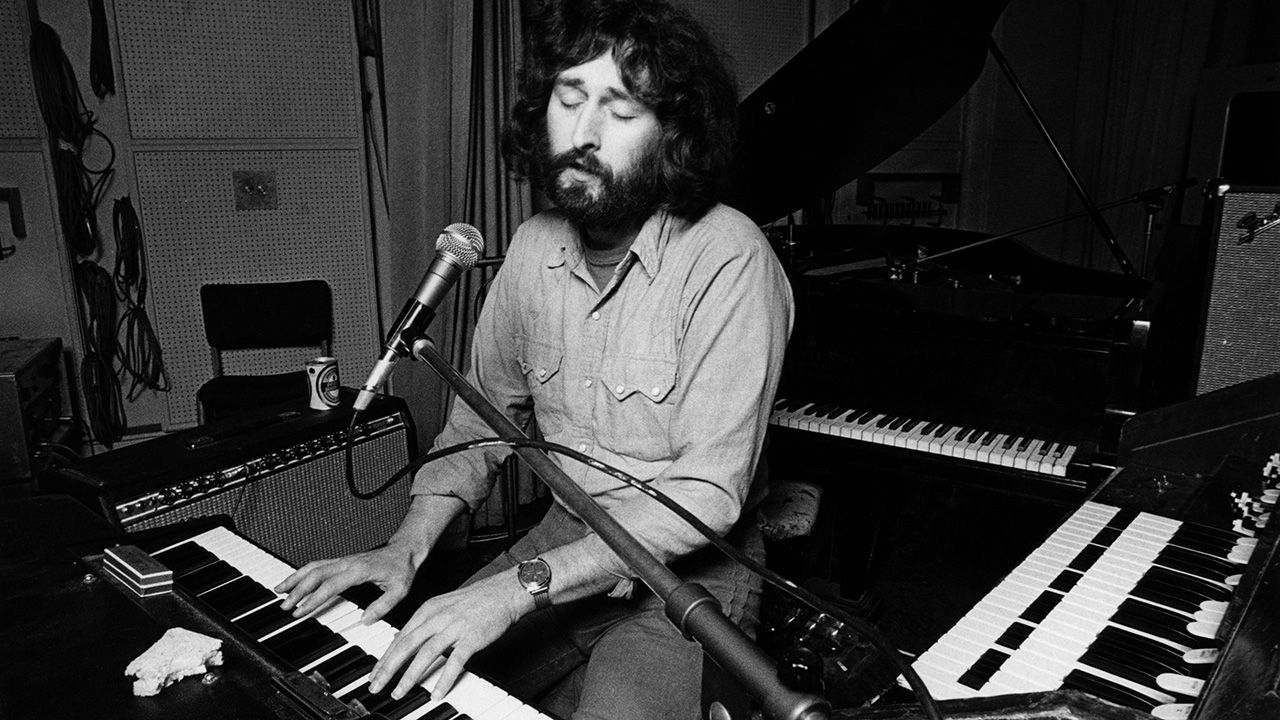
UNITED KINGDOM - JANUARY 15: OLYMPIC STUDIOS Photo of SUPERTRAMP, Rick Davies in rehearsal (Photo by Fin Costello/Redferns).

When Supertramp co-founder Rick Davies’ death was announced in September 2025, the prog world mourned the loss of a great talent. Prog looks back over his remarkable career, which spanned nearly six decades, with commentary from some of those who travelled with him.

“You have to wake up every day and thank your lucky stars,” Rick Davies told a Calgary TV station in 1985. “I find it quite funny when you see rock people throwing tantrums. It doesn’t make any sense. We live a life of privilege, and we should never forget it.”

The Supertramp co-founder, lead vocalist, keyboardist and harmonica player died from complications of multiple myeloma – a type of blood cancer – at home in New York on September 6. He’d worked tenaciously for the privilege he referred to, through some acutely tough times, which took him from his birthplace of Swindon, Wiltshire, to Europe and across the pond.

Born on July 22, 1944, to hairdresser Betty and merchant seaman Dick, Davies showed signs of being musically tuned-in very early on. Superstar jazz drummer Gene Krupa’s single Drummin’ Man sparked a passion for percussion, and the eight-year-old Davies practised beating on pots, pans and an adapted biscuit tin. By 12 he was the snare drummer for a local brass band led by British Railways staff.

“That’s when I got the bug and started to play the drums,” he told WLNG Radio. “I was nervous. I slowly got better and had lessons, but nobody wanted my drumming. They wanted piano.”

Davies had got his hands on a grand piano owned by kindly neighbours in Eastcott Hill, who cared for him after school until Betty finished work. Swept along by rock’n’roll – and especially Fats Domino – he learned boogie-woogie moves thanks to his hosts. He also fell for harmonica aces Jimmy Reed and Shakey Jake.

In 1959 Davis became drummer for local rockers Vince & The Vigilantes, distinctive in their lurid orange and black jackets. Floored by the polyrhythmic expertise of Dave Brubeck drummer Joe Morello, Davies also lapped up Duke Ellington, Miles Davis and Stan Getz. His academic record was less than impressive, but at 17 he pulled out all the stops to get a pass to Swindon School Of Art which, he told biographer Abel Fuentes, “almost all the hairy young guys saw as a way to escape.”

Davies drummed with The Senators, then his own Ricky Davies Band. He acquired a Hohner electric piano and started a new band, Rick’s Blues, teaching his friend Ray to drum for them – he’d later be known as the singer- songwriter Gilbert O’Sullivan. As keyboardist and vocalist Davies performed blues, jazz and rock’n’roll, material that suited his voice perfectly.

The group were booked for weddings, parties and student dances, opening for acts such as The Falcons (featuring Roy Wood) and Steampacket. In 1966 they went to a studio in Putney and recorded two Beatlesy songs written by O’Sullivan, which were never unreleased.

Briefly working as a welder, by September 1966 Davies had landed a professional gig as organist with The Lonely Ones, a covers band started by Hendrix bassist Noel Redding, who’d departed by that time. “They said, ‘Do you play organ?’ I said, ‘Yes’,” he told WLNG. “I’d never played one in my life!”

That was soon rectified when Betty secured a Vox Continental on hire purchase. In ’67 Davies relocated to the group’s base, Folkestone; and soon The Lonely Ones were offered a three-week residency at Griffin’s Club in Geneva, Switzerland. While living in the back room of the club, other European dates opened up.

Conditions could be literally shocking – such as when guitarist/vocalist Trevor Williams received a severe electric one from handling a microphone at the Titan Club in Rome. Without funds or artist representation the band became destitute, living off potatoes stolen from a local shop. “We also used to smoke some terrible Italian cigarettes that caused your lips to swell as if they were infected,” Davies recalled.

The group returned to Griffin’s for a month-long residency that summer – this time with a wind/brass section – now renamed The Joint. They met Munich-based Welsh musician David Llewellyn, who got them involved in creating film music for “films that nobody saw,” and they moved to Germany to play regular dates at Munich’s PN Club.

But they were regularly homeless and hungry. Davies recalled later: “In Supertramp we’d swap stories about who slept in the weirdest place. I slept in an American army barracks and nearly got sent to Vietnam!”

Then Llewellyn had a brainwave: he knew a Dutch millionaire music nut living in Switzerland who might like what the musicians were doing. Sure enought, photographer and pilot Stanley ‘Sam’ Miesegaes took them under his wing and flew them to his villa in Versoix, Geneva.

He supported them through a transitional period in ’68 to ’69 when they began to write their own songs. A new demo gave them the opportunity to head to London to work with Bee Gees and Cream manager Robert Stigwood, and to play hotspots like the Marquee Club. But their performance skills were slipping, and their attitude towards Miesegaes became surly. Only Davies maintained respect; Miesegaes deemed Davies’ talent worth nurturing. He suggested forming a new group around him with the aim of releasing an album within a year.

Davies wrote his first songs at Versoix that summer, then set up home at Botolph’s Bridge House cottage in Romney Marsh, Kent. On August 9 an ad went into Melody Maker, proposing a “genuine opportunity for good musicians.” One of the first through the audition gate was shy 19-year-old guitarist Roger Hodgson. The Oxford native had recorded a single with the soon-to-be Elton John in an act called Argosy, and had a stash of original songs that would eventually become staples of the new group.

Possibly ‘Supertramp’ clicked with Rick because he’d been something of a vagabond himself

Richard Palmer-James

He auditioned by playing Traffic’s Dear Mr Fantasy, showcasing a superb high vocal. Afterwards, Davies took Hodgson for a bite at a local pub. Their backgrounds differed – the former from working-class stock and the latter from a private school scene – but the two bonded, and Hodgson was recruited as bassist.

Davies’ next signings were Bournemouth guitarist Richard Palmer-James – on the scene with local band Ginger Man, featuring John Wetton on bass – and drummer Keith Baker, from Clem Clempson’s blues-rock trio Bakerloo. Davies and Hodgson became a music-writing nucleus, Hodgson’s melodic pop tempering Davies’ blues and jazz approach.

Palmer-James became the lyric-writing voice. He tells Prog: “Rick had had a couple of years more experience than the rest of us. He’d already developed a characteristic and commanding keyboard style – but we soon discovered that he was an excellent drummer too. He was also the first rock’n’roller I’d met who was into Duke Ellington.

“When we started working up a repertoire and trying to write songs together in late summer 1969, we were all very polite to one another. By the end of the following year, not so much! Rick struck me as introverted, sometimes passive; nevertheless possessed of a quiet authority, though never overbearing. On occasion he displayed a wicked sense of humour.”

The group were then called Daddy, and still skipping over to Munich for shows; but Palmer-James suggested something taken from WH Davies’ Autobiography Of A Super-Tramp. “Possibly ‘Supertramp’ clicked with Rick because he had been something of a vagabond himself in Europe during the previous years,” Palmer-James says.

They were about to enter Morgan Studios, with new drummer Robert Millar; and while living under one roof, their tiny record collection had provided plenty of inspiration: “Traffic, Jethro Tull, Procol Harum, Spooky Tooth – a whole movement of more musical bands than showy bands,” Davies said. Spooky Tooth had two strong singers, of course, a key element for the future Supertramp.

Another record stood out to Davies: “In The Court Of The Crimson King. We heard that King Crimson synchronised the music with visuals at gigs, and that really appealed to me. I’m an old art student – I thought we could make use of that, as we didn’t have Mick Jagger to run around or anything.”

The debut, released on August 14, 1970 on the A&M label, was the most prog rock the band would sound. Palmer-James lost his heart while in Munich and stayed there, also admitting: “Rick and I fell out badly at the end of 1970. It was mostly my fault, and leaving the band seemed the right thing to do.”

The follow-up, 1971’s Indelibly Stamped, was a more straightforward rock record, with Hodgson switching to guitar. Now based in Maida Vale, London, the line-up wobbled – mentor Miesegaes had bailed – but in 1973 they found a fit with The Alan Bown Set’s bassist Dougie Thomson and saxophonist John Helliwell, plus Californian ex-pat drummer Bob Siebenberg.

Rick’s music and legacy continue to inspire many and bears testament to the fact that great songs never die

Supertramp

The 1974 release Crime Of The Century changed everything as the chemistry clicked; it yielded clever, satirical progressive pop hits such as Hodgson’s Dreamer, but also the co-write School (featuring Davies’ Shakey-Jake harmonica) and Davies’ brilliant Bloody Well Right. “With Crime Of The Century we went for the more dramatic approach; it seemed to suit the character of the band,” Davies recalled.

The success story unfolded as the band headed for the US, where he met his future wife Sue John, an A&M rep who became the band’s manager in 1984. His song Forever, from Indelibly Stamped, was played at their wedding in 1977, the word engraved on his ring.

Supertramp’s sixth album, Breakfast In America, conquered the planet musically in 1979. Davies’ song from the album, Goodbye Stranger, would close the band’s entertaining and highly visual gigs. It was one of his most-loved compositions and a key example of his deft Wurlitzer work.

Hodgson left the band after 1982’s ...Famous Last Words..., by which time creative and personality differences between him and Davies had become too much. The band continued with Davies solely upfront, releasing five more albums, taking two hiatuses and touring until 2012.

Davies was diagnosed with multiple myeloma in 2015 and began receiving treatment. “Sue gives me my pills,” he told WLNG in June 2022. He was still making music with friends in his basement studio and at small shows, and going for rides on his electric bike.

Following his passing, a message on Supertramp’s website read: “Rick’s music and legacy continue to inspire many and bears testament to the fact that great songs never die, they live on.”

His music was wonderful. He was such a great player and such a great person to be with. He meant a lot to me

John Helliwell

Meanwhile, Carl Verheyen, Supertramp’s 80s touring guitarist and later full-time member, recalled him fondly in a social media post. “He had such a great sense of humour. In fact, he kept a joke book. One day I told him a joke that he actually liked. He said, ‘That’s going in!’”

With his version of the soulful Ever Open Door as a soundbed, sax/keys player John Helliwell said Davies had changed his life. “His music was wonderful. He was such a great player and such a great person to be with. He meant a lot to me.”

Palmer-James tells Prog: “The quintessential Rick Davies song for me is Bloody Well Right – but my favourite is one we wrote together for the first album called Shadow Song. I play it in solo shows whenever I can. I wish we could have compared notes as senior citizens. I admired him.”

Sign up to read this article
Read news from 100’s of titles, curated specifically for you.
Already a member? Sign in here
Related Stories
Top stories on inkl right now
One subscription that gives you access to news from hundreds of sites
Already a member? Sign in here
Our Picks
Fourteen days free
Download the app
One app. One membership.
100+ trusted global sources.